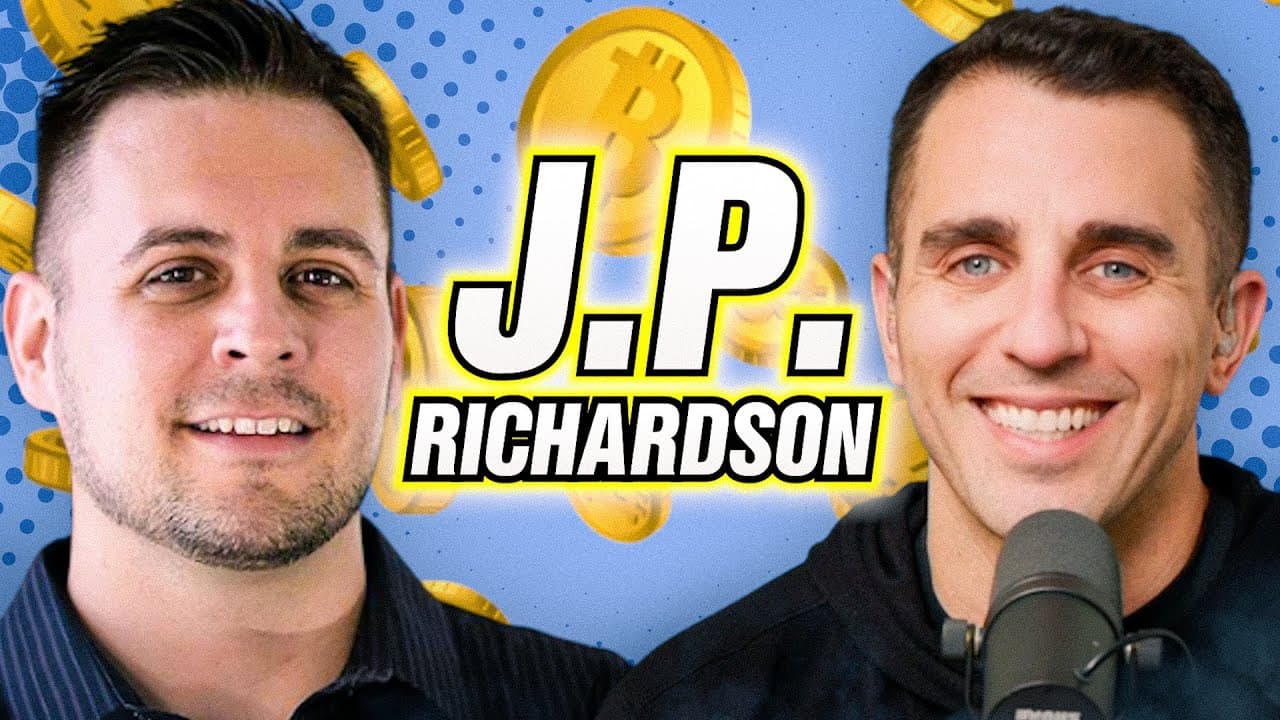
Why You Need To Self Custody Your Bitcoin | JP Richardson
TL;DR
Exodus employs self-custody to secure assets, empowering users through less reliance on centralized exchanges.
Transcript
all right guys bang bang I've got JP here with me uh JP I thought a great place to start would be we've seen a ton of chaos and uncertainty in uh this entire industry and one of the things that you all do is you have a self-custodial platform meaning that any trading any features that people want to use is all done from this self-custodial kind of ... Read More
Key Insights
- 🙈 Exodus has seen a spike in new users, indicating a shift towards self-custody after recent market collapses.
- 🤩 The self-custodial model of Exodus ensures that users hold their own keys and control their assets without relying on centralized exchanges.
- 👾 The collapse of platforms like FTX has heightened awareness of the importance of asset security in the crypto space.
- 🖤 Exodus publishes their audited financials to promote trust and transparency, contrasting with many centralized exchanges that lack such disclosures.
- 💦 By aiming to simplify the self-custody process, Exodus is working to make cryptocurrency more accessible to average consumers.
- 👤 A significant trend among users is the shift toward stablecoins due to market volatility, showcasing a cautious approach in asset management.
- 🤳 JP Richardson's leadership emphasizes a strong commitment to improving self-custody solutions amid market uncertainty and evolving user needs.
Install to Summarize YouTube Videos and Get Transcripts
Explore YouTube Video Summarizer or Get YouTube Transcript Extractor
Questions & Answers
Q: Why did Exodus choose a self-custodial model from the beginning?
Exodus was founded with the intention of eliminating the risks associated with centralized exchanges, particularly in light of significant collapses like Mt. Gox in 2015. The self-custodial model empowers users to manage their crypto assets directly, so they have complete control, avoiding the risks posed by third-party platforms.
Q: How does Exodus ensure users have control over their keys?
Users of Exodus are the sole holders of their crypto keys, which is crucial to the self-custody model. Exodus does not have access to users' funds, allowing individuals to manage their crypto portfolios conveniently without the need for centralized exchanges, reinforcing the philosophy of "not your keys, not your coins."
Q: What impact did the FTX collapse have on Exodus and the wider market?
While many crypto firms struggled due to the FTX collapse, Exodus was minimally impacted as they managed to withdraw a small amount stored on FTX before its downfall. The situation highlighted the importance of self-custody and has led to an increase in interest and new accounts at Exodus.
Q: What strategies is Exodus adopting to encourage self-custody adoption?
Besides promoting self-custody principles, Exodus aims to simplify the user experience by addressing barriers like the complex setup processes that typically involve cumbersome recovery phrases. They focus on making self-custody easy, intuitive, and accessible, enabling broader adoption among mainstream users.
Q: How does Exodus's audit process work?
Exodus undergoes a rigorous financial audit process that is crucial for transparency. Their financials are published on the SEC's website, allowing users to see what assets they hold—giving potential investors confidence in Exodus's management and operational integrity.
Q: What trends is Exodus seeing in user asset preferences during market uncertainty?
Recently, Exodus observed that many users are swapping assets into stablecoins to mitigate volatility, reflecting cautious behavior during market fluctuations. Historically, Bitcoin remains a dominant asset among users, but the immediate reaction shows a shift towards ensuring stable holdings amid uncertainty.
Q: How does CEO JP Richardson view the potential future of decentralized finance (DeFi)?
JP Richardson is optimistic about DeFi's ability to innovate within the cryptocurrency space, emphasizing the dual challenge of promoting useful projects while filtering out scams. He believes DeFi and web3 initiatives can enhance user autonomy over their assets while offering valuable financial products.
Q: Why is Exodus committed to a remote work model and Bitcoin salaries?
Exodus's remote work culture and mandatory Bitcoin salary policy align with their mission to promote cryptocurrency adoption. This approach ensures they attract dedicated individuals who share their vision and fosters a transparency-centered environment, reflecting the foundational ethos of the Bitcoin community.
Summary & Key Takeaways
-
Exodus, founded in 2015, prioritizes self-custody to protect users' crypto assets from centralized exchange risks, like the FTX collapse, fostering a secure environment for management and trading.
-
The platform sees a surge in new accounts, reflecting a growing demand for self-custody solutions as crypto users shift from centralized exchanges amidst industry chaos.
-
Exodus maintains transparency, publishing audited financials, and empowers users with easy access to their assets, promoting the core belief that individuals should control their wealth.
Read in Other Languages (beta)
Share This Summary 📚
Summarize YouTube Videos and Get Video Transcripts with 1-Click
Try YouTube Summary with ChatGPT & Claude or YouTube Transcript Generator
Explore More Summaries from Anthony Pompliano 📚

Summarize YouTube Videos and Get Video Transcripts with 1-Click
Try YouTube Summary with ChatGPT & Claude or YouTube Transcript Generator