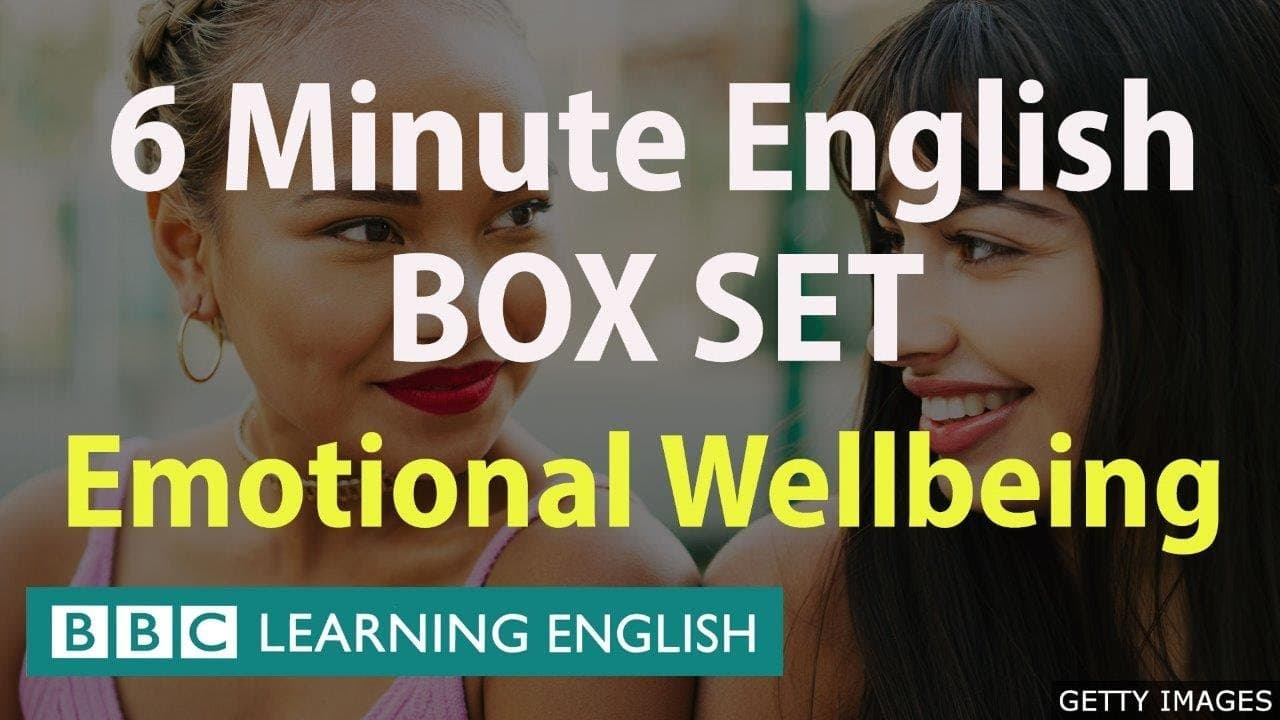
BOX SET: 6 Minute English - 'Emotional Wellbeing' English mega-class! One hour of new vocabulary!
TL;DR
Explore emotional wellbeing through vocabulary and listening practice.
Transcript
Hello and welcome to 6 Minute English. I'm Neil. And I'm Rob. You look tired, Rob. Well, I didn’t sleep well last night. I was tossing and turning all night, but I couldn’t get to sleep. Well, that’s a coincidence, as our topic today is insomnia - the condition some people suffer from when they find it difficult to get to sleep when they go to b... Read More
Key Insights
- Insomnia can be managed by breaking the association between bed and wakefulness, a concept supported by decades of research.
- Improving memory can involve various techniques such as drawing, which enhances contextual representation of information.
- Detecting lies involves paying attention to response latency and emotional distance in communication.
- Reading literature can stimulate different brain hemispheres, offering therapeutic benefits and helping people feel more alive.
- Complaints in sectors like public services often arise from inherent challenges, while traditional complaint methods remain dominant.
- Resilience can be developed through social support, optimism, and biological regulation during distress.
- Mental health issues in the workplace cost UK businesses billions, highlighting the need for better support and awareness.
- Disagreement can be constructive if approached with empathy, truthfulness, and without aiming for middle ground.
Install to Summarize YouTube Videos and Get Transcripts
Explore YouTube Video Summarizer or Get YouTube Transcript Extractor
Questions & Answers
Q: What advice is given for managing insomnia?
Dr. Michael Grandner suggests that if you cannot sleep, you should get out of bed. This counter-intuitive advice is backed by decades of research, indicating that staying in bed while awake can dilute the bed's ability to induce sleep, leading to chronic insomnia.
Q: How can drawing improve memory?
Drawing can enhance memory by increasing the contextual representation of objects in one's mind. This method allows for a greater level of detail and understanding, making it easier to recall information compared to simply writing things down.
Q: What are some signs of lying?
Liars often say less and have a longer response latency, which is the time between a question and the start of an answer. They also tend to use fewer personal pronouns like 'I' or 'me', indicating an emotional distance in their communication.
Q: How does reading literature affect the brain?
Reading literature activates different hemispheres of the brain, exciting it and making it come to life. This process is more complex than scanning for information and can provide emotional engagement and therapeutic benefits.
Q: What challenges do sectors like public services face in handling complaints?
Public services, telecommunications, and transport sectors face inherent challenges like limited resources and complex systems, making it difficult to satisfy customers. Despite modern methods, traditional complaint methods like phone and letter remain dominant.
Q: Can resilience be learned, or is it innate?
Resilience can be learned through social supports, optimism, and biological regulation during distress. While some individuals display resilience from the start, others, known as 'late bloomers', develop it over time, often through adverse experiences.
Q: What are the costs of ignoring mental health in the workplace?
Ignoring mental health issues costs UK businesses between £33 and £42 billion annually. This results from lost contributors who leave due to inadequate support, highlighting the need for better mental health awareness and interventions.
Q: How can disagreement be constructive?
Constructive disagreement involves speaking truthfully, listening intently, and aiming for empathy. It should not aim for compromise but rather seek to challenge and question ideas, fostering societal progress and avoiding stagnation.
Summary & Key Takeaways
-
This content explores various aspects of emotional wellbeing, providing insights into insomnia, memory improvement, and lie detection. It emphasizes the importance of breaking negative associations, using creative techniques, and understanding communication cues.
-
The therapeutic effects of reading literature are highlighted, showing how it can stimulate brain activity and provide emotional relief. The content also discusses the importance of effective complaint handling and the challenges faced in different sectors.
-
The discussion on resilience and mental health in the workplace underscores the significance of social support and awareness. Constructive disagreement is encouraged, promoting empathy and truthfulness for societal progress.
Read in Other Languages (beta)
Share This Summary 📚
Summarize YouTube Videos and Get Video Transcripts with 1-Click
Try YouTube Summary with ChatGPT & Claude or YouTube Transcript Generator
Explore More Summaries from BBC Learning English 📚
Summarize YouTube Videos and Get Video Transcripts with 1-Click
Try YouTube Summary with ChatGPT & Claude or YouTube Transcript Generator