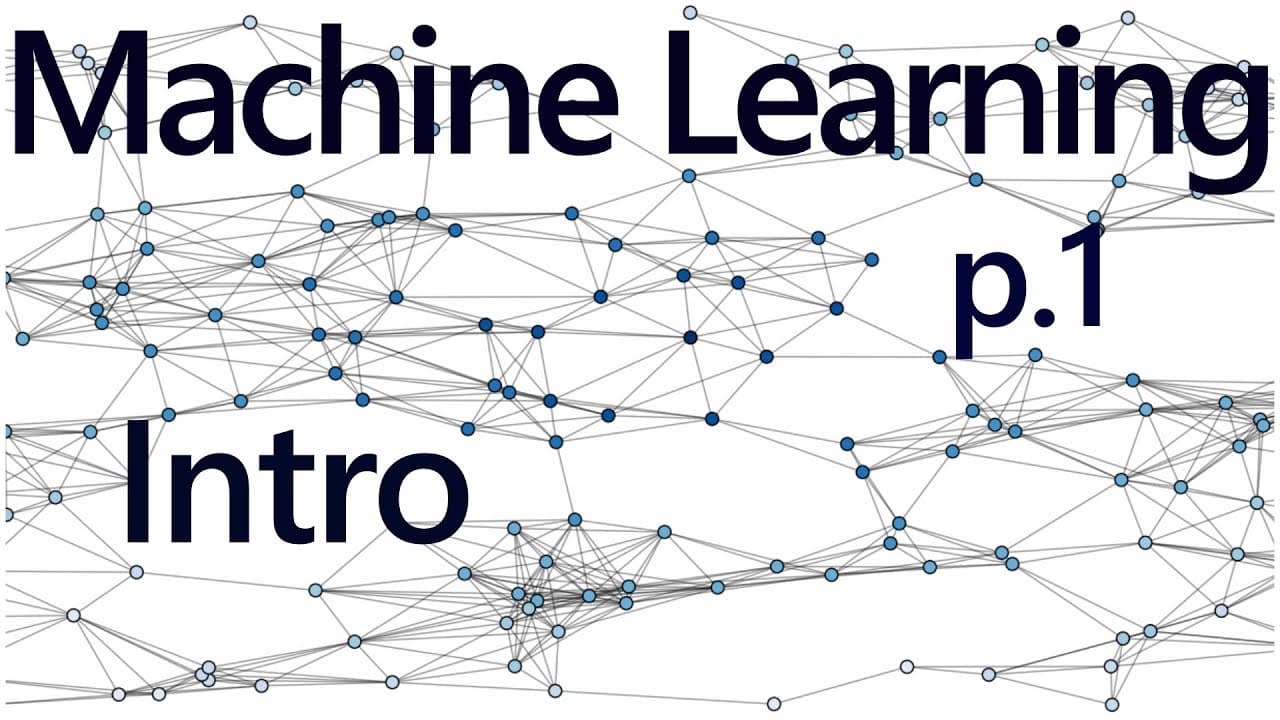
Practical Machine Learning Tutorial with Python Intro p.1
TL;DR
This tutorial series provides a holistic understanding of machine learning, covering various algorithms and their theory, application, and inner workings.
Transcript
Well, girls and guys and welcome to an in-depth machine learning tutorial series. The objective of this tutorial series is to give you a holistic understanding of machine learning and how it works and we're going to be doing this by covering a variety of algorithms so first we're gonna be covering regression then we're going to be moving into class... Read More
Key Insights
- 📠 Machine learning is the field of study that enables machines to learn without explicit programming, providing them with the ability to make predictions or decisions based on patterns in data.
- 📠 The tutorial series covers regression, classification, clustering, and deep learning, providing a comprehensive understanding of various machine learning algorithms.
- 🔋 The accessibility of machine learning has dramatically improved over the years, with advancements in computing power and cloud platforms like Amazon Web Services.
- 📚 Default parameters in machine learning libraries like scikit-learn can achieve impressive accuracy, but further parameter tuning may be necessary for more demanding tasks.
- 🔰 The tutorial series targets individuals looking to push the limits of machine learning and delve into the inner workings of algorithms.
- 📠 Support vector machines gained prominence in the 90s for tasks like handwritten character recognition, overshadowing neural networks temporarily.
- ❓ Basic knowledge of Python 3 and some math (mostly algebra and geometry) is recommended to follow along with the series.
Install to Summarize YouTube Videos and Get Transcripts
Explore YouTube Video Summarizer or Get YouTube Transcript Extractor
Summary & Key Takeaways
-
The tutorial series covers regression, classification (k-nearest neighbors and support vector machines), clustering (flat and hierarchical), and deep learning with neural networks.
-
Each algorithm is explored in three stages: theory, application with real-world data using scikit-learn, and recreating the algorithms from scratch in code.
-
Basic knowledge of Python 3 is recommended, and some math (mostly algebra and geometry) will be covered.
Read in Other Languages (beta)
Share This Summary 📚
Summarize YouTube Videos and Get Video Transcripts with 1-Click
Try YouTube Summary with ChatGPT & Claude or YouTube Transcript Generator
Explore More Summaries from sentdex 📚
Summarize YouTube Videos and Get Video Transcripts with 1-Click
Try YouTube Summary with ChatGPT & Claude or YouTube Transcript Generator