What Are Microservices and How Do They Work?
TL;DR
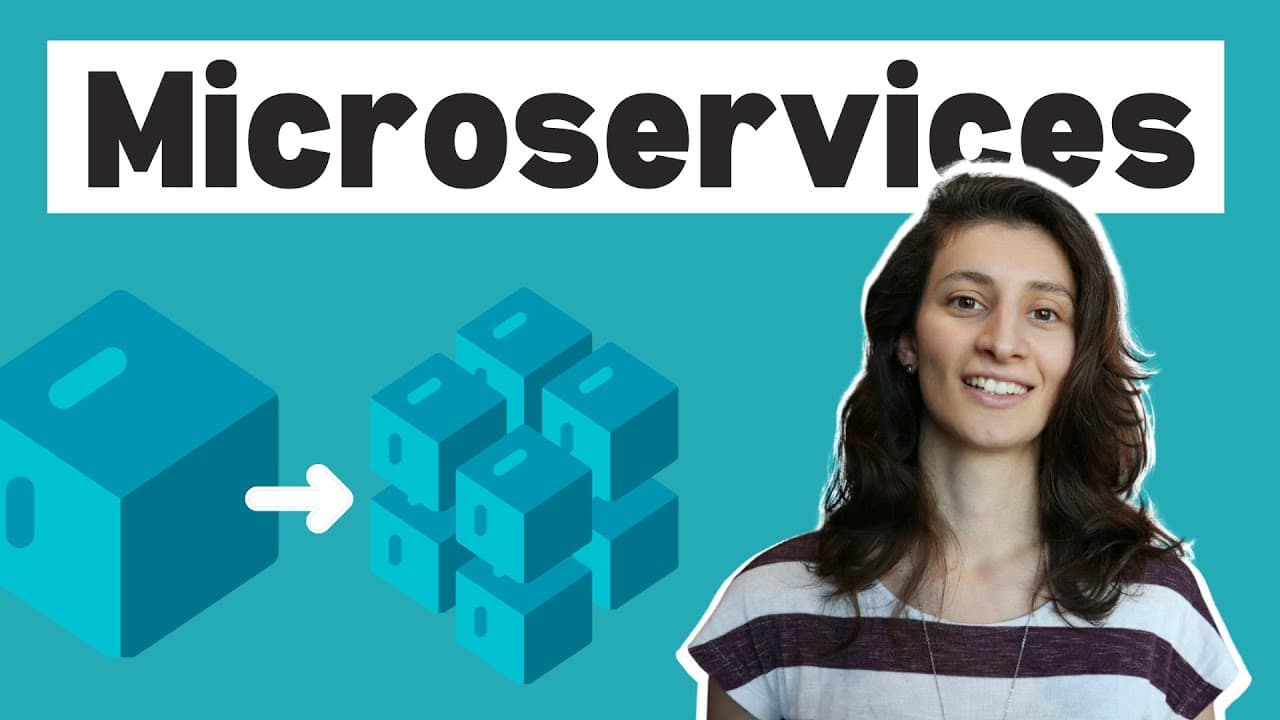
Microservices are an architectural style that breaks applications into smaller, independent services based on business functionalities, allowing for flexible development, deployment, and scaling. They communicate through API calls, message brokers, or service meshes, addressing the limitations of monolith architecture. Code management can be done using a monorepo or polyrepo approach, each bringing its own set of advantages and challenges.
Transcript
in this video i'm going to talk about microservices first i'm going to start by explaining what a monolith application architecture is what were some of the challenges of a monolith architecture and why the industry moved slowly towards the microservices architecture then we will see what microservices or microservice architecture is exactly as wel... Read More
Key Insights
- 🥺 Monolith architecture posed challenges in coordination, scaling, and release processes, leading to the shift towards microservices.
- 🤳 Microservices are self-contained services developed and deployed independently based on business functionalities.
- 🤙 Communication between microservices can be achieved through API calls, message brokers, or service mesh.
- 👨💻 Code management for microservices can be done through monorepo or polyrepo approaches, each with advantages and challenges.
- 🔨 Various tools, such as Kubernetes and HashiCorp's technologies, help simplify the deployment and management of microservices applications.
- 🥳 Companies like Amazon, Google, and Netflix deploy microservices applications multiple times a day using sophisticated CI/CD pipelines.
- 😄 Choosing between monorepo and polyrepo depends on the size of the project, the need for isolation, ease of code management, and collaboration requirements.
Install to Summarize YouTube Videos and Get Transcripts
Explore YouTube Video Summarizer or Get YouTube Transcript Extractor
Summary & Key Takeaways
-
Monolith architecture involves developing and deploying applications as a single unit, which leads to challenges such as coordination between teams, inflexible scaling, and longer release processes.
-
Microservices break down the application into smaller, self-contained services based on business functionalities, allowing for independent development, deployment, and scaling.
-
Communication between microservices can be achieved through API calls, message brokers, or service mesh, each with its own benefits and considerations.
-
Code management for microservices can be done through a monorepo or polyrepo approach, each with its own advantages and challenges.
Read in Other Languages (beta)
Share This Summary 📚
Summarize YouTube Videos and Get Video Transcripts with 1-Click
Try YouTube Summary with ChatGPT & Claude or YouTube Transcript Generator
Explore More Summaries from TechWorld with Nana 📚






Summarize YouTube Videos and Get Video Transcripts with 1-Click
Try YouTube Summary with ChatGPT & Claude or YouTube Transcript Generator