What Is the Grignard Reagent Reaction Mechanism?
TL;DR
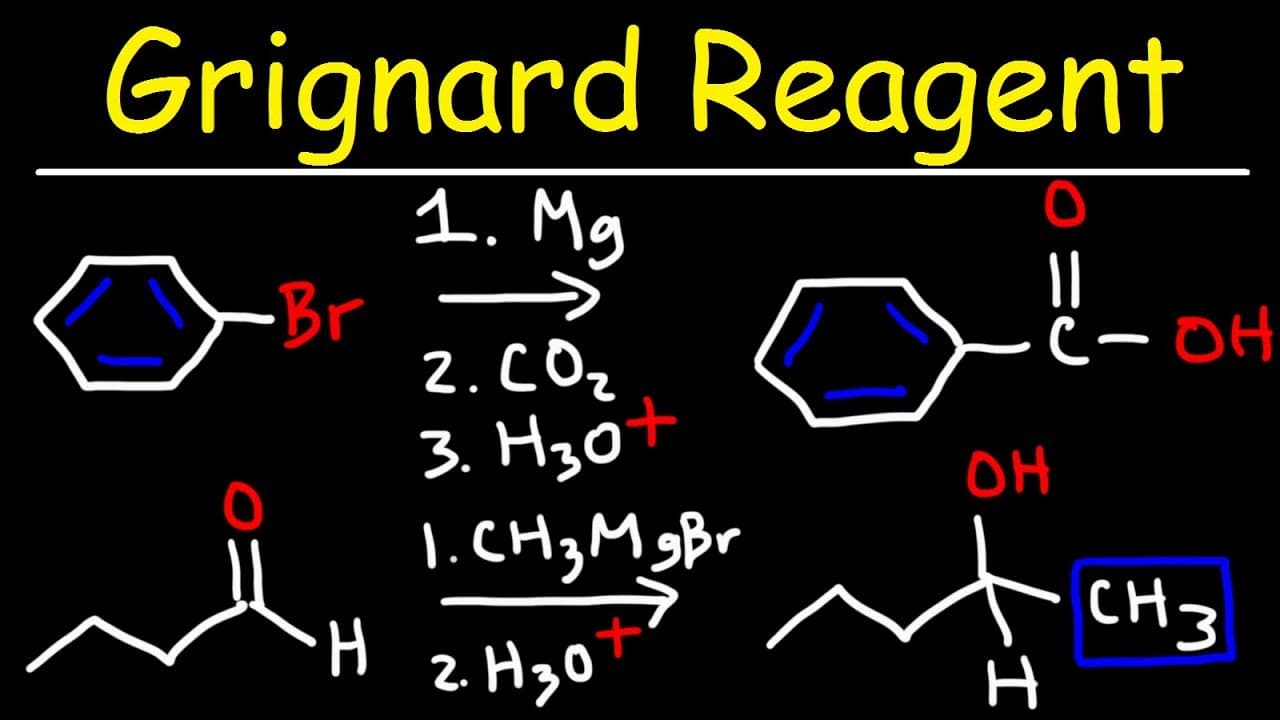
The Grignard reagent is formed by reacting alkyl halides with magnesium, resulting in a nucleophilic carbon that can attack carbonyl compounds. This reaction leads to the formation of alcohols, with aldehydes producing secondary alcohols and ketones resulting in tertiary alcohols. Grignard reagents can also react with esters and acid chlorides, adding two alkyl groups in those cases.
Transcript
in this video we're gonna focus on reactions associated with the grignard reagent so let's talk about how to make it let's say if we have one bromo butane and if we react it with magnesium metal magnesium will insert itself between the carbon and bromine atoms given you a grignard reagent now what you need to know about the grignard reagent is the ... Read More
Key Insights
- 💁 Grignard reagents are formed by reacting alkyl halides with magnesium.
- 🥺 The nucleophilic carbon in a Grignard reagent can attack carbonyl compounds, leading to the formation of alcohols.
- 💁 The type of alcohol formed depends on the carbonyl compound, with ketones giving tertiary alcohols and aldehydes giving secondary alcohols.
- 👥 Grignard reagents can also react with esters and acid chlorides, adding two alkyl groups.
- 👥 The reagent needed to convert an aldehyde into a secondary alcohol can be determined by adding the Grignard reagent to the carbon attached to the carbonyl group.
- 🇪🇭 Grignard reagents react with acid chlorides in a similar mechanism as with esters.
Install to Summarize YouTube Videos and Get Transcripts
Explore YouTube Video Summarizer or Get YouTube Transcript Extractor
Summary & Key Takeaways
-
Grignard reagents are formed by reacting alkyl halides with magnesium, and the resulting carbon attached to magnesium is nucleophilic.
-
When reacting a carbonyl compound with a Grignard reagent, the nucleophilic carbon attacks the carbonyl carbon, leading to the formation of alcohols.
-
The type of alcohol formed depends on the carbonyl compound used, with ketones resulting in tertiary alcohols and aldehydes resulting in secondary alcohols.
-
Grignard reagents can also react with acid chlorides and esters, resulting in the addition of two alkyl groups.
Read in Other Languages (beta)
Share This Summary 📚
Summarize YouTube Videos and Get Video Transcripts with 1-Click
Try YouTube Summary with ChatGPT & Claude or YouTube Transcript Generator
Explore More Summaries from The Organic Chemistry Tutor 📚


Summarize YouTube Videos and Get Video Transcripts with 1-Click
Try YouTube Summary with ChatGPT & Claude or YouTube Transcript Generator