Architect Breaks Down NYC Subway Stations (Oldest & Newest) | Architectural Digest
TL;DR
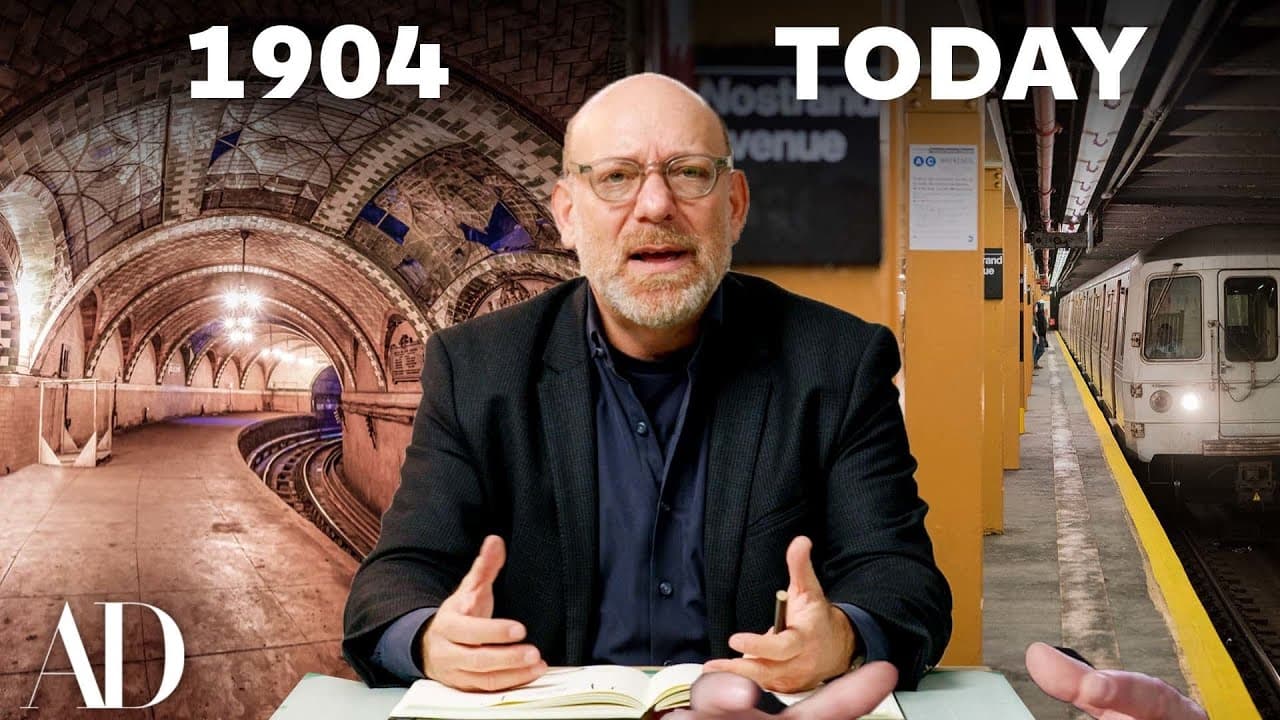
This video explores the architectural details of the oldest and newest subway stations in New York City and highlights the unique features and design elements of each.
Transcript
the New York City subway it's crowded it's dirty it's hot and it's one of the most dynamic and exciting places in the world hi I'm Michael weitzner and I've been an architect in New York City for over 35 years and I've been riding the subway for over 40 years today we're going to look at the architectural details in the oldest and newest subway sta... Read More
Key Insights
- 🚉 The City Hall subway station was a showpiece with grand vaults and unique design elements like skylights and brass chandeliers.
- 🚉 Typical IRT subway stations are simple and functional, designed for efficient operation.
- 🤗 The Second Avenue subway stations are modern and bright, with unique features like a platform in the middle and open, tunneled spaces.
- 🥺 The New York City subway system was prompted by the Great Blizzard of 1888, which paralyzed existing transportation systems and led to the need for an underground subway.
- 🍁 The New York City subway map has evolved over time, incorporating multiple subway companies and expanding to become a vast network.
- 🫥 Subway entrances in the early days had an Art Nouveau design, while newer entrances like the Second Avenue line feature beautiful glass canopies.
- 🏃 Subway tile, especially rectangular subway tile in a running bond pattern, has become iconic in New York City subway stations and remains a popular choice.
Install to Summarize YouTube Videos and Get Transcripts
Explore YouTube Video Summarizer or Get YouTube Transcript Extractor
Summary & Key Takeaways
-
The City Hall subway station, one of the oldest in New York, features grand vaults with beautiful Roman arches made of Guastavino tile. It also had skylights and brass chandeliers.
-
Typical IRT subway stations are simple and functional, built using a method called "cut and cover" with columns, walls, and tracks laid down in a trench in the middle of the street.
-
The Second Avenue subway stations, like the 96th Street station, are tunneled and self-supporting with no columns. They have a platform in the middle, tracks at the edge, and a mezzanine level.
Read in Other Languages (beta)
Share This Summary 📚
Summarize YouTube Videos and Get Video Transcripts with 1-Click
Try YouTube Summary with ChatGPT & Claude or YouTube Transcript Generator
Explore More Summaries from Architectural Digest 📚





Summarize YouTube Videos and Get Video Transcripts with 1-Click
Try YouTube Summary with ChatGPT & Claude or YouTube Transcript Generator