Angina pectoris (stable, unstable, prinzmetal, vasospastic) - symptoms & pathology
TL;DR
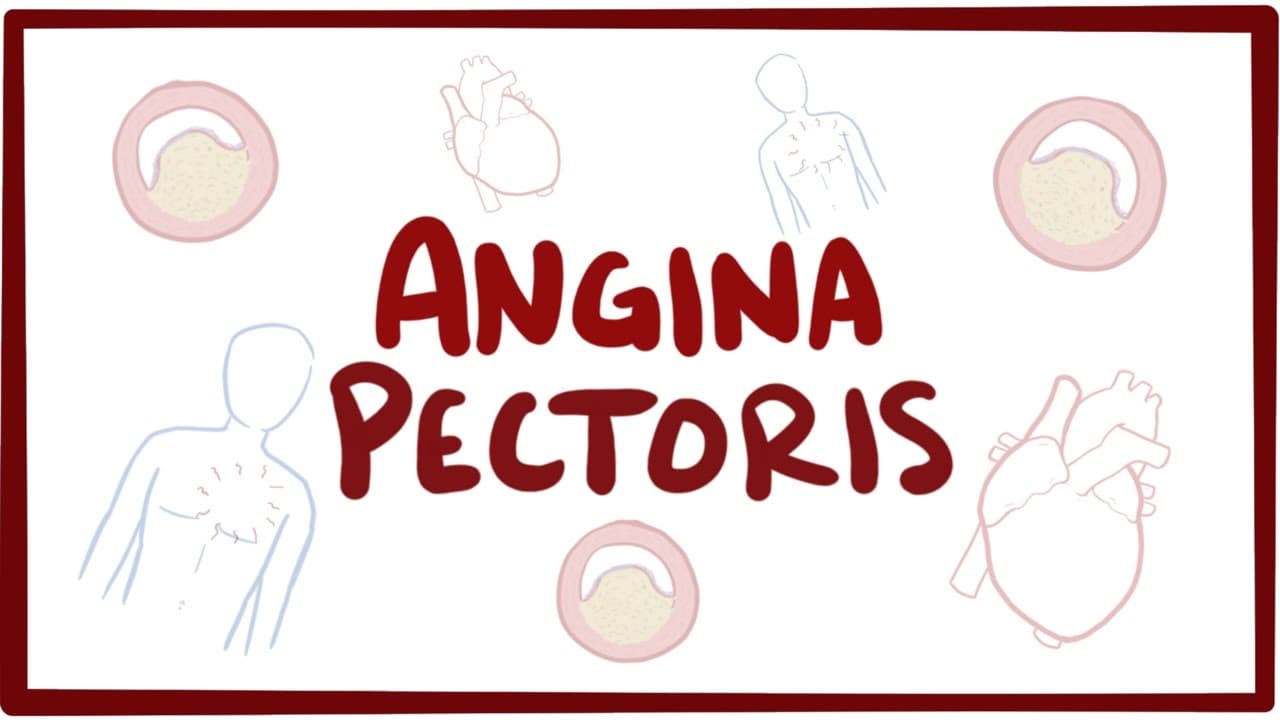
Angina pectoris, or chest pain, is caused by reduced blood flow to the heart muscle. There are three types: stable angina, unstable angina, and vasospastic angina.
Transcript
Angina comes from the latin angere, which means to strangle, and pectoris comes from pectus, meaning chest—so angina pectoris loosely translates to “strangling of the chest”, which actually makes a lot of sense, because angina pectoris is caused by reduced blood flow which causes ischemia to the heart muscle, or lack of oxygen to the heart, almost ... Read More
Key Insights
- 🌰 The term "angina pectoris" translates to "strangling of the chest," reflecting the chest pain experienced due to reduced blood flow and oxygen to the heart.
- 😣 Stable angina occurs during periods of exertion or stress, while unstable angina can happen both during these times and at rest.
- 🥰 In unstable angina, there is a higher risk of progressing to a heart attack, as blood flow becomes severely restricted.
- 🥰 Vasospastic angina involves extreme constriction of the coronary arteries, leading to transmural ischemia affecting all layers of the heart wall.
- 🤩 Electrocardiograms (ECGs) can help identify different types of angina, with ST-segment depression in stable and unstable angina, and ST-segment elevation in vasospastic angina.
- 😌 Rest usually relieves stable angina, but unstable and vasospastic angina can occur at any time.
Install to Summarize YouTube Videos and Get Transcripts
Explore YouTube Video Summarizer or Get YouTube Transcript Extractor
Summary & Key Takeaways
-
Angina pectoris, also known as chest pain, occurs when there is reduced blood flow and lack of oxygen to the heart muscle.
-
Stable angina is the most common type and is caused by atherosclerosis or heart conditions that increase oxygen requirements.
-
Unstable angina occurs during exercise or at rest and is caused by rupture of atherosclerotic plaque, posing a higher risk for heart attack.
-
Vasospastic angina involves coronary artery vasospasms and can happen at any time, even at rest.
Read in Other Languages (beta)
Share This Summary 📚
Summarize YouTube Videos and Get Video Transcripts with 1-Click
Try YouTube Summary with ChatGPT & Claude or YouTube Transcript Generator
Explore More Summaries from Osmosis from Elsevier 📚


Summarize YouTube Videos and Get Video Transcripts with 1-Click
Try YouTube Summary with ChatGPT & Claude or YouTube Transcript Generator