Recommended byNaval Ravikant
About This Book
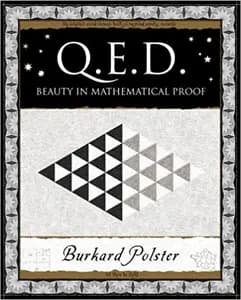
Q.E.D., by Burkard Polster, is a captivating exploration of the fascinating world of mathematical proofs. In this enlightening book, Polster takes readers on a journey through different mathematical proof techniques, revealing the beauty and power of these logical constructions.
Through clear and concise explanations, Polster unveils the secrets behind the art of mathematical proof, showcasing famous and lesser-known proofs from various branches of mathematics. From geometry to number theory, the author presents a diverse range of proofs, each accompanied by insightful commentary that highlights the brilliance of their construction.
With a focus on elegance and simplicity, Polster introduces readers to the concept of "proof without words" – a visual approach to demonstrating the truth of a mathematical statement. By combining visual diagrams, patterns, and logical reasoning, he demonstrates how these ingenious arguments can be both concise and impactful.
Moreover, Polster delves into the history of mathematical proofs, offering engaging anecdotes and biographical sketches of renowned mathematicians who have paved the way for contemporary proof techniques. Drawing on these historical references, he showcases the evolution of mathematical proofs, from ancient times to the present day.
Q.E.D. is not just a compendium of fascinating proofs and anecdotes; it also serves as an accessible introduction to the art and beauty of mathematics. With its clear explanations and engaging writing style, this book is sure to captivate both mathematics enthusiasts and those new to the subject, offering a deeper understanding and appreciation for the power of mathematical reasoning.
In summary, Q.E.D. unravels the mysteries behind mathematical proofs, presenting a collection of diverse and captivating demonstrations. Polster's insightful commentary and historical context add depth and richness to this exploration of the elegance and power inherent in mathematical reasoning.
Through clear and concise explanations, Polster unveils the secrets behind the art of mathematical proof, showcasing famous and lesser-known proofs from various branches of mathematics. From geometry to number theory, the author presents a diverse range of proofs, each accompanied by insightful commentary that highlights the brilliance of their construction.
With a focus on elegance and simplicity, Polster introduces readers to the concept of "proof without words" – a visual approach to demonstrating the truth of a mathematical statement. By combining visual diagrams, patterns, and logical reasoning, he demonstrates how these ingenious arguments can be both concise and impactful.
Moreover, Polster delves into the history of mathematical proofs, offering engaging anecdotes and biographical sketches of renowned mathematicians who have paved the way for contemporary proof techniques. Drawing on these historical references, he showcases the evolution of mathematical proofs, from ancient times to the present day.
Q.E.D. is not just a compendium of fascinating proofs and anecdotes; it also serves as an accessible introduction to the art and beauty of mathematics. With its clear explanations and engaging writing style, this book is sure to captivate both mathematics enthusiasts and those new to the subject, offering a deeper understanding and appreciation for the power of mathematical reasoning.
In summary, Q.E.D. unravels the mysteries behind mathematical proofs, presenting a collection of diverse and captivating demonstrations. Polster's insightful commentary and historical context add depth and richness to this exploration of the elegance and power inherent in mathematical reasoning.
What People Are Saying
More Praise
Naval Ravikant mentioned reading 'Q.E.D.' on Twitter.
Revisit Your Highlights, Deepen Your Understanding
Import your Kindle highlights to review, organize, and share the ideas that matter most to you.
Get the free browser extension
Share This Book
More Books in Math
View More
Factfulness
Hans Rosling
Fooled By Randomness
Nassim Nicholas Taleb
Gödel, Escher, Bach
Douglas R. Hofstadter
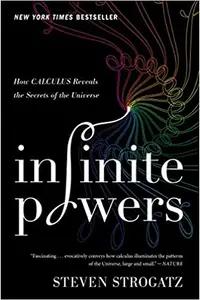
Infinite Powers
Steven Strogatz
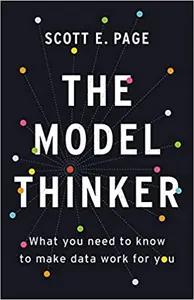
The Model Thinker
Scott Page
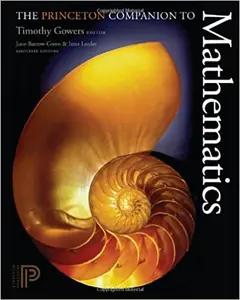
The Princeton Companion to Mathematics
Timothy Gowers
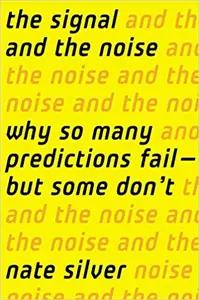
The Signal and the Noise
Nate Silver

A Mathematician's Apology
G. H. Hardy
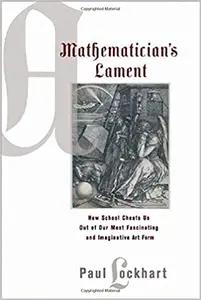
A Mathematician's Lament
Paul Lockhart
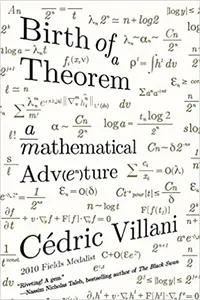
Birth of a Theorem
Cédric Villani
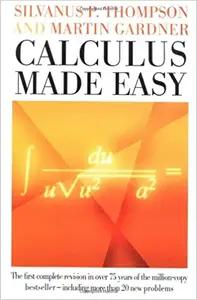
Calculus Made Easy
Silvanus P. Thompson
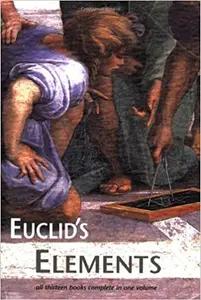
Euclid's Elements
Euclid
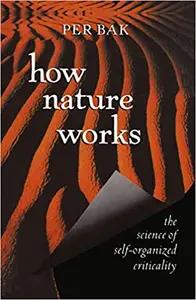
How Nature Works
Per Bak
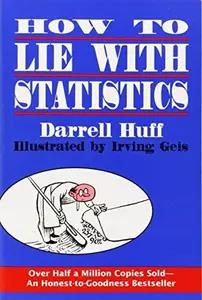
How To Lie With Statistics
Darrell Huff
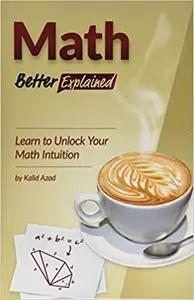
Math, Better Explained
Kalid Azad
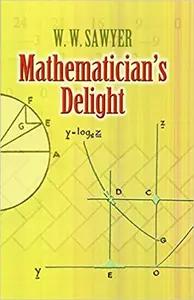
Mathematician's Delight
W. Sawyer
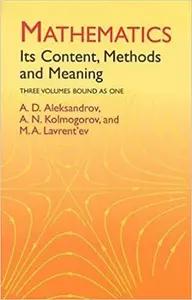
Mathematics
A.D. Aleksandrov
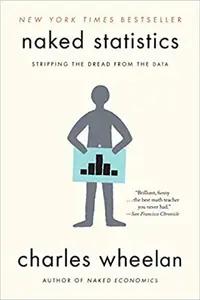
Naked Statistics
Charles Wheelan
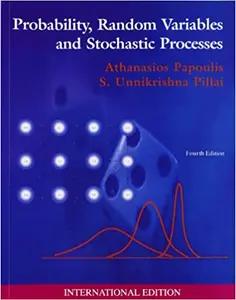
Probability, Random Variables and Stochastic Processes
Athanasios Papoulis
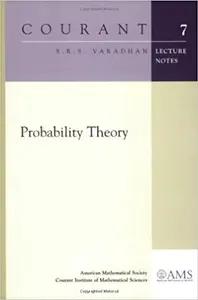
Probability Theory
S.R.S. Varadhan
Statistical Consequences of Fat Tails
Nassim Taleb
Statistical Models
David A. Freedman
The Blank Swan
Elie Ayache
The Compleat Strategyst
J. D. Williams
The Elements of Statistical Learning
Trevor Hastie

The Mathematics of Politics
E. Arthur Robinson

The Perfect Bet
Adam Kucharski
The Principia
Isaac Newton
The Science of Conjecture
James Franklin
Popular Books Recommended by Great Minds 📚
Sapiens
Yuval Noah Harari
The Hard Thing About Hard Things
Ben Horowitz
Zero to One
Peter Thiel
High Output Management
Andrew Grove
Principles
Ray Dalio

Shoe Dog
Phil Knight
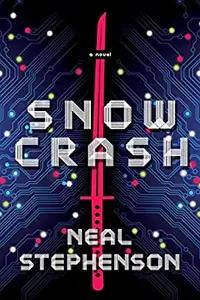
Snow Crash
Neal Stephenson
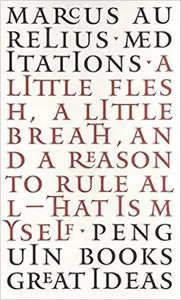
Meditations
Marcus Aurelius
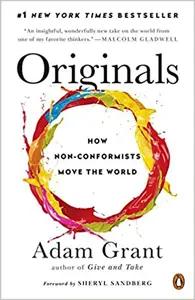
Originals
Adam Grant
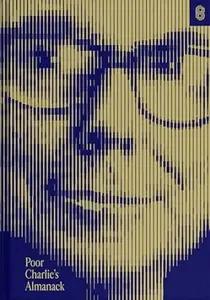
Poor Charlie's Almanack
Charlie Munger

The Innovators Dilemma
Clayton Christensen
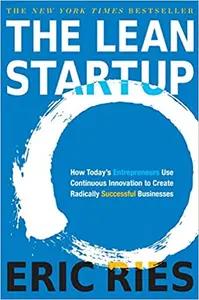
The Lean Startup
Eric Reis
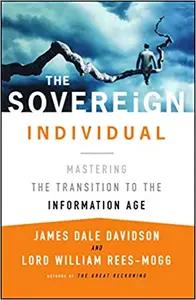
The Sovereign Individual
James Dale Davidson & William Rees-Mogg
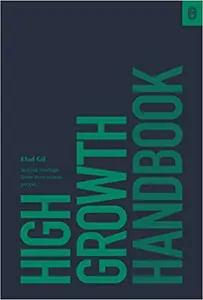
High Growth Handbook
Elad Gil
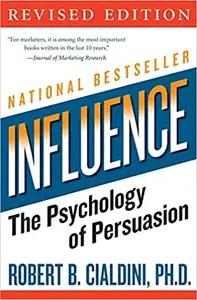
Influence
Robert Cialdini
Principles for Dealing With The Changing World Order
Ray Dalio
Rework
Jason Fried
Surely You're Joking Mr. Feynman
Richard Feynman

The Ride of a Lifetime
Bob Iger
The Three Body Problem
Cixin Liu
Thinking, Fast and Slow
Daniel Kahneman

7 Powers
Hamilton Helmer
Antifragile
Nassim Nicholas Taleb
Atlas Shrugged
Ayn Rand
Blitzscaling
Reid Hoffman

Dune
Frank Herbert

Foundation
Isaac Asimov
Good To Great
Jim Collins
Hopping Over The Rabbit Hole
Anthony Scaramucci
Man's Search for Meaning
Viktor Frankl