The Record of a Woman Who Overcame Triple Disabilities and Changed the World | Helen Keller Autobiography Review

Feb 23, 2026
7 min read
10 views
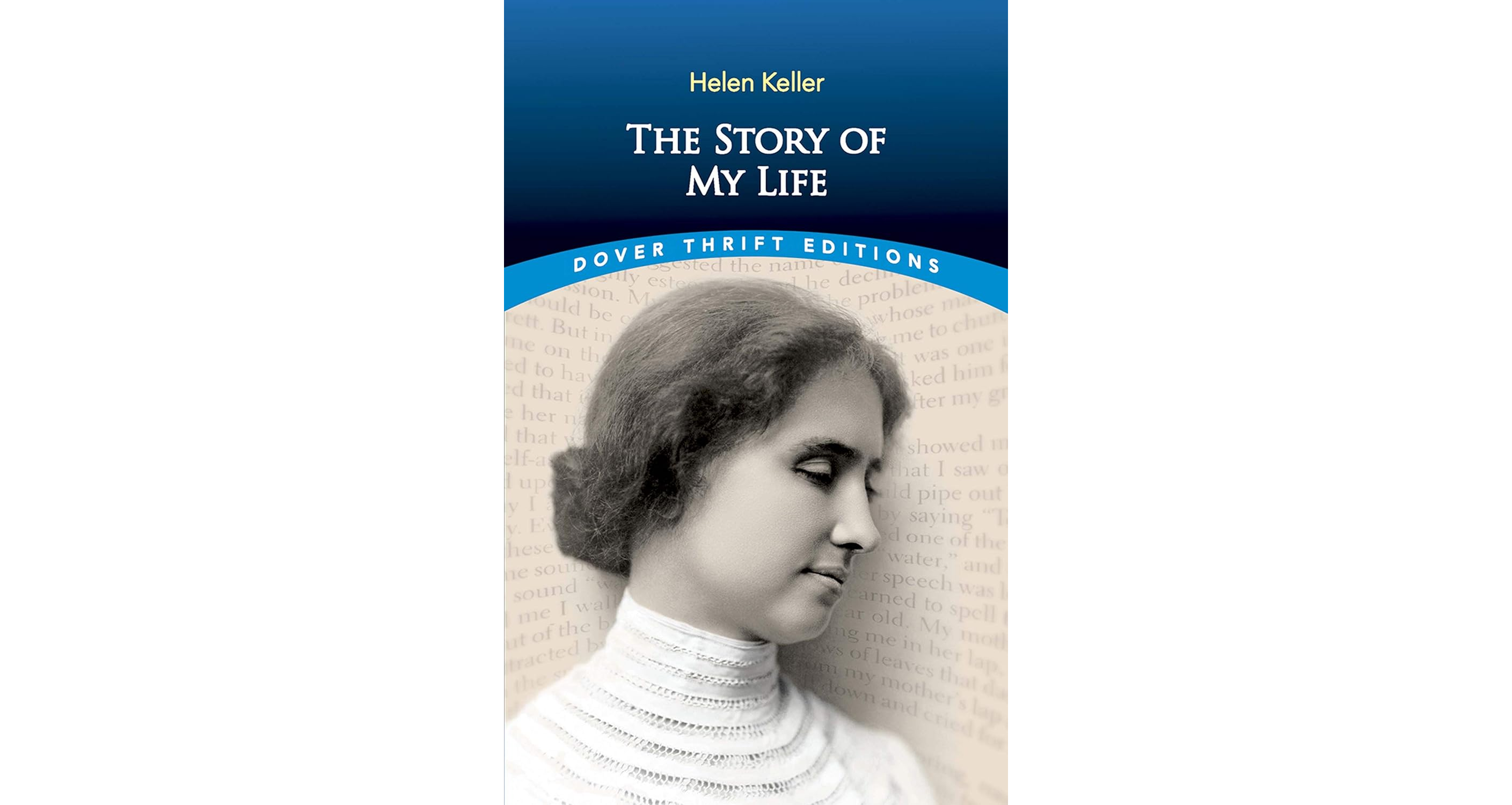
📖 The Story of My Life by Helen Keller Amazon:
Story of My Life (Dover Thrift Editions: Biography)
Helen Keller — the "Miracle Worker" story we all think we know. At 19 months old, she lost both sight and hearing, and with them, the ability to speak. Then came Anne Sullivan, and everything changed. Keller went on to learn five languages and graduate from Radcliffe College, the women's college of Harvard.
This book covers her life up to around age 22. That means it doesn't fully answer the question of "what did Helen Keller actually accomplish?" — and that's worth noting. But the process of watching her discover that words exist and then seeing the world crack open from that single realization is extraordinary. It forces you to confront things that are so obvious to those of us with all five senses that we never stop to think about them.
📖 Who should read this book:
Anyone curious about how language and sensory experience shape human cognition
Anyone who wants to witness what relentless learning looks like under impossible circumstances
Anyone interested in what Anne Sullivan's devotion reveals about the nature of education
📕 Get it on Amazon:
Story of My Life (Dover Thrift Editions: Biography)
My Thoughts
What struck me first was how Keller writes as though she can see. You keep forgetting she's blind. She describes scenery, theater, nature — and you have to remind yourself that none of this came through her eyes. She mentions touching people's lips to follow along with plays. I honestly couldn't picture how she enjoyed them. Her sensitivity and imagination must have operated on an entirely different level from most people.
The most powerful episode in the book is when she discovers that things have names. Before that moment, she had been smashing dolls without any feeling. But once she learned the word "doll" — once she understood that this object had a name — she felt regret and sadness for the first time. Language didn't just label the world for her; it unlocked emotions. It's not quite the Japanese concept of kotodama (the spiritual power of words), but the force that naming things carries is far greater than we usually acknowledge.
Anne Sullivan's dedication is staggering. She spent 50 years as Keller's teacher, companion, and friend. I sometimes wonder if Sullivan was the more remarkable person of the two. Sullivan herself had been nearly blind and regained her sight through surgery. I'd love to read the story from Sullivan's perspective — what did she see in Helen Keller as a person?
I was moved by the story of Alexander Graham Bell. He invented the telephone not as a pure engineering exercise, but out of love for people who couldn't hear — his wife and his mother were both hearing-impaired. It was an invention born from personal necessity. This side story alone made the book worth reading.
Keller struggled with math, but her verbal sensitivity was extraordinary. There's even an incident where she was accused of plagiarism because she had unconsciously absorbed and reproduced a story she'd been told. That's how deeply words imprinted themselves on her.
Compared to other biographies I've read — Marie Curie, the Wright Brothers — it's less clear what Helen Keller accomplished in concrete terms. That's partly because the book ends at 22. I wish it had covered her later years of social activism and advocacy for people with disabilities.
Helen Keller lived to nearly 88. Given that her illness at 19 months was severe enough to take her sight and hearing, that longevity is remarkable.
Book Club Discussion Highlights
What Does It Mean to Lose Your Senses?
Being unable to see or hear is harder to imagine than you think. Keller at least had 19 months of sensory experience before her illness — faint traces of sight and sound. But near the end of the book, there's a boy who was born without either sense. No memory of sound. No concept of vision. How does someone like that learn language? Do they dream? If you've never experienced images, what does a dream even look like?
Touch remains, so you can feel warmth and cold. But when an earthquake hits or a wave pulls you under — you have no idea what's happening. Does panic feel different when you can't perceive the source of danger?
One of our members brought up a Japanese TV drama with a fascinating premise: a man trades his five senses, one by one, to save the person he loves. Touch, smell, and taste are already gone; sight and hearing are next. When all five senses are gone, what's the difference between that person and someone in a vegetative state? The body can move, but without touch, you don't even know what position you're in. A caretaker could be right there, touching you, talking to you — and you'd never know.
Which Sense Would You Give Up?
A strange question, but it sparked a lively debate. Someone said smell — but losing smell degrades taste too. (Try eating while pinching your nose; you can barely tell what you're eating.) Sight felt like the most essential, followed by hearing. Touch covers your entire body, so losing it would be devastating — you wouldn't even know if you were drowning.
Language Creates Emotion
This was the discussion that stayed with all of us. Keller felt nothing when she smashed dolls. The moment she learned the word "doll," regret appeared. Language wasn't just a tool for communication — it was the trigger for emotion itself.
Without names, attachment to objects or people is hard to form. The act of recognizing something through a word might be the foundation of how we feel. For those of us with full senses, this is so automatic we never notice it. But through Keller's experience, you can see how each word was amplified and etched into her consciousness like nothing we typically experience.
Someone raised the question: can a person who has never seen understand what a graph or pie chart represents? How does spatial reasoning work without vision? You can feel shapes by touch, but can you reconstruct them as three-dimensional models in your mind?
Anne Sullivan's Devotion
Every member of our group commented on Sullivan. Fifty years as teacher and friend. She was essentially a second mother. Sullivan herself was the daughter of Irish immigrants and had her own visual impairment. What drove her to dedicate her life to another person to that extent? "The school was nearby" doesn't explain it.
Sullivan married one of Keller's associates. We all agreed we'd read a book written from Sullivan's point of view in a heartbeat.
Keller's own love life came up too. She fell in love with Peter Fagan, a journalist who served as her secretary. They got engaged — but her family, especially her mother, opposed it violently. Her mother reportedly pointed a rifle at Fagan and told him to never come near her daughter again or she'd shoot. Keller never married after that.
The Web of Historical Figures
Katharine Graham, Marie Curie, the Wright Brothers, Truman, Alexander Graham Bell. Every biography from this era seems to connect to the others in unexpected ways. Bell's invention of the telephone, born from his wife's and mother's hearing loss, was the standout connection in this book.
On the subject of women in public life: Keller and Katharine Graham were among the most visible American women of overlapping eras. Different fields, but the pool of prominent women was small enough that they could have crossed paths. This book ends at 22, though, so we don't get to see those later connections.
What Did Helen Keller Leave Behind?
This was the question everyone shared. She didn't discover radium like Curie. She didn't build a company. The answer is: her life itself. She was the first deafblind person to earn a degree from Harvard. She influenced disability legislation in Japan. She received the Presidential Medal of Freedom. Her legacy is the lived proof that the human spirit can transcend almost any limitation.
📕 Get it on Amazon:
Story of My Life (Dover Thrift Editions: Biography)
Quotes
"I think knowledge is happiness, for those who do not possess knowledge live in a cold, dark world. As long as we feel and think, we are free."
"What is visible is fleeting; what is invisible is eternal."
"There is only one universal religion — the religion of love."
The quotes in this article were exported using Glasp. If you're interested in exporting your Kindle highlights, check out this guide:
How to Export Kindle Highlights — Notion, Obsidian, AI Integration & More
If You Liked This Book
▶ Another Way of Seeing the World
▶ Stories of the Founders