Hollywood's Screenwriting Secrets Apply to Products, Marketing, and Everything Else | "Writing for Emotional Impact" Review

Feb 24, 2026
7 min read
8 views
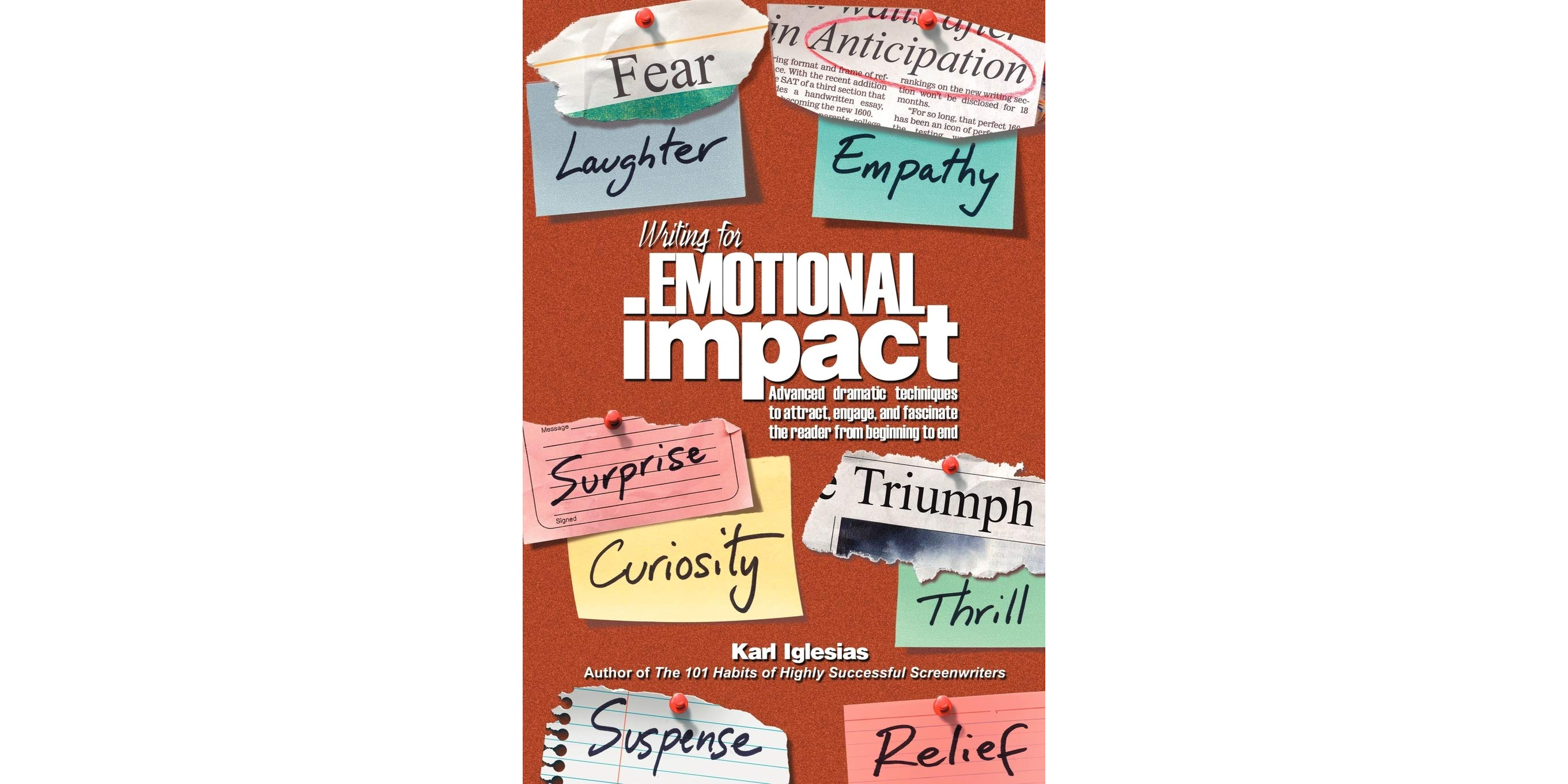
This is technically a screenwriting book. But reading it, I realized nearly every principle applies to product development, marketing, and audience engagement. No conflict means no drama. Concept is everything. Emotion drives attention. It all connects — how you capture someone's attention, hold it, and make them feel something. That's the game, whether you're writing a screenplay, building a product, or crafting a pitch deck.
I was surprised by how many codified techniques exist for something that feels like it should be intuitive. Once you break down hit movies into their component parts — story structure, character design, dialogue — you start seeing the same patterns everywhere. Some of the film references were unfamiliar, but the underlying frameworks are universally applicable.
📖 Who should read this book:
Anyone interested in how story structure and narrative technique work at a mechanical level
Anyone who wants to see the connections between storytelling, product design, and marketing
Anyone who wants to understand why certain movies, shows, and products become hits
📕 Get it on Amazon:
My Thoughts
Without conflict, there is no drama. It sounds obvious, but think about how this applies beyond film. "A person was born, lived peacefully, and died." Where's the story? It's the tension, the struggle, the unresolved friction in everyday life that makes anything worth watching — or worth building.
The difference between screenwriting and novel writing was insightful too. Novels can spend pages on description with barely any plot advancement. Screenplays move relentlessly forward. Every scene must push the story. That discipline has direct parallels to product design — every feature should move the user toward their goal.
The emphasis on concept reinforced something I already believe but needed to hear again. Like the Double Diamond framework in UX design, you diverge and converge, diverge and converge. A story's skeleton can be written in three lines: "Lost something. Fought to get it back. Resolved." Then you flesh it out into a two-hour film. The audience spends two hours absorbing it, then reflects on what it all meant afterward. It's like differentiation and integration — the filmmaker breaks the idea into granular scenes, and the viewer reassembles the meaning.
The principle of "Show, don't tell" runs through the entire second half of the book. It reminded me of something Takeshi Kitano said about filmmaking: the art is in what you remove. In Outrage, a gangster fights in one scene, and the next scene cuts straight to a funeral. No death scene needed — you understand what happened. The restraint is what makes it powerful. Kitano understood subtraction; Matsumoto Hitoshi, despite being a comedy genius, never grasped this for film, and his movies struggled commercially.
There's a counterpoint worth noting: with TikTok and Shorts conditioning audiences for instant comprehension, modern films increasingly explain everything through dialogue. The "show, don't tell" principle may be losing ground as audiences lose the patience — or ability — to read between the lines.
High concept matters enormously. What makes your idea different? Why is it compelling? Not "who's starring in it." Nintendo's Hiroshi Yamauchi had a famous test: if someone described a new game as "a little bit better than the competition," it was already dead. "A little bit better" isn't a concept. It's a commodity.
One important distinction between storytelling and product building: movies and shows have a lifecycle — they peak and fade. Products like Google can compound and grow indefinitely. Sustaining relevance means either continuously shipping high-concept features, or building something so fundamentally valuable that it becomes evergreen. That tension between novelty and permanence is one of the hardest problems in product strategy.
Book Club Discussion Highlights
Character Deficiency as the Engine of Story
A member of our group who works as a manga editor made a powerful observation: in manga, character design is everything. A movie has a captive audience once someone sits down in the theater. Manga has to hook readers in a free preview. The opening pages are life or death.
Human suffering falls into recognizable categories. The suffering of simply being alive (poverty, bullying, harsh circumstances). The suffering of aging (declining strength, loss of freedom). The suffering of separation from loved ones — which breeds the desire for revenge. The suffering of wanting what you can't have (unfulfilled desires, dissatisfaction with the present).
The protagonists of hit manga almost always carry one of these forms of suffering. Demon Slayer opens with the protagonist's family being massacred in Chapter 1 — a textbook case of separation grief combined with the drive for vengeance. Give your protagonist a wound and an antagonist, and the story has a foundation. In manga, that initial character setup is arguably more important than anything else.
Why Did One Piece Become a Global Phenomenon?
Luffy is a seemingly perfect hero with no obvious wound. So why did One Piece explode?
Because the surrounding characters carry the emotional weight. Luffy solves their problems. Chopper's backstory, Nico Robin's desperation — those are the moments that move readers to tears. Luffy is the protagonist, but the supporting cast generates the emotional impact.
Luffy does have subtle contradictions that create intrigue: his Devil Fruit power (rubber) seems weak, yet he's incredibly strong. He dreams of the sea but can't swim. And a narrator character — Koby — exists to articulate Luffy's deficiencies for the audience. Luffy alone wouldn't sustain the series.
The worldbuilding is equally brilliant. By structuring the story as an island-hopping pirate adventure heading toward a final destination (the One Piece), Oda can reveal the world incrementally. If he'd dumped the entire world's lore upfront, readers would have bounced. Instead, each island introduces a new slice of the universe. It's the optimal structure for sustained curiosity.
Subtraction in Film and the Economics Behind It
Kitano's philosophy of "subtract, don't add" in filmmaking led to an interesting economic argument in our discussion. Every frame costs money and time. Like Elon Musk's approach at Tesla — "Do we actually need this part? Cutting it is faster, cheaper, and the product still works" — Kitano's minimalism may have originated not from pure artistic vision, but from practical constraints that happened to produce better art.
There's also the pacing problem: explaining everything through dialogue makes films bloated. Budget constraints and emotional restraint may converge at the same optimal point — which would mean that great filmmaking is partly an emergent property of resource limitations.
Miyazaki's One-Page Pitch
Someone brought up that Hayao Miyazaki writes his film pitches on a single page. Spirited Away was reportedly distilled to one sheet of paper: "This is the problem, this is the world, this is what the protagonist does." Radically different from Amazon's six-page memo culture.
Studio Ghibli's marketing approach came up too. For recent films, they released zero promotional content — the same strategy The First Slam Dunk used. No production committee, 100% self-funded, total creative control. The bet: word-of-mouth generates more impact than trailers. In an era where audiences watch trailers, theorize endlessly, and feel satisfied before seeing the actual film, showing nothing might be the superior strategy. But this only works if you have an overwhelmingly strong brand. For everyone else, silence just means invisibility.
We also discussed how cultural context shapes what stories resonate. The Terminator emerged from fears about artificial intelligence. The Martian rode a wave of public interest in space exploration. Sometimes films reflect the zeitgeist; sometimes they actively create it. That's the marketing dimension of storytelling.
Deficiency and Curiosity in Human Communication
The conversation took a philosophical turn. When we meet someone and ask "Why do you do what you do?" — isn't that the same structure as story? We're trying to find their missing piece, to connect the dots of their context. We want to understand the wound that drives them.
Startup pitches work the same way. Open with "I nearly died" and everyone leans in: "What happened?" A protagonist with a wound, fighting to overcome it — that structure powers stories, products, and pitches alike.
How do you capture attention? How do you manipulate curiosity? How do you create a sense of loss that generates tension? Screenwriting, marketing, and product development all converge on the same question: how do you make someone care?
Quotes
"A genre's defining entertainment characteristics can immediately signal what the project promises to deliver — a story that works even if scribbled on the back of a hand."
"Pit your character against opposition. Conflict clarifies what's at stake and drives the story toward its resolution."
"We are born loving drama."
📕 Get it on Amazon:
If You Liked This Book
▶ The creative mind behind hit products
▶ How habits drive engagement
💡 Save and export your book highlights with Glasp!
The quotes in this article were exported using Glasp. If you're interested in exporting your Kindle highlights, check out this guide:
How to Export Kindle Highlights — Notion, Obsidian, AI Integration & More
📚 See what other readers highlighted in this book: