When Humans Are Stripped to Their Core | Viktor Frankl's "Man's Search for Meaning"

Feb 24, 2026
7 min read
12 views
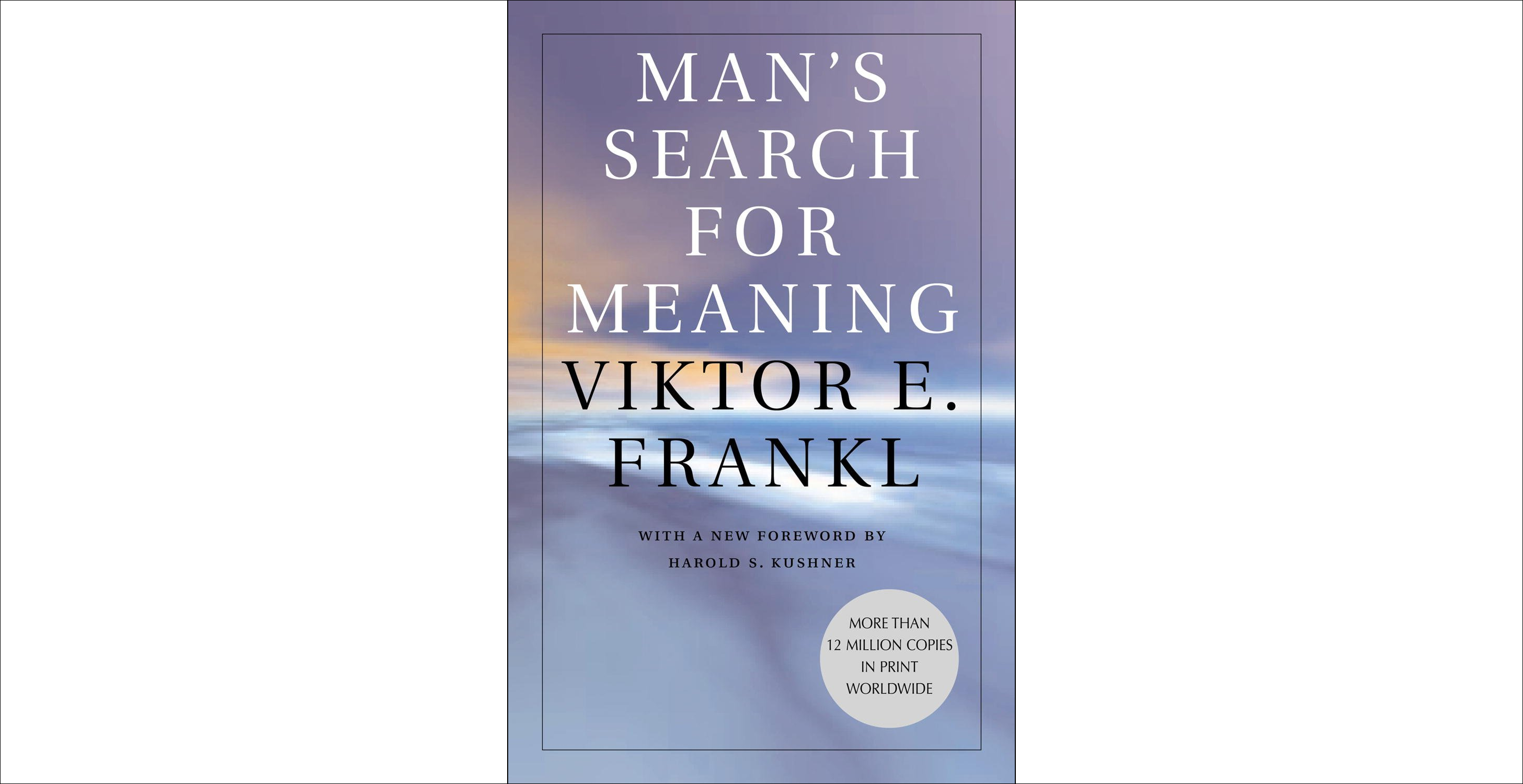
A psychiatrist survives a Nazi concentration camp and records the experience — not as a memoir, but through the lens of a psychologist observing human behavior under the most extreme conditions imaginable. "The question is not what we expect from life, but what life expects from us." This reversal of perspective, arrived at in the depths of Auschwitz, still has the power to reshape how you think about your own existence, 80 years later.
📖 Who should read this book:
Anyone willing to confront the question "What am I living for?"
Anyone fascinated by human psychology and behavior under extreme pressure
Anyone who wants philosophy grounded in lived experience, not thought experiments
📕 Get it on Amazon:
Reflections — What Emerged from Our Book Club Discussion
Philosophy Written in Blood, Not Ink
The first thing I felt reading this book was: you can't argue with someone who's been there.
I've read plenty of philosophy. Most of it is written as theory — thought experiments directed at a general audience. Frankl is different. His conclusions were forged inside a concentration camp, through his own body and mind. Every sentence carries that weight.
Of all the philosophy I read this year, this was the book that hit hardest. Not because of its arguments, but because its values were earned through reality. That distinction made all the difference for me.
The Optimists Died First
The most shocking revelation in this book: optimistic people were often the first to die.
Intuitively, you'd expect positive thinkers to survive longer. The reality was the opposite. Those who clung to specific expectations — "We'll be freed by Christmas," "The war will end next month" — collapsed mentally when those dates passed without liberation.
As Frankl writes, those who lost faith in the future were doomed. But the lesson isn't "don't have hope." It's that hope must not depend on specific dates or conditions. Expect the best without being crushed when the timeline shifts. This balance between hope and detachment isn't just survival advice for concentration camps — it applies directly to everyday life.
Good and Evil Don't Follow Titles
The line from this book that stayed with everyone in our group: "There are only two races of men — the decent and the indecent."
Among the Nazi guards, there was a camp commandant who spent his own money buying medicine for prisoners. Among the prisoners, there were those who betrayed their fellow inmates. Good and evil don't split neatly along the line of "Nazi versus prisoner." Every group contains both kinds of people.
This isn't limited to extreme situations. In ordinary life, a person's character shows regardless of their job title or social position. People often say that hard times reveal someone's true nature. Frankl proved that observation in the most brutal environment in human history.
Environment vs. Inner Strength — Can You Really Overcome Anything?
One of the book's core messages is that environment isn't everything. But our book club was honestly divided on this.
Frankl writes that "sensitive people who were used to a rich intellectual life may have suffered much pain, but the damage to their inner selves was less." Inner richness, he argues, could overcome even the harshest external conditions. And for some, that was clearly true.
But many people who couldn't adapt simply died. There's a survivorship bias problem here. Frankl is writing from the perspective of someone who made it. Not everyone could.
Members of our group pushed back: "Environment matters. I don't assume I'd be one of the survivors." "I moved to San Francisco specifically because I believe environment shapes outcomes."
Our conclusion: "Environment isn't everything" is a factual record that some people overcame terrible conditions through inner strength. It's not a claim that environment doesn't matter. Frankl's intent, I believe, was to offer courage — even in the worst possible circumstances, it's still possible to find meaning in how you respond.
The Reversal of Life's Meaning
This is the book's most famous idea, and the one that influenced me the most.
"It did not really matter what we expected from life, but rather what life expected from us."
A chess analogy makes this clear. If someone asks "What's the strongest possible move?" — you can't answer without seeing the board. Frankl says the same is true of life's meaning. Asking "What is the meaning of life?" in the abstract is the wrong question. Meaning can only be found in the concrete — in the specific situation you face right now, answered through action.
This aligns remarkably with Adlerian psychology: action-based, not goal-based. Don't reverse-engineer from a future destination. Respond to what's in front of you, right now.
What makes Frankl's version so compelling is that he didn't arrive at this conclusion by reading Adler. He reached it independently, through lived experience in a concentration camp. When theory and experience converge from separate paths, the resulting insight is exponentially more convincing.
You Can't Survive for Yourself Alone
Ultimately, if you're living only for yourself, then your own death becomes acceptable. What the survivors had in common was a sense that their life mattered to someone else.
Frankl kept himself going by holding the image of his wife in his mind. In reality, she had already been killed — but that didn't matter. The act of carrying a loved one's presence inside yourself was, by itself, enough to sustain the will to live.
There's a cruel dimension to this, though. Some prisoners survived by believing they'd see their families again, only to discover after liberation that everyone had been murdered. Frankl himself lost his wife and child. Belief generates life force. But when that belief is betrayed, the resulting despair is, as Frankl himself admitted, "not easy to overcome."
Frankl's answer to this contradiction: the deeper the suffering, the greater the potential for meaning. Don't deny suffering — accept it as part of life itself. That's the core of his logotherapy (therapy through meaning).
The Books That Don't Help Immediately Are the Ones You'll Need Most
The comment that stayed with me longest came at the very end of our discussion.
"Not every book needs to be immediately useful. A book like this — it's enough to remember that this person existed and what they went through. When you're truly struggling, you'll recall what was written here. That alone changes everything."
Business books that are useful today tend to become irrelevant in two or three years. But a book like Man's Search for Meaning will become necessary at some point in your life. Keeping it stored in your mind for that moment — maybe that's what real education is.
Quotes
"An abnormal reaction to an abnormal situation is normal behavior."
"Love is the ultimate and the highest goal to which man can aspire."
"If there is a meaning in life at all, then there must be a meaning in suffering. Suffering is an ineradicable part of life, even as fate and death. Without suffering and death, human life cannot be complete."
"It did not really matter what we expected from life, but rather what life expected from us."
"Life ultimately means taking the responsibility to find the right answer to its problems and to fulfill the tasks which it constantly sets for each individual."
"He who has a why to live for can bear almost any how."
"There is nothing in the world that would so effectively help one to survive even the worst conditions as the knowledge that there is a meaning in one's life."
"There are only two races of men in this world — the decent and the indecent."
"No one can take from you what you have experienced."
"Emotion, which is suffering, ceases to be suffering as soon as we form a clear and precise picture of it."
📕 Get it on Amazon:
If You Liked This Book
▶ Another record of Nazi persecution
▶ Philosophy that asks what it means to live
▶ Facing death with resolve
💡 Save and export your book highlights with Glasp!
The quotes in this article were exported using Glasp. If you're interested in exporting your Kindle highlights, check out this guide:
How to Export Kindle Highlights — Notion, Obsidian, AI Integration & More
📚 See what other readers highlighted in this book: