The 13 Virtues Practiced by a Founding Father | A Review of Benjamin Franklin's Autobiography

Feb 25, 2026
6 min read
12 views
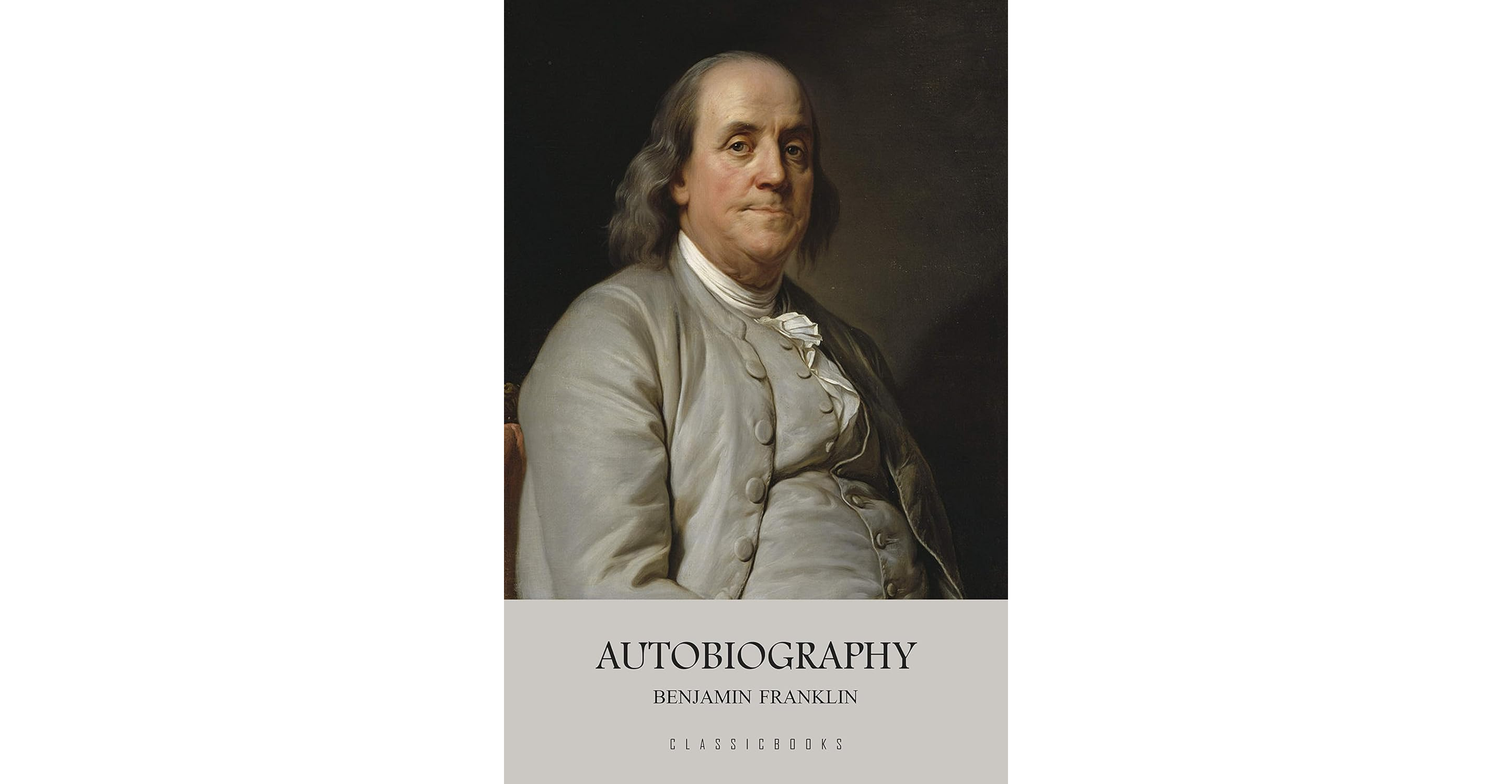
"If I could live my life over again, I would want to repeat the same life." This opening line hit me like a lightning bolt. Can anyone really say that? But as I read deeper into what Franklin actually accomplished and how he did it, what emerged was a set of astonishingly simple principles. Frugality, honesty, diligence — and the system of habits he built to sustain them. They sound obvious, but sticking with them is the hardest part of all. That Franklin doggedly kept at it is what makes this book truly remarkable.
Honestly, most members in our book club knew Franklin only as "the electricity guy" or "the face on the $100 bill." The surprise that he had been such a serious entrepreneur and civic builder set the tone for the entire discussion.
📖 Who should read this book:
Anyone looking for a concrete system to build habits
Anyone who wants to see the human side of a legendary figure
Anyone curious about the atmosphere of America's founding era
📕 Get it on Amazon:
The Autobiography of Benjamin Franklin
Reflections
The 13 virtues and the system of practicing one per week are remarkably simple. There may be surprisingly few self-help books that distill things this clearly. And Franklin himself couldn't always keep up — he got frustrated and abandoned the practice for stretches. That he eventually came back and persisted anyway is what makes him feel so human.
Despite being an autobiography, it reads like a novel. The level of everyday detail is extraordinary — how did he even remember all this? The era is completely different from modern founder stories, but an autobiography this granular is rare.
Franklin had plenty of flaws, bad habits, and weaknesses — and his 13 virtues were essentially his system for correcting them. He stole a friend's girlfriend. He admitted openly that he "could not free himself from impure thoughts." It was genuinely refreshing to see such honesty from a historical icon.
There's a wonderful line about how being honest, sincere, and doing good work becomes your own letter of recommendation. He wrote this specifically as advice to young people, and it's one of the truest things in the book.
I was surprised to learn he was a vegetarian. It's an oddly modern detail for the 18th century.
The pre-independence American history was fascinating. Spanish dollars, French gold coins, British pounds — multiple currencies circulating simultaneously. The fact that Philadelphia, where Franklin built his life, was also where the Declaration of Independence was signed feels almost like destiny.
Even when attacked, Franklin never responded aggressively — and he always ended up on top. In politics, he borrowed a book from someone who was essentially an enemy, returned it with a gracious note, and eventually turned the relationship friendly. His ability to weaponize vulnerability — what you might call the art of disarmament — was extraordinary.
He reminded me strongly of Eiichi Shibusawa, Japan's "father of capitalism." Diligence, humility, discipline. Across all the biographies of great figures I've read, these principles keep recurring. Shibusawa, too, was moved around as a child to learn commerce, and he read while walking. Franklin, similarly, was always reading, always working. That diligence and humility built trust, which generated opportunities and connections.
What We Discussed in Our Book Club
Can You Actually Copy the 13 Virtues?
Many members wanted to try the 13 virtues system, but there was an honest voice saying, "If I start all 13 at once, I'll have an identity crisis." Thirteen is too many — maybe start with three. Many of us had read books that made us think "I want to be a better person," but this was the first time we saw a concrete, step-by-step process for actually doing it. The reaction was: "So this is how you actually do it."
Franklin himself gave up for a while. You start with enthusiasm, but the real question is how to turn that into sustained habit. He could return to it because he had an inner anchor — a clear sense of who he wanted to become. Even after the initial excitement faded, something stuck. That's why it worked in the end.
Is "Speaking Uncertainly Even When You're Certain" the Right Approach?
Franklin's principle of "speaking without certainty even about things you are certain of" and "avoiding definitive language" sparked vigorous debate. In business, the opposite is often true — "speak with conviction even when you're not sure." Which is right?
One perspective: nothing is absolutely certain in the first place. As Sapiens argues, humanity survived partly because of the ability to believe in unverifiable things — like the existence of God. You can't even logically disprove the "five-minute hypothesis" that the world was created five minutes ago. So speaking with uncertainty about certain things is logically sound.
A communication perspective: saying "I think that..." gives the other person space to think. It doesn't just create followers — if the idea is genuinely good, someone else might champion it in your place. Franklin seemed less interested in personally realizing every idea and more interested in being part of something larger than himself. If so, gathering like-minded people and letting them execute is more effective.
Another reading: this principle came from Franklin's own experience of winning Socratic-style debates but losing relationships. Do you prioritize short-term victories or long-term relationships and outcomes? Leaving space for the other person to think has tremendous value. That's the kind of person you want in your life.
The Idea That Character Is Formed in Youth
"Habits and prejudices are acquired in youth; career and marriage choices are made in youth. What is acquired in mature adulthood has comparatively little impact on one's life." A 23-year-old member reacted to this by saying he wanted to spend the next seven years — before 30 — thinking more deeply about the kind of person he wants to become.
A 28-year-old member joked, "I have one year left before I'm at a disadvantage," but then cited a passage from a Japanese educator's writings: "There are two periods in life when you must read voraciously. The first is in your youth. The second is around 35, when you read biographies of great figures to determine your life's landing point."
Why Did Historical Figures Read So Much?
Franklin, Shibusawa, Ninomiya Sontoku — the great figures of the past were prolific readers. Why? We concluded that in an era with no social media, no Netflix, no YouTube, reading was simply the most accessible and natural leisure activity. Today, social media consumes the time that reading once occupied. Learning from history matters, and perhaps the goal shouldn't be reading on assignment but cultivating the state of being a "bookworm" — reading compulsively, not performatively.
The Fascination of America's Founding Era
Some members were captivated by the historical backdrop. What industries existed beyond printing in Franklin's time? An economy where multiple currencies circulated simultaneously. For many of us, this was the first biography we'd read from someone this far back in history, and it was full of fresh discoveries.
It was partly because Franklin's book mentioned Socratic dialogue that the book club decided to read Plato's Apology of Socrates next.
📕 Get it on Amazon:
The Autobiography of Benjamin Franklin
Quotes
"Were it offered to my choice, I should have no objection to a repetition of the same life from its beginning."
"I made it a rule to forbear all direct contradiction to the sentiments of others, and all positive assertion of my own."
"Being honest, sincere, and doing good work becomes your own letter of recommendation."
💡 Save and export your book highlights with Glasp!
The quotes in this article were exported using Glasp. If you're interested in exporting your Kindle highlights, check out this guide:
How to Export Kindle Highlights — Notion, Obsidian, AI Integration & More