What Can You Find in a World Where Everyone Believes the Wrong Thing? | Peter Thiel's "Zero to One"

Feb 23, 2026
9 min read
12 views
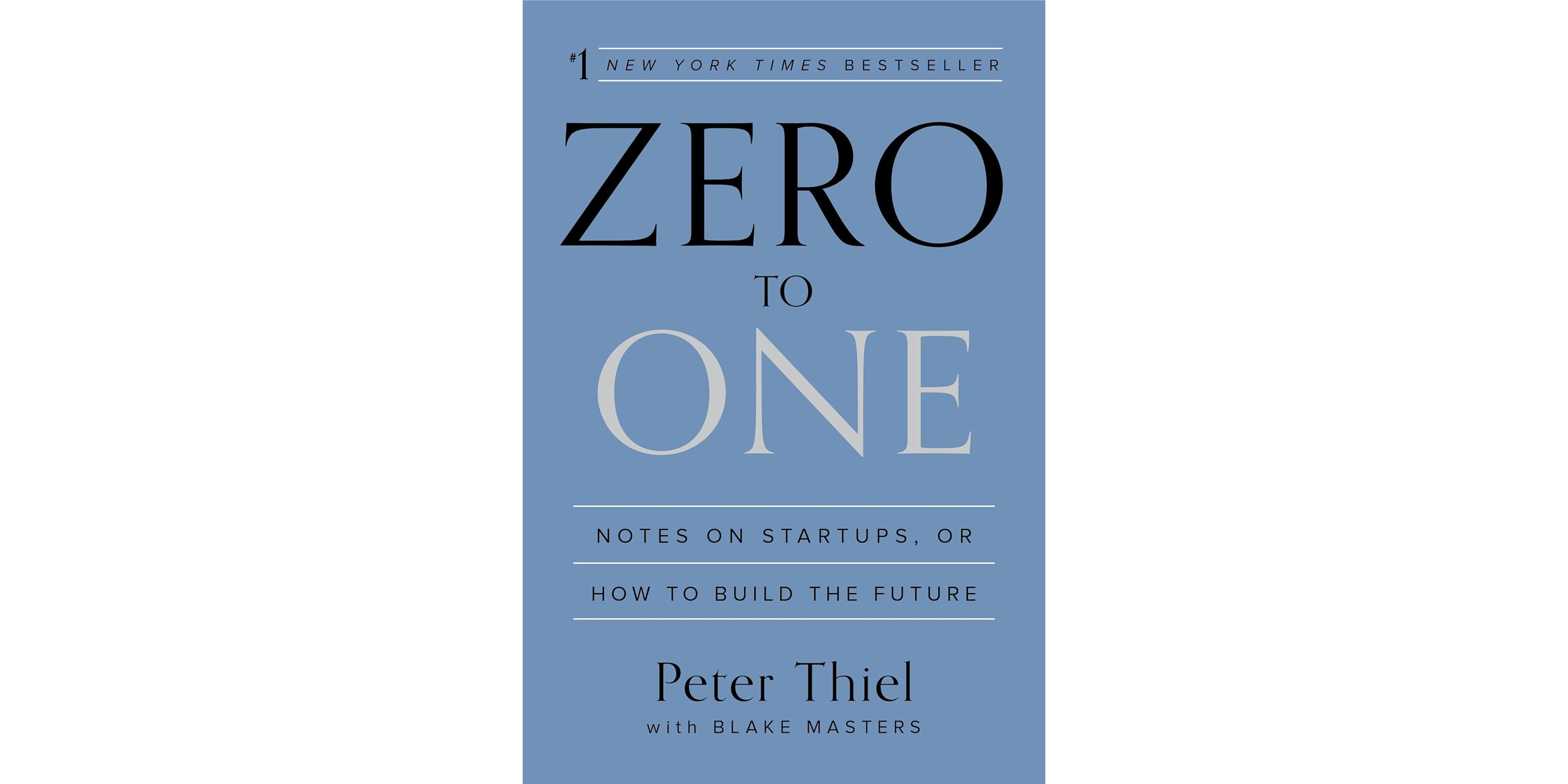
If you've spent any time in the startup world, you've probably heard the phrase "hidden truth." This is the book where it comes from. Written by Peter Thiel — PayPal co-founder, first outside investor in Facebook — based on a course he taught at Stanford. "Don't compete; monopolize." "Don't make small improvements; make bold bets." The provocations come one after another. But when our book club discussed it, we found ourselves split clearly between what convinced us and what didn't.
📖 Who should read this book:
Anyone interested in startups or entrepreneurship
Anyone who's ever felt uneasy about doing what everyone else is doing
Anyone who wants to rethink competition and market dominance from first principles
📕 Get it on Amazon:
Zero to One: Notes on Startups, or How to Build the Future
Reflections — What Emerged from Our Book Club Discussion
How Do You Actually Find a "Hidden Truth"?
The most impactful concept in this book is the "hidden truth" — something the majority believes is right, but is actually wrong. Only those who see through the consensus and bet against it can create something from zero to one. It's a beautiful idea. But the obvious follow-up is: how do you actually find one?
Before our session, one member had the chance to talk with a serial entrepreneur and asked exactly this question. The answer stuck with all of us: "You can't find it sitting at a desk. You have to move. And while you're moving, pay close attention to your own emotions. When something feels exciting, or when something feels off — dig into why. That's where insight lives."
In other words, hidden truths don't emerge from analysis alone. They surface when you're in motion, picking up on your own discomfort and curiosity. The things that feel strange precisely because they contradict what you were taught — those are worth pursuing.
Thiel himself writes that there are two kinds of hidden truths: truths about nature and truths about people. The latter — things people don't talk about, taboos, uncomfortable realities — is where he believes the richest startup opportunities hide. That's a sharp observation.
Competition Is the Opposite of Capitalism
This was the claim that hit me hardest.
Most people vaguely believe that competition creates healthy markets. I did too. But Thiel argues that competition doesn't advance humanity in any fundamental way. In fiercely competitive markets, profits evaporate and businesses become undifferentiated commodities. That's why you should aim for monopoly.
What's fascinating is his observation about how monopolists and non-monopolists lie in opposite directions. True monopolies downplay their dominance: "Oh, we're in a very competitive space." Companies that aren't monopolies do the opposite: "We're the only ones in this category." In the startup world, this rings true. You have to look at what companies do, not what they say.
The inversion of Tolstoy's famous line was memorable too. Tolstoy wrote that happy families are all alike and unhappy ones are each unhappy in their own way. For businesses, Thiel says, it's the reverse: "All happy companies are different. Each one earns a monopoly by solving a unique problem. All failed companies are the same: they failed to escape competition."
Start Niche — But Not Too Small?
This was our most heated debate.
Early in the book, Thiel warns against defining your market so narrowly that you only appear to have a monopoly — using the example of an Italian restaurant in Palo Alto. But later, he says you should start with a niche market and expand from there. Isn't that a contradiction?
After a long discussion, here's where we landed: the difference is whether there's a visible path to expansion. Facebook started with Harvard's campus, but the road from there to other universities to the entire world was clear. Amazon started with books — a deliberate niche — and expanded intentionally. The Palo Alto Italian restaurant has no such path.
Thiel repeatedly insists that successful founders see a definite future. That's why Facebook could turn down a $10 billion offer, and why Amazon understood the purpose of starting small. Whether you have a clear vision for the future is what separates a smart niche strategy from a dead end.
The Trap of "Indefinite Optimism"
This section gets less attention than the big headlines, but I found it one of the most thought-provoking parts of the book.
Thiel defines the current era as one of "indefinite optimism" — a vague belief that the future will be better, with no concrete plan for how to make it better. People chase short-term, legible gains and can't bring themselves to commit to bold visions.
It's true. Trace the roots of many current trends and you'll find this indefinite optimism at the bottom. Thiel's example of cleantech is perfect: investors bet on the vague concept of "alternative energy" without backing companies that had actual business plans. The result was a bubble.
Thiel's counter is simple: "A bad plan is better than no plan." Replace indefinite optimism with a definite future and bet boldly on it. That felt like the thesis statement of the entire book.
The Power Law — A Few Things Generate Almost All the Impact
Thiel writes that the biggest secret in venture capital is this: the most successful investment in a fund will equal or exceed the returns of all other investments combined.
This isn't just a VC insight — it applies to everything. One of our members reflected: "During my time in the Bay Area, I did a lot of things. But starting a media project — that single action — generated more impact than everything else combined."
We take countless actions every day, but only a tiny fraction produce real impact. That's why it's critical to understand your strengths, combine them with a vision for the future, and identify where the power law works in your favor. "Distribute resources equally across everything" is the wrong instinct. "Go all-in on the one thing that matters most" — that applies to careers and life, not just investing.
The Existence of Serial Entrepreneurs
The chapter on luck is also fascinating. Thiel quotes Emerson: "Shallow men believe in luck, believe in circumstances. Strong men believe in cause and effect."
A comment from our discussion stayed with me: "The fact that serial entrepreneurs exist in the world means success can't be purely attributed to luck." One success could be a fluke. But when the same person builds and succeeds with multiple ventures, there has to be something reproducible at work.
That "something" is probably the ability to spot hidden truths and the courage to bet on them. Thiel goes so far as to say: "Forget about your MVP." Don't stack up small improvements — commit to creating something genuinely new. That extremism is what makes Peter Thiel compelling as a thinker.
Where Thiel's Arguments Didn't Convince Us
To be honest, not everything in this book landed.
The chapter arguing that "computers can't replace humans" felt weak to our entire group. The examples Thiel uses — a security case here, an image recognition case there — are too narrow to support such a broad claim. One or two anecdotes don't constitute a rigorous argument.
We also noticed that his take on HP contradicts Built to Last, which holds HP up as a model of greatness. Thiel evaluates it differently. Which is right? Or are they operating from different premises entirely?
Throughout the book, Thiel comes across as a passionate, bold visionary — but also cold and extreme. There's undeniable selection bias in the examples he chooses to support his arguments. But maybe that extremism is the message itself: it's better to bet big than to chase small differences.
Why the Timing of This Read Mattered
When our book club discussed this, a recession triggered by COVID was just beginning. One member said something that stuck: "Starting something when the economy is down, so you're positioned to ride the wave when it recovers — that's what playing the long game looks like."
When no one else is starting, and you keep going because you believe in a hidden truth — there are no competitors. It's the perfect time to monopolize a niche. Short-term profits are hard to find anyway when markets are shrinking, so you might as well bet on something big with a 5- to 10-year horizon. Paradoxically, a downturn might be the ideal environment for zero-to-one thinking.
I want to revisit this book regularly. It's the kind of book you reach for when you catch yourself chasing short-term revenue in a competitive market — when you were supposed to be building a long-term monopoly.
Quotes
"Progress comes in two forms. Horizontal progress means copying things that work — going from 1 to n. Vertical progress means doing something new — going from 0 to 1."
"If you want to create and capture lasting value, don't build an undifferentiated commodity business."
"All happy companies are different: each one earns a monopoly by solving a unique problem. All failed companies are the same: they failed to escape competition."
"What valuable company is nobody building? Every correct answer is necessarily a secret: something important and unknown, something hard to do but doable."
"The best place to look for secrets is where no one else is looking."
"The most important first decision in starting something is who to start it with. Choosing a co-founder is like getting married, and founder conflict is just as ugly as divorce."
"Time is your most valuable asset. It's odd to spend it working with people you don't want to be around for the long term. If your time at the office doesn't produce lasting relationships, you're doing something wrong."
"As long as you're creating new things, the act of creation itself is what 'founding' means. The moment it stops, so does the founding."
"The best businesses are often overlooked — they're usually not the ones everyone applauds. The problems nobody is trying to solve are the ones most worth working on."
"The single greatest danger for a founder is to become so certain of their own myth that they lose touch with reality. But an equally common trap for any company is to reject all myths, thinking that disillusion equals wisdom."
📕 Get it on Amazon:
Zero to One: Notes on Startups, or How to Build the Future
If You Liked This Book
▶ Comparing the conditions of great companies
▶ Is it luck or skill?
▶ An entrepreneur who found a hidden truth
💡 Save and export your book highlights with Glasp!
The quotes in this article were exported using Glasp. If you're interested in exporting your Kindle highlights, check out this guide:
How to Export Kindle Highlights — Notion, Obsidian, AI Integration & More
📚 See what other readers highlighted in this book:
👉 Top Highlights for "Zero to One: Notes on Startups, or How to Build the Future" on Glasp