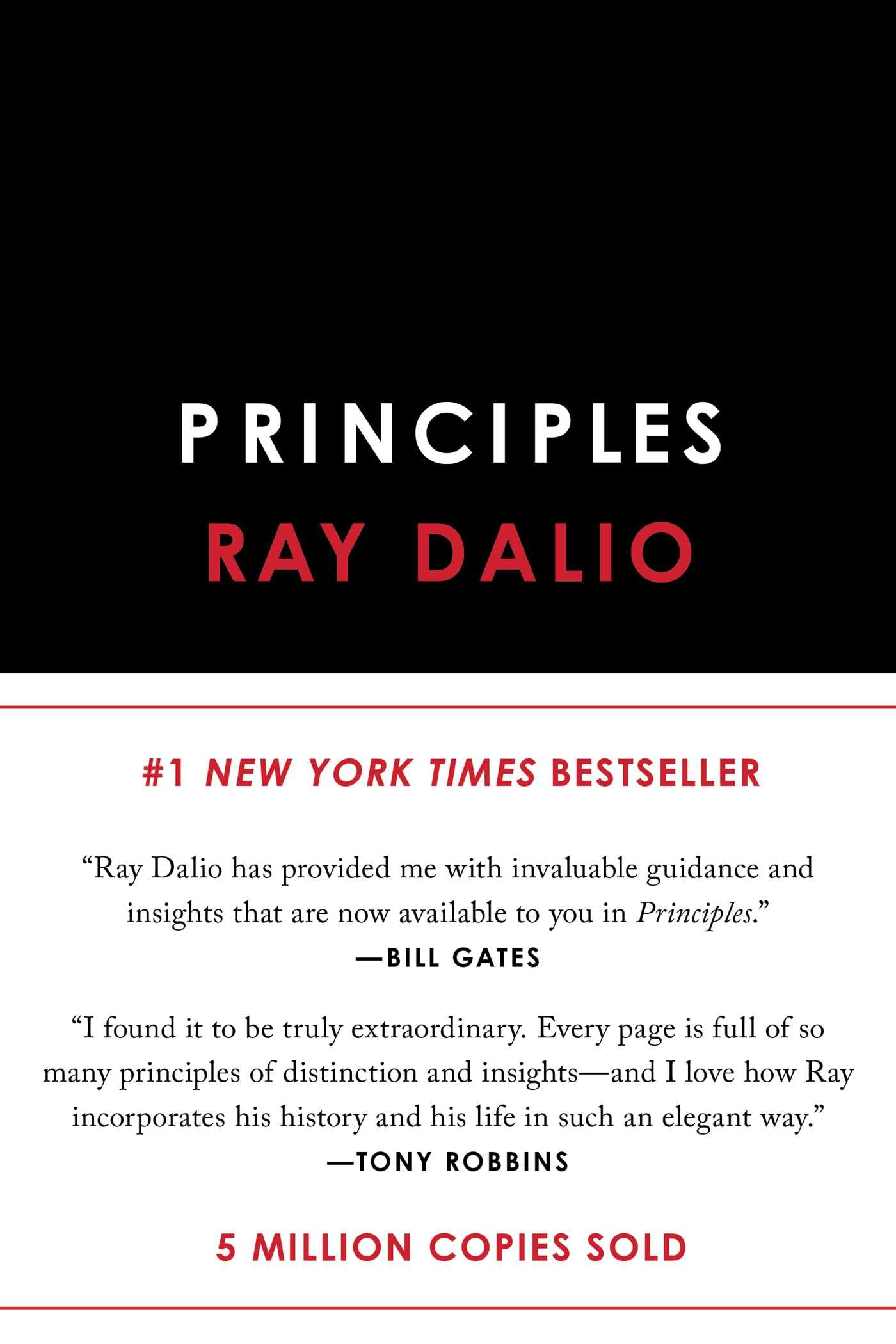
Principles: Life and Work
About This Book
Ray Dalio’s Principles: Life and Work argues that better lives and better organizations come from explicit, testable principles rather than impulse, ego, or convention. Across the most-highlighted passages, readers consistently gravitated to one core idea: think for yourself about what you want, face reality as it is, and act with enough humility to stress-test your views against other smart people.
The book begins with Dalio’s life story, using painful failures in markets and business as proof that success depends less on always being right than on learning quickly when you are wrong. He repeatedly returns to a few linked lessons:
- Write down your decision criteria.
- Seek out intelligent disagreement.
- Assume you are missing something.
- Balance boldness with risk control.
- Treat pain as a signal that something important can be learned.
A major structural move in the book is from autobiography to operating system. Dalio explains how he turned lessons into repeatable principles, then into systems, algorithms, logs, and management tools. He sees reality, markets, and organizations as machines governed by cause-and-effect relationships. If you can diagnose those relationships well, you can improve outcomes more reliably than by relying on intuition alone.
The “work” half extends this into Bridgewater’s culture: radical open-mindedness, radical transparency, thoughtful disagreement, believability-weighted decision making, and an idea meritocracy where the best reasoning should win rather than hierarchy or popularity. Strong organizations, in this view, surface problems, diagnose root causes, assign responsibility clearly, and match people to roles based on values and abilities.
Overall, the book is a framework for personal evolution and organizational design. Its recurring message is that truth-seeking, reflection, and principled systems help people pursue ambitious goals while surviving inevitable mistakes.
Key Takeaways
- 1.Principles are reusable decision rules that help you respond better and faster when life presents similar problems again.
- 2.Great outcomes require balancing independent thinking with humility, especially by seeking out smart people who disagree with you.
- 3.Painful mistakes are not just setbacks; they are often the fastest route to learning if you reflect on them honestly.
- 4.Reality works through repeating cause-and-effect patterns, so history, feedback, and evidence matter more than wishful thinking.
- 5.Strong decisions come from making a few well-balanced, uncorrelated bets rather than relying on one big fragile wager.
- 6.Organizations improve when they surface problems openly, diagnose root causes, and assign responsibility clearly.
- 7.Meaningful work and meaningful relationships matter more than money alone once basic needs are met.
Top Highlights
the key to success lies in knowing how to both strive for a lot and fail well.
Highlighted by 9 people
Making a handful of good uncorrelated bets that are balanced and leveraged well is the surest way of having a
Highlighted by 9 people
If you can think for yourself while being open-minded in a clearheaded way to find out what is best for you to do, and if you can summon up the courage to do it, you will make the most of your life.
Highlighted by 8 people · 1 left a note
In trading you have to be defensive and aggressive at the same time. If you are not aggressive, you are not going to make money, and if you are not defensive, you are not going to keep money.
Highlighted by 8 people
Principles are fundamental truths that serve as the foundations for behavior that gets you what you want out of life. They can be applied again and again in similar situations to help you achieve your goals.
Highlighted by 7 people · 1 left a note
Meditation has benefited me hugely throughout my life because it produces a calm open-mindedness that allows me to think more
Highlighted by 7 people
1. Seek out the smartest people who disagreed with me so I could try to understand their reasoning. 2. Know when not to have an opinion. 3. Develop, test, and systemize timeless and universal principles. 4. Balance risks in ways that keep the big upside while reducing the downside.
Highlighted by 7 people
principled means to consistently operate with principles that can be clearly explained.
Highlighted by 6 people · 1 left a note
The most important thing is that you develop your own principles and ideally write them down, especially if you are working with others.
Highlighted by 6 people
“You better make sense of what happened to other people in other times and other places because if you don’t you won’t know if these things can happen to you and, if they do, you won’t know how to deal with them.”
Highlighted by 6 people
AI Review
Glasp’s AI analysis of 41 reader highlights suggests a strong consensus that this is a highly impactful book on decision making, failure, and organizational culture. The most-saved passages cluster around durable, actionable ideas rather than isolated quotes, which usually signals lasting reader value.
Pros
- +Clear decision framework for life and work
- +Strong emphasis on humility, truth, and open-mindedness
- +Memorable lessons on learning from pain and failure
- +Practical focus on writing down and testing principles
- +Useful organizational ideas on hiring, accountability, and culture
- +Resonant systems thinking around risk, causality, and feedback loops
Cons
- −Can feel repetitive because core ideas are restated often
- −Bridgewater-style radical transparency may seem too intense for some readers
- −Examples lean heavily on investing and Dalio’s own management philosophy
- −Some readers may find the culture principles harder to apply in ordinary workplaces
Glasp AI analysis based on highlights from 41 readers.
Who Should Read This
This book is best for founders, investors, operators, managers, and ambitious individual contributors who want a repeatable way to make decisions under uncertainty. It’s especially useful for people building teams, designing culture, hiring leaders, or recovering from failure.
Readers who like systems thinking, feedback loops, journals, checklists, and decision rules will get the most from it. No finance background is required, but those interested in markets, entrepreneurship, and organizational design will find the strongest payoff.
Frequently Asked Questions
What is the book about?
Who is it for?
What are the key lessons?
Is it worth reading?
What does Ray Dalio mean by an idea meritocracy?
Why does the book focus so much on pain and failure?
How practical is the book for everyday work?
How to Apply What You Read
- 1.Write down the principles you currently use for major decisions, then refine them after each important outcome.
- 2.Create an issue log for recurring mistakes, naming the problem, its severity, root cause, and responsible party.
- 3.Seek out one credible person who disagrees with your view before making any high-stakes decision.
- 4.Define your real goals first, then work backward to the money, skills, relationships, and tradeoffs required.
- 5.Review one painful recent failure and identify the lesson that can become a repeatable rule for the future.
Discussion Questions
- Q1.Which of your current beliefs are least stress-tested by thoughtful disagreement?
- Q2.How can you tell when pain is a signal to learn versus a signal to change direction?
- Q3.What would an idea meritocracy look like in a normal workplace without becoming harsh or dysfunctional?
- Q4.Which is harder in practice: admitting you might be wrong, or changing behavior after admitting it?
- Q5.How useful is Dalio’s machine metaphor for understanding people, organizations, and markets?
- Q6.Where should leaders draw the line between radical transparency and psychological safety?
- Q7.What principles have you learned from failure that you still haven’t written down or systematized?
Recommended Books


Revisit Your Highlights, Deepen Your Understanding
Import your Kindle highlights to review, organize, and share the ideas that matter most to you.
Get the free browser extension