GlaspTalk_57_Noah
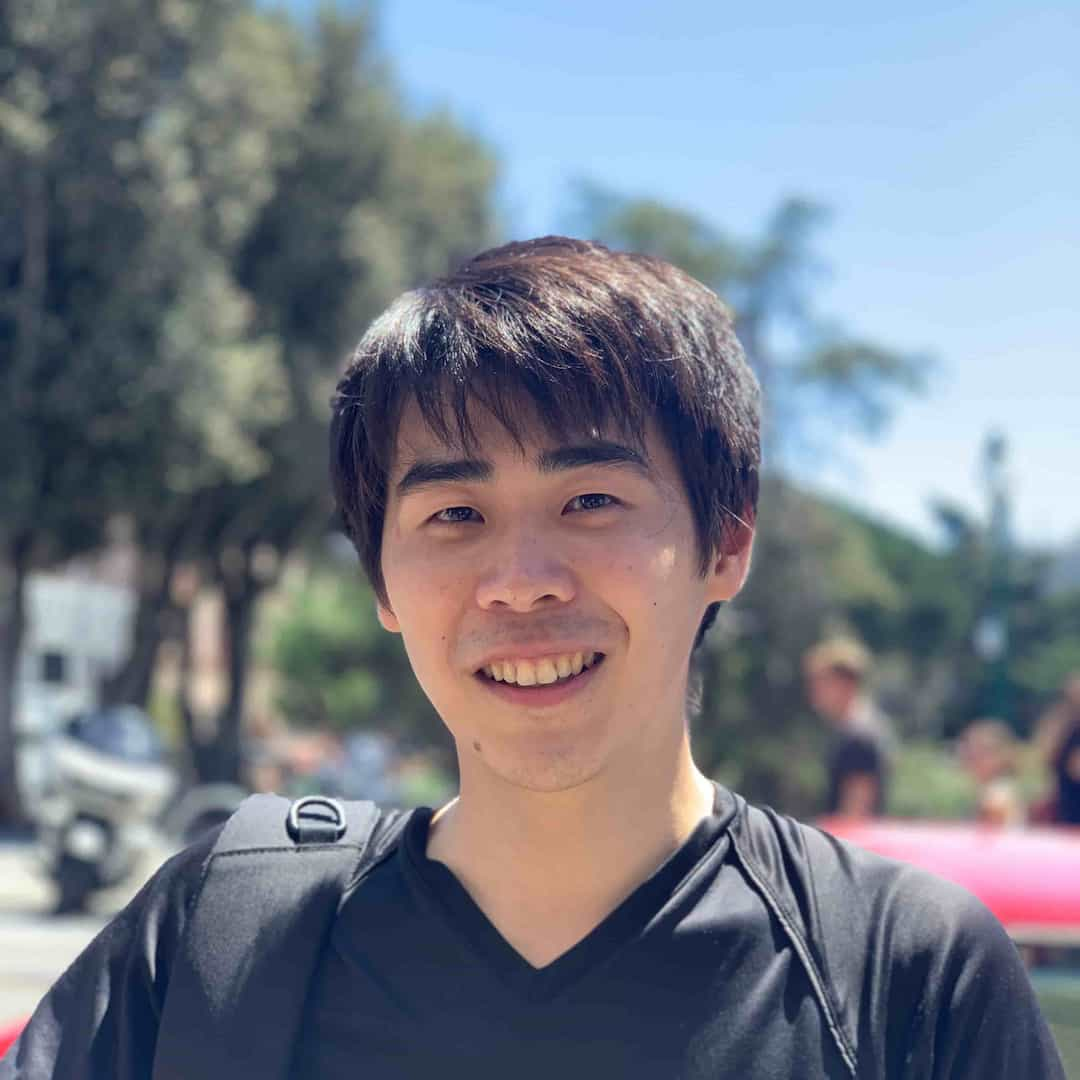
Kei
Aug 3, 2025 7:22 PM
Summary
Transcript
Hi, everyone. Welcome back to another episode of Glass Talk. Today, we are very excited to have Noah Smith with us. So Noah is a renowned economist, writer, and commentator known for his sharp insights into economics, technology, geopolitics, culture. And he is the founder and writer of No Opinion, a widely read newsletter with nearly 400,000 subscribers that distills complex topics into engaging digestible leads.
With a PhD in economics from the University of Michigan and a background in physics from Stanford, Noah combines academic rigor with a unique ability to communicate big ideas clearly. And previously, Noah was a columnist for Bloomberg opinion and assistant professor of finance at Stony Brook University. And today, we will dive into Noah's past perspectives on the global economy, the role of AI in discovery, and the cultural forces shaping our future.
Thank you for joining us, Noah, today. Well, thank you so much for having me on. Thank you. So first of all, we are huge fan of your newsletter and your content, and but we are curious about your background and career. So it seems like you studied physics at Stanford and then switched to economics so later. But I see that there is three year gap. And when you like, you graduated a bachelor finished from Stanford in 02/2003, and you started PhD program in economics in 02/2006.
And what made you to switch from physics to economics, and what happened to you at that time? Oh, so what happened was actually depression. So when I was in college, my mom died of an aneurysm, brain aneurysm. And, I forget how to say that in Japanese, but it's like like a burst blood vessel in your brain. And I became, clinically depressed after that during my, you know, middle or or later years of college.
And so because of that, I decided I had to have a life change. I didn't wanna go back to physics. I was actually very good at physics, actually better at that than I am at economics. And I I really liked it, but then I decided that associations for me were very negative because I had been very depressed, and I saw I wanted to make a change and do something else in life. But I didn't know what I wanted to do.
So I then decided to go take some time, live in a foreign country, and then think about what I wanted to do with life. So I went to Japan because I had studied some Japanese in college and because it seemed like a great place. And so I lived in Osaka for those three years. And then during that time, applied to grad school and then returned. I see. And you said you studied Japan like, Japanese in college, but what made you to study Japanese, and what made you interest in Japan?
Good question. So, actually, I was I didn't have to do a foreign language requirement because I I had taken Latin in high school, and I passed out of the foreign language requirement by being very good at Latin. However, I kind of did always wanna take a foreign language. You know? So my senior year, I took an intensive Japanese course for the whole year because I wanted to do that. And then it was a little too late.
I wish I had done it earlier so I could have done study abroad, but I didn't I came I did it too late to do study abroad. So so the reason I did it was because I saw this movie, And Yeah. I thought that is, like, the most beautiful movie. I really loved it. And so I yeah, I I decided, oh, I'll take Japanese. And so I thought that was very fun to study a foreign language. And then I took a spring break trip to Japan my senior year, and that was my first time I had been overseas.
And I thought, wow. This is incredible. And so, anyway, that's why I I picked Japan. Did were you interested in Japanese anime? Because Japan is famous for anime, animation, manga. Yeah. Not really. No. I I mean, I had seen some. Like, I I occasionally enjoyed watching some anime with friends of mine. We watched, like, Berserk or Cowboy Bebop or some other ones like that. Or have you ever seen one called Vision of Escaflone?
Vision of Escaflone? Old one from the nineties? I mean, we saw it in the February, but then yeah. So we saw that. But, anyway, we saw a few of these, but then I didn't I wasn't really that much into it. I thought, oh, this is cool, but I wasn't, like, you know, otaku style. The stuff I liked from Japan was more kind of punk and underground stuff, things like movies, like underground movies or, like, indie movies kind of like do you know Ishii Sogo, Like, the movie director or, Nakashima Tetsuya or, like, so Mika Takashi or some guys like that, or then some, fashion.
So, like, the street fashion in, things like Fruits Magazine. I thought that was so cool. Or, like, maybe, like, underground, like, rock music or just, like, indie rock music or something I really liked. And then yeah. Or some some that was not indie, but stuff like Sheena Dingo, I really like. Yes. Or the pillows or some other bands. And so I just thought, well, I like all this underground culture stuff, so that's what I was excited about to see in in Japan.
I see. I see. But was that that that made you to but what made you to study economics and especially in University of Michigan? You could have studied in Japan Japanese, like, university, like, Tokyo University, Kyoto University if you anticipate I could I maybe I could have. But then in fact, I even thought about doing that. But then I I decided that going to The US would be more like, The US is definitely the center of, like, economics research.
And I wasn't confident enough in my Japanese ability to do, like, academia in Japanese. But maybe in retrospect, maybe I should have considered that. It might have been more fun. I don't know. But Michigan was great. You know, it was, I really like my adviser. I I one reason I picked Michigan was because, I got a really good adviser. I I found him searching through a whole bunch of professors. His name is Miles Kimball.
I really liked him. And, and so that was one reason I chose Michigan. Also, much of my family like, lot of my family goes to Michigan for undergrad. So my sister, my dad, lots of others to University of Michigan. I went to Stanford, but I was unusual in my family. Oh, wow. Most go to Michigan. And so then I thought it would be cool to live in Michigan for a little while. But if I could do my life over again, I might go to, like, a university in Japan for graduate school.
I see. Yeah. There are a lot of universities in Japan, so access, like, only English. So language, not like Japanese are must. Right? So not not sure if, you know, at that time, but how was I At the time, it was a lot harder. There were a couple that I looked into it, and there were a couple who did it, but I was not I was not confident that that, you know, it would really work. You know? Okay. I see. How was learning Japanese?
Was it difficult for you? No. Japanese is a very easy language, which is good for me because I'm lazy. And, so it was very easy to learn. The grammar of Japanese is very simple. Really? Yeah. Well well, the grammar of written Japanese, like, you read a novel or a book, something that's high high class, I guess, or advanced, the the grammar is a little more difficult because they have many dependent clauses.
Mhmm. But then Yeah. If you in the way people talk in Japanese is just run on sentences. It's just like, you know, You know? Like, it's it's very easy grammar, I think. And then this the the pronunciation of Japanese is very easy because there's no sounds that we don't have in English. And so there's the Yeah. Yeah. Yeah. That made us you know, Japanese people speak English harder. Right? Right. We don't have lot of sounds here.
Yeah. Sounds But, like, speaking, like, Hindi, for example, is diff is more difficult because they have all these sounds we don't have. Even Korean has a few sounds we don't have. They have, some vowels we don't have. But Japanese, it's all just, like, very simple vowels, you sounds that we have. And so that was very easy. And then, I guess, you know, memorizing kanji is hard, but it's not that hard. But then that's the hardest part of Japanese is kanji.
But it's really not that hard. It's not as hard as, like, Chinese because you have to do more kanji in Chinese. Interesting. Because, yeah, we talk to many foreign people learning Japanese. All of them say, oh, Japanese is the hardest language I learned or something. But you are the first one. It's easy. Yeah. I don't have any basis for comparison. I've never learned another foreign language. But you learned physics, so you just dive into phys principle then apply to it.
Maybe that's why it it's easy for you. Maybe. You think Japanese has some physical principle? Yeah. Physical. You say that glamor is easy. Maybe. Yeah. Principle and apply. Yeah. Maybe. I don't know. Anyway, I just loved it. It was really fun. Yeah. So Cool. And, by the way, back to the topic. But you finished PhD in 02/2012, and then you became a writer. And I was always wondering what inspired you to transition from academia to writing full time.
Oh, so, actually, I I started doing my blog in graduate school. I started doing my blog in in 2011. Mhmm. And yes, sir? What was the platform? So it's like a WordPress a blogger. Okay. Yeah. So you can see my my blog. You can just look for no opinion blogger. It was still called No Opinion. And I just did it for free. It was fun. It was my hobby. And then I didn't really want to do academia, to be honest. My professor, my adviser, convinced me to try it for a couple of years because he said, oh, you might like it.
But I didn't really like it. But I did it just because he is very convincing and also, you know, I to do something else for money. You know, there was nothing that I was very excited about. I could be, like, a consultant or something. Really, what I loved doing was my hobby of blogging, but I didn't think I could ever get paid to do that. So I was just needed a job. But then academia is, you know, it's kind of interesting.
I like, I I it's okay, but it's not really my thing. So I tried it a little bit like he recommended. And then but then while I was there, Bloomberg came to me and offered to pay me to be a writer for them while I was working as a professor. So I said, okay. I'll do it. Because I can live anywhere I want and just do my hobby as a job because it's fun. And so that's how that happened. And then so you started writing on.
Right? Not immediately. No. So I start I was writing for Bloomberg just on and I in in my spare time, I would keep writing on my own blog. So I wrote many things every week. So I wrote on my own blog and Bloomberg at the same time. I wrote five things a week for Bloomberg and then maybe three things a week for my own blog. Cool. Wow. And so I was writing a lot. And it was fun, though. I loved it, and I I still love it.
You know? And so I I did that for years. Excuse me. Starting in 2015 and then moved to San Francisco in 2016 and kept doing that. And then I didn't get on Substack until the 2020. K. Oh, so, yeah, I I saw on your LinkedIn that you started liking No Opinion on November 2020. Yeah. I see. Yeah. Well so the my old blog was called No Opinion also. I just moved it to Substack. I see. And that's this is the first time I ever charged money for it.
And, actually, at first, I didn't charge money. I was just doing it for free. But then when I decided to leave Bloomberg, I started charging money. I see. And you said you were liking, like, two to three articles for Bloomberg and then two to three for your own blog. How did you choose? Three two, three of my for my own blog. Oh, sorry. So so how did you choose? Oh, this is for Bloomberg, this is for my blog.
And does it compete with each other? Or it's Not really. No. So the way I chose was basically, most things I would write for Bloomberg, but something that would be speaking to a narrower, more academic audience or be unrelated to the topics that I wanted to write for Bloomberg, I would write on my blog. So there are many times I wanted to, like, discuss some data problem or some paper or some very nerdy stuff, and then I would do my that on my own blog.
And then or I wanted to respond in detail to someone's post that they made, so I do responses on my own blog because that's not how Bloomberg posts are written. But if I just wanted to give some opinion on some issue, then I would do Bloomberg. I see. Yes. And I know you've been writing a lot of articles a week, but I was always curious, how do you choose a topic to write? Because Oh. Do you does that are based on the feedback from your readers or or from news you consume?
I was curious. How do you come up with ideas to write? Oh, so, actually, that's the easiest part. I come up with way too many ideas. I come up with more than twice as many ideas as I write. And the way Don't publish any method of coming up with them. I just read things, and then I ideas pop into my head. But how do you, yeah, keep the ideas then? Because you have a lot of ideas. And did you do you keep the ideas in Google Docs?
Or Yes. Google Docs. But I see. Yes. But if you kept keeping the ideas in Google Docs, does it go super long? And is it highly Hey. Look at how long it is now. I have a document called blog post to write. How many pages? Now it's 22 pages long. 20 pages. 22. Yeah. Mhmm. Just filled with topics to write. Oh. I could count the number of topics, but it will probably be about 100. I see. And when you chose like, what made you do, like, switch from blogger to Substack?
Is that because of the pay payment payable system? No. Email. So blogger so blogger is just a website. You publish it, and it appears on a website. Substack will send out emails to all your followers. I see. So the I see. So the distribution was just much, much better. Mhmm. And now you have around four, yeah, 400,000 subscribers. So how did it grow? So were there any, like, post going you know, went viral, or, like, it's kind of, like, linear growth?
Linear. Very linear. Linear. I see. And I remember maybe you or someone told me that the the first subscriber was Max. I don't know if you can share, but yeah. He wasn't the first, but he he did subscribe at some point. Yeah. Or at least someone in his team subscribed. I don't know if I don't know if he ever reads it, but someone at his office is, you know, reading it in his name. Oh. He probably just him? I've never met him.
No. He probably just, you know, he probably has his office subscribed him to a million newsletters, but I don't know how much he actually reads because I've never met him, so I don't know if he read has ever read it himself. So you don't get any feedback from him? Never. Never. I should I should go meet him. Yeah. So in the newsletter, you cover so many topics, like economics, geopolitics, and culture, and so on.
And one thing I'm curious about is AI AIs and and impact of AI. And Yeah. You recently wrote about AI. And so how do you see the AI truly impacting jobs and productivity in the coming years? Are we overestimating the the robots will take all the short narrative? Well, I probably because we people are really fixated on this idea. They really are thinking about it a lot, and they can't stop thinking about it.
Evidence to the contrary just bounces off people's heads. Boo. You know? Like, it doesn't go in. So for example, for many years, people said, there will be no more trucking jobs. Trucks will be automated, and all the truckers will lose their jobs. And I had a Bloomberg another Bloomberg writer yell at me. He said, these people aren't gonna have a future. He How can you how can you say we don't know what's gonna happen?
It's obvious what's gonna happen. He yelled at me very strongly at lunch, and I was taken aback. I said, well, we just don't know. We don't know whether we'll still decide we need drivers, you know, human drivers. He just yelled at me and thought I was stupid, and I he thought I was being intentionally stupid, intentionally ignorant. He thought I was pretending that he thought everybody knows the truckers will all be out of a job soon.
Everybody knows it. It's an obvious fact. And he thought I was being dishonest by not admitting the obvious fact. That was in 2035. That was ten years ago. It has been ten years since then. The number of truck drivers employed is larger than ever, and there is a shortage of truck drivers now. They're they need so many truck drivers that they're having to raise wages a lot within the industry just to get humans.
And all the self driving truck companies have gone out of business, including a company my friend was doing. So called Embark. They went out of business or got acquired for their technology or, you know, just something that it's not gonna it's not working. Will it ever work? Maybe it will. Will we still have humans in the in the loop just in case of something of some problem? Maybe we will. And truck drivers will just sit there while the truck drives and just be a monitor.
I don't know. But here's the point. The truck driving apocalypse that this guy predicted, that my colleague predicted, never happened. It didn't happen in ten years. And but there's no learning. He doesn't learn nobody learns. Nobody's learned from that. Nobody apologizes. No nobody says, I was wrong. I didn't understand how technology affected the economy and jobs. And maybe I don't understand the next time either.
Maybe this is more complicated than I can understand. Maybe I am fundamentally ignorant, and my knowledge is limited, and I shouldn't I shouldn't be so confident about things that I don't know. I should understand why economics is so complicated, and I should look at the history and look at the, you know, theory and and understand why these things are complicated, and I can't just use common sense to decide the answer.
But I don't that's what people should have taken from this failure of prediction. But, here's another. Jeffrey Hinton won the Nobel Prize for helping to invent AI. He had declared that within five years radiologists will be gone because AI will read scans. But it's been five years. There's more radiologists than ever, and there's a shortage of radiologists. He was totally wrong. And yet they never ever learn.
They just keep making the same prediction again and again and again, and it keeps being wrong and wrong and wrong. Now I'm not telling you that they'll never be right because I'm not so arrogant to assume that I know that they'll never be right. But what I do know is that they are overconfident. They don't really know all the things they think that they know, And they keep making these confident predictions.
Everybody's obsessed with this idea that AI will take away jobs. It keeps not happening. Does that mean it will never happen? No. I don't know. Maybe it will, maybe it won't. I don't actually understand enough to make a prediction, but I understand that they also don't understand. Okay? And so I keep saying we don't know, and then they keep being wrong and they never learn. They never become less confident.
They just keep making the same confident prediction again, ignoring the fact that they were wrong the last time, and it frustrates me. Yeah. But we don't know. Yeah. As you mentioned, we don't know the future. So it could happen, but couldn't happen then. Don't Exactly. It could happen, but might not happen. Do you use any AI tools for lighting for, yeah, whatever? I use o three to proofread my posts, and it catches most, but not all, typos.
When I use it, then then I'll I'll use it to do, like, background research. So I do my own literature search, but then I have it do a literature search too, o three. And, it's it catches a lot of papers I miss, but then I catch a lot of papers it misses. So, actually, me plus the AI is currently good. I do not use AI to create text for me. Okay. But have you tried it? Not yet? Many times. Many times. Every time a new model comes out, I try it.
I see. It don't work? Doesn't work? Well, the quality is okay. It's it's you know, the quality is what an undergraduate working for an online news site would write. Mhmm. It it has confident hallucinations. It makes hallucinations that it then never admits we're wrong, and it just keeps running with them and keeps inventing new lies to cover up its old lies. Mhmm. So it's like a a liar who doesn't want to get caught.
Just keeps making up new lies to cover the old ones. Never admit you're wrong. It does lots of other problems too. It's it's it's useful. It's good. You know? I would if I were writing a high school essay, I would certainly use that. Yeah. I know. Yeah. My friend is working on something like that. Yeah. Yeah. But then it's not for what I do, it's it's not yet useful enough to just push a button and generate something.
Maybe it will never be. Maybe it will be. I don't know. But hallucinations seem like a problem that's not solved by scaling. So maybe we'll solve it with some other algorithmic innovation. It should be. Yeah. And I listened to a leader articles that there are many, like, AI generated generated articles. And so AI learns from it, then there are many garbage. So garbage in, garbage out. So I'm not sure if it's yeah.
There are many hallucination in the future again. But Right. And what very soon, we might actually see AI training become more difficult because the web is getting filled. The basic datasets are all getting filled with LLM generated content. And one thing that's a pretty consistent conclusion from research findings is that training LLMs on LLM generated content makes them worse. It's called model collapse.
I see. But it used to be called modal collapse, and people just started they changed the word and started calling it model collapse. But, anyway Mhmm. Yeah. So so we could see that be a problem in the years to come of AIs not being able to train correctly because they're training on their own output. Yeah. Totally. And you mentioned, like, you are researching with, you know, ChatGifique, all three, and so you are writing many topics and covering many topics.
What is your, like, source of information usually? So what kind of article But you can list up some many types. So news articles, blog posts, especially now on Substack, Papers, economics papers, a lot of them. Sometimes other papers, but mostly in economics because those are the ones I understand. Sometimes Twitter, although it's getting much worse, so now I don't use it much. And then and then private research reports from, like, McKinsey or something.
I see. How much do you spend for researching or reading usually a day? Oh, it really depends. You know, I it only occasionally will I do a lot of research for a post that I'm writing. Usually, I read stuff because it's interesting, and then I write about it later when it's important. And so it's very difficult to tell my leisure research from my work research. Mhmm. And after you read something interesting, so do you keep those newsletter or papers somewhere like Notion, Google still Google Doc?
Or how do you keep ideas? Do you remember? Google Docs. Google Docs. Okay. Interesting. So when I see an interesting article or paper or something, I copy the link, and I put it under the correct heading in Google Docs corresponding to the post I wanna write in the future. Interesting. And now it's, like, 22 page 22 pages. Right? It's currently Google Docs. Yeah. Are you asking a question? Ah, yeah. Yeah. Asking a question.
Yeah. 22, you know, Docs side pages. What's the question? Yeah. Yeah. Now you are like, Google Doc has 22 pages. Right? That's correct. Okay. Yeah. Thanks. So in regarding the the AI and the leadership, so it seems like US is leading in this space, like, space nowadays. But China is catching up, and then and they release a lot of o open source project and products. And do you think The US can continue to maintain its top position in this field in the future?
Oh, I'm not sure. I feel like I'm not I'm not a 100% sure, honestly. Yeah. No. I'm I'm the wrong person to ask about this, especially because I think that it's it's there are different areas of AI. So I think China's now number one in computer vision. But then US is number one in large language models. And then there's a bunch of other AI things, and I'm not sure who's, you know, ahead. But in your like, how I would regulate AI essay, you warned that, you know, heavy handed rules can backfire.
It's hard to predict what rules will make tech safer but easy to inadvertently stifle stifle stifle, like progress. Right? And what kind of, like, a decoration and and and deduce the risk, in your opinion, without so much innovation smuggling innovation? Sorry. So the thing about regulation is we should make rules for things we understand. With AI regulation, people are very eager to make rules for something that they don't understand yet, that no one understands yet.
So I would say, watch to see how the thing works in reality and then make your rules around that. And be prepared to change the rules as the capabilities of the technologies change quickly. But trying to anticipate where the technology will go in five years and making a rule now that will apply in five years and keep us safe is stupid. Like, that just doesn't make sense. You can't predict where it's gonna be in five years.
So you can't really make rules that will apply in five years. The only thing you can do is be nimble and adaptable. You have to be willing to change the rules quickly. Unfortunately, America is less like this than Japan. Japan actually has better adaptability in terms of rule making because in Japan, rules are made by you know, bureaucrats. Whereas in America, they are made by laws and lawsuits. We do too many things by the courts.
We should have a bureaucracy instead for some of those things. Do you, like, occasionally check the the regulations of each country? Or how do you I know you were catching up, you know, what's happening in the world. Oh, that's something you can really ask AI about. AI will describe the regulations in each country. And once in a while, it'll get it wrong. So if you write something that where you have to get this thing right, you should check carefully first.
But I think in terms of backgrounders on regulation, it gives very good backgrounds on regulatory environments in different countries. Excuse me. Oh, no worries. Yeah. No worries. And I think some people oh, sorry. Another topic, but some people are concerned about current tariffs. I mean, and we've seen a lot of, like, major tariff announcements lately and including 35% tariff on Canada, which is America's top terrorism partner, 25 tariffs on Japan and South Korea.
They are both US allies. You know, but the inflation hasn't really gone up. Right? So and I I read your blog post, but why is that, and then should we be worried about it? Yeah. I would be worried, but then we don't really know what's gonna happen. America is being ruled by a crazy king. Imagine an old king who goes crazy. Maybe he started out a little crazy, but he's getting very, very old. He's older than Biden was at the same time in his presidency.
Yes. Oh. He's the oldest president we've ever had. Mhmm. And he's going mentally downhill, and and he but he's so popular among Republican base. They love him so much that no other Republican can stand up to him. Even Elon Musk tried and failed. Mhmm. And he's basically kicked out of the movement because even Elon Musk could not stand up to Trump. And so we have a mad king in America. Should we prepare for or brace the impact, like, for the future?
Or Inflation? Yeah. Or But I don't think I think Japan doesn't have to worry about inflation as much. Okay. And Oh, why is that? Oh, yeah. Why? Worries Oh, because first of all, Japan structurally has forces pushing you toward deflation, so it's harder to get as much inflation as in America. But also because if The US puts tariffs on Japan, that make that raises prices for America. But for Japan, it doesn't really, it doesn't really raise prices because Japanese exporters will then sell their domestic prices will match the after tax price they're getting overseas, not the pretax price.
So they will actually have an incentive to drop prices in Japan. So tariffs in America are deflationary for Japan. I see. And how do you see the, you know, US future after three point five years, like, after, you know, incumbent president? Even more stupid than now, man. How come? Well, because the the the real problem with America isn't Trump. I mean, Trump is a problem, but he the real problem is social media.
America was always a country that depended on people with different ideas and different lifestyles being able to spread out and all coexist by not living next to each other. When the Internet when social media came, it took all the different kinds of Americans and basically put them in one room together. Mhmm. And our country is not built for that. Japan is built for that because you guys, you already knew what it was like to you know you knew what other Japanese people were like to fifteen years ago, twenty years ago, but Americans didn't know what other Americans were like.
It was so big and diverse. Then they found out all at once. And so now the social conflict is just happening across every level of society because Americans are been forced together, whereas Japanese people were already used to living together. I see. Then That's my theory anyway. Yeah. But there shouldn't be any regulations. So for, like, social media companies, Internet companies. So what kind of regulation should it be, do you think?
I don't know what kind of regulation can help this. Okay. Sorry. Is I mean, the question could be, like, the issue is algorithm Oh. Consortium. Or I don't mean to interrupt you. I did I do know a one regulation that can stop this, which is ban phones in schools. Only schools? Because it's the only time we're able to ban phones. Other times, it's not legal. Okay. We can't ban phones in companies. That's illegal.
Oh, yeah. Interesting. Yeah. Ban phones in schools. Get kids off the Internet for most of the day. So do you do for your kids as well? If I had kids, of course. Oh, okay. Yeah. Okay. Got it. Yeah. Ban all phones in schools. But is issue more like the algorithm, like, on on the social media or the people who believe in the information? Or Both. Which? Both. Both are a problem. In fact, I wrote an interesting, article about this a while ago where I showed research papers showing that both of these effects are important.
One more thing I'm curious about is The US China decoupling. And how far do you think US China decoupling go, and how should founders prepare for that? Well, US China decoupling was is mainly a Chinese initiative. Most of the decoupling has been China's goal. So China has imported a lot less, a lot fewer imported components from The US because they want to be economically independent of The US. And this is this will also be Chinese decoupling from Japan.
So Japanese companies are now not as able to sell things to Chinese companies because China has been working has been basically pushing its companies to to make all the stuff at home and to basically separate themselves from a technological ecosystem, the global technological ecosystem. So the most of the decoupling is is that so far. But, what people talk about is America buying less stuff from China.
But, really, what's more important so far is China buying less stuff from America and from Japan and Korea and Europe and those places. This is hitting Germany really hard right now. So How how does Because Germany was selling a lot of machinery and components to China, and now China is aggressively trying to push out German companies. I see. Can these relationships, like, international relationship relations get better in the future, or will it be worse by worse?
They will be better in at some point in the future. But as long as Xi Jinping is in power in China, it will be difficult to get better. Xi Jinping is is honestly, he's kind of stupid, if I'm being perfectly frank, because he he's not a smart guy. He, you know, he was not good in his education, and he grew up during a time of poverty when his worldview was very limited and narrow. And he but at the same time, he is extremely overconfident.
He's self confident. He believes he should control everything. He should rule everything. If you know if you look at the people so now sometimes he does delegate. He sometimes assigns, some other people to work, to to be the head of some of these party commissions and groups that he's officially the head of. So, guys like Kai Chi or whoever. The problem is that those guys are all old, not very smart, and they're just a 100% loyal to Xi Jinping.
He prizes loyalty above all else. And so he surrounds himself with all these people who just say, yes, sir. You're right, sir. You're so brilliant, sir. Everything you say is right, sir. You're winning. And this is why he's dumb because he can't he doesn't get the perspective to understand when he makes mistakes. Mhmm. And so he made a big mistake with zero COVID. He made a big mistake with the IT crackdown, crackdown on tech companies that later they worked very hard to try to reverse.
He did the real estate bubble in a bad way. He hasn't done stimulus. He hasn't done enough bailouts. He's not fixing property taxes. He's not fixing the local governments. Belt and Road has been a disaster. Chinese diplomacy has been bad. I mean, he's not as bad as Trump because he's not just this insane old guy who's trying to wreck his country for fun. Right? But then, but he's not as bad as Trump, but he's he's not great.
And so I think that but he's also 72 years old. And leaders usually start going downhill around 75 to 78. Mhmm. That's usually when they really go go downhill. And, when when leaders get older, they start getting paranoid. They start thinking, oh, the younger people are gonna push me out. I have to fight hard against the younger people to push me out who are who wanna push me out. I gotta stay in power. Mhmm.
So once they get into that mode, they focus fully inward and not outward. And so I think Xi Jinping may be starting to get in this mode. We've seen a little bit of evidence. We don't really know what's happening inside China, I think, but we've seen he's taking many fewer meetings and doing less travel. He's firing a lot of people in the military that he hired. He's firing his own guys that he hired earlier.
That's kinda crazy. Right? He's, he's disappearing from view, making fewer public appearances, doing very short meetings instead of long meetings. His health could be bad, but he's increasing his purges and attacks on on other people. You know, Japanese government has many problems, but you haven't ever had this problem. Mhmm. Because in Japan, no one person ever gets very strong. Yes. Yeah. But then in when one person gets very strong, you get this kind of thing.
I think Deng Xiaoping was the great master of politics in China. He the system he created was supposed to prevent people from getting too strong so that they wouldn't be like Mao Zedong. Right? Mhmm. He didn't want them to be like Mao, so he made a system that he thought would prevent power from being centralized under one guy. So if you look Jiang Zemin you know these guys. Right? It's not the Japanese name, but you know who I'm talking about.
Right? Mhmm. Yep. Okay. So Jiang Zemin was less powerful than Deng Xiaoping. Hu Jintao was even less powerful than Jiang Zemin. Those guys were picked by Deng Xiaoping. Mhmm. He picked them in advance to be his successors. But after that, he didn't pick anyone. So Xi Jinping was picked. Mhmm. And he became the kind of dictator that Deng was afraid of, centralizing all power within his own individual person. And so because of that, China now has the classic problems of dictatorship.
And as Xi Jinping gets older and older and gets less and less secure, he may worry about fighting the other people. Also, they have realized that he's not competent. Mhmm. But he's so good at internal politics that they can't do anything about it. This is also true in the Republican Party in America. All the Republicans know Trump is stupid and crazy. The conservative writers, even the right wing guys, even the most, like, Uyoku guys, they know Trump is a complete idiot and just old.
You know? He's like, he's going mentally downhill, he's kinda crazy. Mhmm. But there's nothing they can do about it. They can't challenge him in public. Elon Musk tried, and he failed. So this is the problem when you have these leaders who seem very, very strong and are very, very good at crushing internal enemies, but then are not effective leaders for the outside. So this is a big problem. I see. And I was wondering if you were or you could become the president of The United States, but I don't know if you want to be.
How would you handle the situation? Never. If you were. Yeah. If I could was the president of The United States? I mean, there's lots of different things I would do. But yeah. What would I mean, I would do you mean if I could just control policy myself? Yes. Yes. Oh, I would try to make it easy to build things in America. That would be my most important policy. Housing, factories, infrastructure, things like that.
And I would make close alliances with, you know, of course, Japan, Korea, India, Europe, and all these countries so that we can all have complete free trade between us. So that and then I would coordinate our industrial policy so that we make sure that every industry doesn't depend on China. Every important industry doesn't depend on China. It that we can do it somewhere within our system of alliances.
And I would make that system as big as I could, even include, like, Indonesia, Philippines, you know, Vietnam, if I can, you know, Turkey, obviously, include all these countries, and then Latin America, if I can. Maybe they wouldn't do it, but then maybe they will. But then and I would try to make this system as big as possible and make sure that together, we make sure we're not dependent on China. And I would have it be so within this alliance system, nobody fights anybody else.
We don't have any trade arguments. We're all friends. We all cooperate. And that would be what I would do. Interesting. Thank you. Yeah. Yeah. And I was this is a random question, but I was Of course. Since the gate, I was wondering, like, there are some people who won the Nobel Prize in economics. Right? And I was wondering because politics is not all about economics, but economics is a it's a large part of politics.
And can, like, a Nobel winner prize winners in economics become the president so that can handle the situation better? Or sorry. I'm this is a dumb question. Yeah. I don't know that Nobel Prize winners in economics are right to be the president. I like Paul Krugman. He's amazing, but I don't think he'd be good as a president, or any Nobel Prize winner that I know of. I can't think who would be a good president.
Nobel Prize winners do research. They're not you know, that doesn't mean they're good at administrating. Now a Fed chair maybe could be a good president because they're used to running stuff. So in, in Canada, you now see a former, central bank head becoming president or prime minister of Canada. And so, Mark Carney, he's really good, smart economist. So a smart economist can do it, but they have to have experience in managing a large organization.
So it's not just an academic researcher who will believe in theories too much. I see. I see. Thank you. So switching the topic to your book and we've economy, and we've read your book, we've economy, and we really enjoyed it. And Thank you. But I was curious, why did you write the Weave Economy? And, also, you published it in only in Japanese. Right? Could you tell us our audience that about the book and also why did you write it?
The book is about so so a dream of mine was always to write a book that could give some economic ideas for Japan. And so I finally achieved my dream. Although, there will be a second book and maybe a third, but definitely a second book. Probably next year, I'll write it. But, I'm gonna write an English language book in the meantime. But, anyway, the reason I wrote it was because I sensed that in Japanese economic policy and in the Japanese economy, there was a gap.
And that gap I thought that gap should be closed. And that gap was greenfield investment. There's almost none in Japan, but it would be a great place for greenfield investment. And, you know, I met with the head of the economic development board of Singapore. Singapore is a very rich country, much richer than Japan or America. Although they're just a small city, but, you know, they still are extremely rich.
And so I asked this woman, you know, who's the she's the head of the EDB, head of economic development board in Singapore. How do you do industrial policy? She said, we all we do is FDI. That's our only thing. She said, you can't name a Singaporean company except Temasek, but that's just does domestic stuff. They're not a real, like, high-tech company. You can't name a Singaporean company because Singapore is an extension of the economy of The United States Of America.
We just invest there and do things there, and then that's how they get rich. But Japan can't be that, and it shouldn't be that. It's too big to be that. But you can add that as one piece. You know, economy should have many pieces. Right? You can have domestic investment for export. You can have domestic investment for selling domestically. You can have all kinds of pieces. You can have government. You can have private sector.
You can have universities doing research. You can have all of these these sectors of the economy, but foreign companies using your country to make things for to export to the rest of the world is an important piece of the economy that Japan doesn't really have. But you'd be so good at it. Right? Actually, America does have a a good amount of this. US has this, but Japan doesn't have much of this. And, Japan is a great place to make things.
You've got great planning. You know, you can build stuff quickly, not as quickly as China, but much more safely Yeah. And much more quickly than America or Europe. You can, and for low cost. Japanese costs are low, but productivity is high. You have a good supply chain. There's good talent in Japan. And it's a, you know, it's a a liberal country where you don't have to be afraid that your com your company will be seized by the government.
Property rights are protected, and that it's safe. It's it's great place to live. Everybody loves living in Japan. It's the perfect place for greenfield investment, and yet there's almost none. We could fix this. This can be fixed. I'm sure it can be fixed. Yes. And we in your book, as you wrote in the book, you know, we see some example, like a TSMI created As you see. Plant in t the TSMC yeah. Created front in Kumamoto.
Two plants, I think. Oh, yes. Yes. But how how should push that forward anymore, like, invite more foreign con con companies to build this? First, you need the people in the government to agree that this is good. And the way to get them to agree that it's good is to stress the purpose of this is for exports. Inviting foreign investment, the purpose of foreign investment should be exports. Once they understand that, they will encourage foreign investment.
The people in the government need to stop thinking about FDI as being about selling things in about imports, selling things into Japan. They have to stop that. They have to think about greenfield investment for exports. The purpose of foreign companies investing in Japan should be so that Japan can make things for the rest of the world. And doing so, you get foreign technology and you learn all the foreign technology.
Learn how to do all the things. And so that's the purpose of FDI, and so Japan Japanese government people should understand that. Once they understand that, the motivation will be there. Next, we need a marketing campaign. We need the Japanese government to tell everybody Japan is the place to make things for the rest of the world. Japan is the best platform for manufacturing, for research, for, you know, whatever you wanna do.
In the future, you can even do software. Right now, Japan is very weak in software, but I have a plan for this too. I have a plan for everything. Yeah. Yeah. Because we'd love to yeah. Yeah. Yeah. Oh, do you wanna talk about software? Yes. Yeah. We'd love to learn that. Yeah. The the reason Japan has bad software is because Japan doesn't have software engineers. Software is not well so so AI is capital intensive because of data centers.
But software itself is not capital intensive. It's labor intensive. It's human capital intensive. You need software engineers. Everything engineers are like the the oil of software. They're the raw material. They are the material you use to make software, is software engineers. That's still true in the age of AI. So Japan doesn't have many software engineers because most Japanese people don't go into software.
And if you hire software from overseas, there's no good software people within the Japanese companies to lead them and to use them, so it doesn't it doesn't help much. It only helps a little bit. It's not about hiring coders. You need software people in the organizations who go up and up and up and know how to incorporate software into the product and into the production process and into the business models and into the business processes.
You need software people. Japan doesn't have software people, so it's time to train them. Train software people in Japan. Create elite coding schools at every good university in Japan. Todai, Kyodai, you know, Keio, Waseda, everywhere. Alright? Everywhere should have an elite coding school as part of the school. Elite software engineering school. This will make software prestigious. But you need jobs for these people.
I have an idea for the initial job. The initial job should be national security. Japan should create an elite cybersecurity unit to block North Korea and China and Russia, and Japan should create an elite AI unit to make sure Japan has the best AI. The government should do these things, and it should hire people from the top coding schools to do it. This will create demand, and even more importantly, it will create prestige.
In the old days, why did Todai become prestigious? Because if you graduated from Todai as a law major, you could go you could become a comin, and you could be in charge of the whole country of Japan. And then after you were done with your career, you could go work at some big company and make a lot of money. Mhmm. That was prestigious. The government created the demand for these for these schools, and so it became very prestigious.
Why did engineering become prestigious in Japan? Because these big engineering companies would hire the engineers from the top schools. Software companies can hire in Japan. So you could get Google or Facebook or Amazon or these software companies to hire people from these schools. But foreign invested companies are not quite as prestigious in Japan as local companies, and local companies aren't as prestigious as the government.
Government is probably still it may be less prestigious than before, but still elite government unit would be the most prestigious thing you could do. Honestly, America did this already. We did this. We have Sandia National Laboratories. Do you know Sandia? Oh, no. I'm It's a national laboratory run by the government for cryptography. Mhmm. Actually, our national cryptography labs came from World War two. You know, they were trying to break the codes.
And then eventually, became in the Cold War, it it really scaled up to become a lot of cybersecurity, cryptography, all kinds of things like that. And they hired the best applied math people, the best software people. And then they those people became a really, really good software engineers. And then some of them went into, like, finance, hedge funds and high finance. Some of them went into private industry.
But they became the base of a really amazing generation of software engineers in America. Japan can do the same thing. I see. Yeah. Thank you. Thank you for That's my idea. Advice. Yeah. Idea. Yeah. What do you think? Idea. Yeah. I think that makes sense. And I know some business leaders in Japan, and they their background is from business side, and they don't know much about software technologies and so that sometimes they it depends on the situation, but they sometimes they underestimate the you you know, this is and and of especially, like, now, thanks to AI, you know, anyone can build anything in five minutes.
And it business leaders who don't have any engineering background could build something in five minutes. They they assume, oh, maybe engineers could do the same, or do we need engineers? So it means, like, it could reduce the the software engineering skill set and and and also understandings, I think. So, yeah, we should change the situation, I think. Right. You need software talent. Japan lacks software talent.
Mhmm. But you could get it with prestige. Prestige is the key. It's how to motivate people. It's true in America too. Although in America, people are more motivated by money. In Japan, people are less motivated by money. People would like to be rich, but they don't need to be super rich. I see. Like, no one in Japan cares about being a billionaire. Because why would you? Life doesn't get better in Japan past being a millionaire.
Like, if you're a millionaire in Japan, you that's it. That's the best life you can have. A billionaire doesn't actually get you extra. But in America, you get lots Pardon? Yeah. Sometime, there are some anti funds to billionaires. So if you have more money and power, so some people, like, criticize and hate you so that you get more attention from those people. And, yeah, is, I think, the right place, yeah, for some people.
Right. But, anyway, so would you recommend this, like like, ideas, like, a software engineer talents and also, like, a greenfield investment to other countries, not only Japan? Other countries should do follow the same thing? Or Yes. Yes. Poland is a great example of a country that Poland, I think, this year is has becoming is becoming richer than Japan. Okay. I see. Yeah. They went from a poor communist country to richer than Japan in just a few decades, thirty years.
Oh, what happened to them? Greenfield investment. Oh, really? Oh, wow. Yeah. Basically, everyone in the EU builds all their factories in Poland, and so then Poland learned all these technologies, and now do their research in Poland too. Mhmm. So everyone just invested in Poland. And and now it's rich. I mean, Poland is smaller than Japan. It Poland has about 40,000,000 people, so maybe one third the size of Japan.
That's not that's a lot smaller, but it's not as small as Singapore. And yet using mostly FDI I mean, there are some Polish com Polish companies or Polish brands, but could you name any? Could you tell me a Polish brand of something? No. I can't think of any. Me neither. I can't think of a single one. I I looked up a large list, and I immediately forgot them because you don't buy anything from them. Poland doesn't even have brands.
But with only greenfield investment basically from other countries, they managed to become richer than Japan. Wow. Pretty amazing. Yeah. So I don't think Japan should copy that and do only try to only do greenfield investment. But I think if you take that it's a missing piece. If you take that and add it to your economy, I think Japan's GDP could increase by 25% or more. Wow. It's huge. Maybe maybe one third?
Increase by one third? It's huge opportunity. Yeah. It could just be enormous. Look. Everyone wants to get out of China, not because of tariffs or any policy, but just because they know that China is gonna push them out anyway. They know China's a bad place to do business. Japan's a great place to do business. Get if I know Japan's much smaller than China, but if you could get only 10% of the people leaving China, you could increase Japan's income by a huge amount.
Mhmm. And not just income, but technology. Japan could be at the center of global technology ecosystem again like it was in the, like, 1994. Like, thirty years ago. Right? Yeah. Thirty years ago. You could go back to that level of technological importance. But you need that greenfield investment because you need to absorb the technology from the foreigners and then build on that to, you know, make things for the whole world, and then everybody has to use the technological standards that Japan makes.
I see. Yeah. Yep. So, yeah, that's the way to do it. Yeah. Thanks for sharing the ideas in it. And Anyway so yeah. I love this idea. I think it's really Yeah. Can you give those ideas to politicians in Japan? I have I have said these ideas to some politicians in Japan. Was it changing? So, is it changing or no? It'll take a long time to change. Politicians are important, but, but, bureaucrats are also important.
So I'm talking to people in, Kaesancho and, maybe Zaimusho as well, and then Jetro, of course Mhmm. Whose actual job is this. So I'm talking to those people. Hopefully, we'll change some things. I'm meeting a bunch of people in the startup world. Hopefully, gonna meet people in the big company world to tell them, but politicians are important. And I met Tamaki san, a politician. Kokkomi. Yeah. I see. And and he he liked the idea.
Mhmm. And then I met some guys, and then they I don't know if they liked the idea or not, but they agreed to read it. Mhmm. So I need to just meet more people. Yes. Don't think Sansseido is gonna like my idea. Oh, yeah. So exclusive. Anyway, so your latest was about, like, sunset tour. Right? Yeah. Oh, yeah. And so do Japanese politician understand that, you know, greenfield investment to Japan is for export, not for, like, entering Japanese market?
And what is a important thing or key to convince those politicians that greenfield invest in for export. Well, I don't think they understand it yet. And as for how to convince them, I think Because, yeah, Japan has a, you know, huge market. Then after they entered as a, you know, greenfield investment, they can enter Japan's market later, right, not exporting. Yeah. As far as exporting. Right? Sure. But you can you can give incentives for exports.
So you can give tax breaks if they export. China did that. Mhmm. Okay. You can say if you do greenfield investment, if you a certain percent of your products are sold overseas, you get no taxes or not maybe low taxes. Low taxes. I see. So then I see. Mhmm. And then you also not just low taxes. You get expedited permitting. You get to build things faster. Mhmm. You get access to certain services. You can do so many things for countries.
Say, if you if you export this much, you get low taxes. I see. And there are many fields for green field investment, so, like, semiconductor or AI software, whatever. But so what kind of field or industry so should match the best with Japan? Oh, well, so semiconductors are obvious. Big one. Right? That's huge. Mhmm. And there are many other industries connected with semiconductors in the electronic components industry.
Robotics. Japan should have robotics companies, but they don't. They need better robots. Industrial you know, machine tools, industrial machinery kind of things, that's an important one, because it connects pretty closely. AI, obviously. AI is important. Japan can build data centers and get, you know, get energy for data centers. And, you'll need to turn on all the nuclear power plants, but I think they'll they'll do that.
But then Yeah. Then in term of other other industries well, the those industry oh, drones. Mhmm. Yeah. We have no drone. Yeah. We have some Drone drone industry should be a big target for Japan. Of course, EVs should be big, but then, you know, the the legacy companies are for that. Like, Toyota needs to make EVs, and I don't know how to get them to do that. But then well, I I do, but it's another topic of conversation, so it's not related to this.
But in terms of FDI, I would say semiconductors, electronic components, machinery, robotics, AI, and drones. Those all go together. Mhmm. And then once you get software talent, then you can start doing software industry as well. This beyond only AI. I see. But then that's for the farther future. Right now, Japan has lots of strength in manufacturing type industries. But then these the talent and the capital and these things are not being used effectively by existing companies.
Japan's exports are not very high. It's it's higher than it was, actually. It's 22% maybe, 21% of GDP, which is higher than before. Before, it was only 15% of GDP. But Japan can do better, export more. You could raise that. I I believe you can raise that to 30%, at least 30% of GDP. And that would make Japan 10 times richer oh, not 10 times. Sorry. 10% richer. And then there was the multiplier effect where other things then once people sell more to the world, then they can do more stuff at home.
So then the rest of GDP goes up too. So I think, overall, this could make Japan 25% richer. That's my guess. I see. Yeah. And we will see the the the the results in the future. In ten year, twenty years, I think we may change, I think. Yeah. So get started now. You know, it took the tourism campaign ten years to make everybody start visiting Japan. Mhmm. An investment campaign would take ten years, but it would start working within two years.
Mhmm. But it would only reach maximum level within ten years. I see. Yeah. And regarding the future innovation and which upcoming technologies do you think the most underrated for the next couple decades? So if if you have any ideas. Well, I think that whether it's underrated depends on which country we're talking about. So, for example, America in America, I would say that batteries and electric, like anything powered by electricity, like robots, you know, highly underrated.
But in China, these things are correctly rated. China understands that these are important. So it's overrated it's underrated in America, not underrated in China. Why is it underrated in in The US? Is it because of That's a really good question, and I'm not a 100% sure of the answer. But I think one reason is because those new technologies threaten to disruptive to many people's old way of life, and people are scared of change.
In China, people see opportunity. In America, they see a threat. That's the main reason, I think. It's like, you know, we're we are now in the position that China was in in the, eighteen hundreds. In the eighteen hundreds, the European countries had all this industrial technology, steam ships and manufacturing and mining. And in China, everyone was afraid of this technology. They didn't use it because they said, if we use this technology, our powerful rich families will be less rich because there'll be disruption.
New people will get rich. The old people will fail. Also, people might use the new technology to challenge the government, and the government would be in trouble. So everyone who had power in China in the eighteen hundreds, they, were afraid of change because they were afraid that it would lead to different people having power. So they ignored the industrial technology for so long that then the European powers were able to take advantage of them and even invade them in the Opium Wars.
And so then this was a big mistake for China. But in America now, we're we are in that position. Mhmm. People who are in the fossil fuel industry are afraid that electric technology could displace fossil fuels. People who are in the, yeah, utility industry are afraid that new kinds of power could displace utilities. People who are in the, you know, who make old types of machine tools are afraid that robots could displace those.
People who are workers are afraid that robots could change their jobs or displace their jobs. They don't see opportunities. They see threats. And because they see threats, they resist new things. And because they resist new things, China is beating us. In the old days, we always embraced the new. New. New. New. And we still do it in software. We do it with AI. We're embracing new things, but we're not embracing new things in physical technology.
Before, we embraced, like, the semiconductors. We really tried very hard to get semiconductor industry, and we did all these things. And, hold on one second. Sorry. And then sorry. So we tried very hard to be on top of semiconductor manufacturing, and then a lot of other things too. We embraced novelty. Aerospace manufacturing, we tried very hard to be number one in aerospace. But we've lost that in America.
We no longer see opportunities in new technologies. We see only threats. Even AI, you know, we're doing it, but then people in America are the most negative in the world about AI. Everyone's terrified of AI. In Japan, I think people are not terrified. No one's terrified of AI that I ever talked to. Seems like that we are repeating the same history. It's a lime you know, there's a lime in history always. But do we but if so, why Mhmm.
Can't people change their mindset? Oh oh, this happened, you know, two hundred years ago. We learning from in the history class, or we shouldn't be worried about the, you know, change in physical effects. Why doesn't that happen? Because because an individual human can understand history. An individual human is smart. A group of humans is not so smart. When humans get in a group, political pressures and competition and kind of power dynamics and poor communication and rivalries and all kinds of things come into play.
And groups of people are not as good at making decisions. Individuals can make good decisions or they can make bad. They're very high variance. Right? You can get someone like Xi Jinping or, you know, Donald Trump that makes stupid decisions, or you can get a very good leader who makes really good decisions, but it's risky. But when you have groups of people make decisions, it's very hard for them to change.
Who takes responsibility? Who exercises power? Who has the ability to get things done? If I want Japan to get a lot of greenfield investment tomorrow, who can I talk to? Who should I talk to? I don't know. Yeah. Yeah. I mean, before, I would talk to the advisers of Abesan ten years ago. Mhmm. But now the Abesan is gone, and his advisers are gone, and the leaders are back to the sort of, like, party insider type of guys Mhmm.
Like, who who don't have a strong, you know, ability to get things done. So who can I talk to? I I'll talk to everyone. I'll give this idea to everyone. But even if I give the idea to everyone, it doesn't mean that someone will do anything. Because someone has to take responsibility. Someone has to exercise power and take responsibility and say, you know what? This Noah Smith guy, he's right about this. Let's do it.
You know, maybe if I can meet the, like, vice ministers of, like, Kei Sancho and Zai Mushong and the head of JETRO also. Maybe together, those guys could do something. Traditionally, in Japan, a strong bureaucracy helped to compensate for weak political leadership. But I don't know if that's still true. So, anyway, when you figure out who I should talk to, please let me know. Yeah. Yeah. Yeah. I talked to many, yeah, people from, yeah, ministry of economy and the industry, so we'll let you know.
Yeah. Yeah. That yeah. So, yeah, thanks for sharing a lot. But I think you shared a lot already, but if you have any since, you know, our audience are founders, writers, and content creators, if you have any advice to those people in this situation, you know, world economics, If you could share some advice. We'd love to Advice to writers or to founders? Both if you could share some. Well, to writers, I think don't be afraid to say what you think, but be friends with all the other writers and talk to them a lot.
Interact with them in a community of writers. Too many writers fall into there's two big traps I see. The first trap is to only write your own things and don't listen to what other people write. Don't do that. You should engage with the community. The second trap is to almost the opposite trap. It's to fight, fight, fight with everybody. Don't do that. Yes, if you disagree, can argue, but then usually you should be building on other people's ideas.
Be constructive. So that's my advice to writers. Also, of course, write more. Just please write more. Mhmm. But could you write more? Pardon? Because you said you have you have hundreds of ideas to write more. You you could technically ship, like, at one to two posts per day. Right? Technically. When AI helps me more, I'll write more. No. I I've I've been focusing on fewer but longer pieces. When I write shorter things, I can I'll I'll I can write 10 a week if I write, you know, 1,200 words.
But if I'm writing 2,500 or 4,000 words, I can't write as many per week. So it depends on what I think people wanna read. But lately, I've been enjoying writing longer pieces, but then I might go back to shorter soon. Remember, it's my hobby. I'm doing my hobby as a job. To founders in Japan, I have this is my advice. Oh, not not you it's not not only in Japan, but, you US or any countries, I think. Oh. Yeah.
Yeah. If you have any advice. Well, to I have very different advice to peep place people in the two countries. To founders in America to founders in America, my advice is don't go through the standard procedure of being a founder. America has standardized entrepreneurship too much. Seed round, series a, series b. Go through Y Combinator. Here's your comparables. Here's how much traction you should have at series a, blah blah blah, incubators, accelerators, you know, all these things.
In the old days, entrepreneurs would just venture into the wilderness. Bill Gates didn't know how likely it was to succeed. Maybe he just totally failed. He had no idea. He didn't know about series b or, you know, he didn't go through Y Combinator. He just went into the wilderness. Mark Zuckerberg too. Or a lot of these people, the Google people, Jeff Bezos, Elon Musk didn't have any you know, he was just, trailblazing.
You know, he just hacking into the woods. Just venture off into the woods. Now too many entrepreneurs too many entrepreneurs just do a standard procedure. You have to explore. Explore. Yeah. I know some founders, their goal is, like, getting into YC so that once they get into YC, then, okay. We're done then. So they forgot what to do next. They they shouldn't be like that. Yeah. The yes. Go into the wilderness.
Be a true entrepreneur, not just a founder. To Japanese founders, my advice is dream very big. Not so you can be a billionaire, but so you can build up society. Like Matsushita. You know? Like, he was a guy a long time ago, like, nineteen tens. Matsushita, was it Konosuke? Yes. Yeah. Yeah. He he really he didn't want he didn't care about being super rich. He cared about Japan, so, you know, he cared about his country.
But I think more, he wanted society to have a lot more stuff. And he just wanted to build this big organization that could give society what it needed. That is a good reason to build a big organization. And I think, honestly, eve even if you look at the people who get very rich, like Yanai san, right, or or or, you know, Mikitani san, or these Japanese guys who get rich, they didn't do it to get rich.
I mean, maybe they wanted to be rich, but but they didn't wanna be that rich. That was accident. That was an accident. What they wanted was to build a big organization, you know, to give everybody good food, good stores, you know, something like that. They wanted people to have stuff. So they wanted to build a big organization to give stuff for the world. And I feel like Japanese entrepreneurs or founders have lost this dream to some degree.
Instead, they just they wanna get rich, but they only wanna get rich enough to live a good life in Japan. You know? You IPO for, you know, $100,000,000 on mothers or something, and then you're rich enough to afford, like, a good house in Yogi, Uhara, or wherever you want. And then you can, you know, go to some nice bars and get, like, you know, whiskey with ball ice for, like, you know, per glass. And then you're done.
That's all the money you need in Japan. They because they want money, but they're satisfied with only a little amount of of money. Mhmm. Like, the amount of money they make, I can make just writing a blog. But Yeah. But they're but what they should be motivated by is build something bigger. Build organizations. That's what I think Japanese founders have forgotten is to build something big to help the world.
Anyway Dream big. My advice. Yeah. Yeah. Thank you so much. Alright. Last question because I gotta go. Yeah. Yeah. Last question is since Grasp is a platform where people share what they are leading, learning, aesthetic, and legacy, we wanna ask this question. So what legacy or impact do you want to leave behind for future generations? I would like people to be a little more reasonable. I want people to, you know, think about ideas instead of just taking you know, doing what their own political side says they should do or just repeating what other people say or just I I want people to think about ideas instead of trying to sound smart or trying to sound politically correct.
I want people to not be extreme in their thinking and to be to understand the limits of their own knowledge. I just want people to be reasonable because the purpose of society is not to be reasonable. The purpose of society is for everyone to be happy. But if you are reason is a good tool. It's the most powerful tool that we have as humans, and that will continue to be true in the age of AI. Just people need to just be reasonable.
And I hope I leave the world a more reasonable place than I found it. Oh, yeah. We should read more about your content, I think, newsletter maybe. Yeah. Well, thanks. If you do, I I thanks in advance. But you don't have to, but but if you enjoy it, please do. Thank you. Yeah. Yeah. And thank you so much for joining today. Yeah. Thank you. Learned a lot. Yeah. Thank you. Alright. Until next time. Yes. Yeah. Thanks.
Share This Audio Transcript & Summary 📚
GlaspTalk_57_Noah
00:00
01:25:23