What Is the Future of Mixed Reality Technologies?
TL;DR
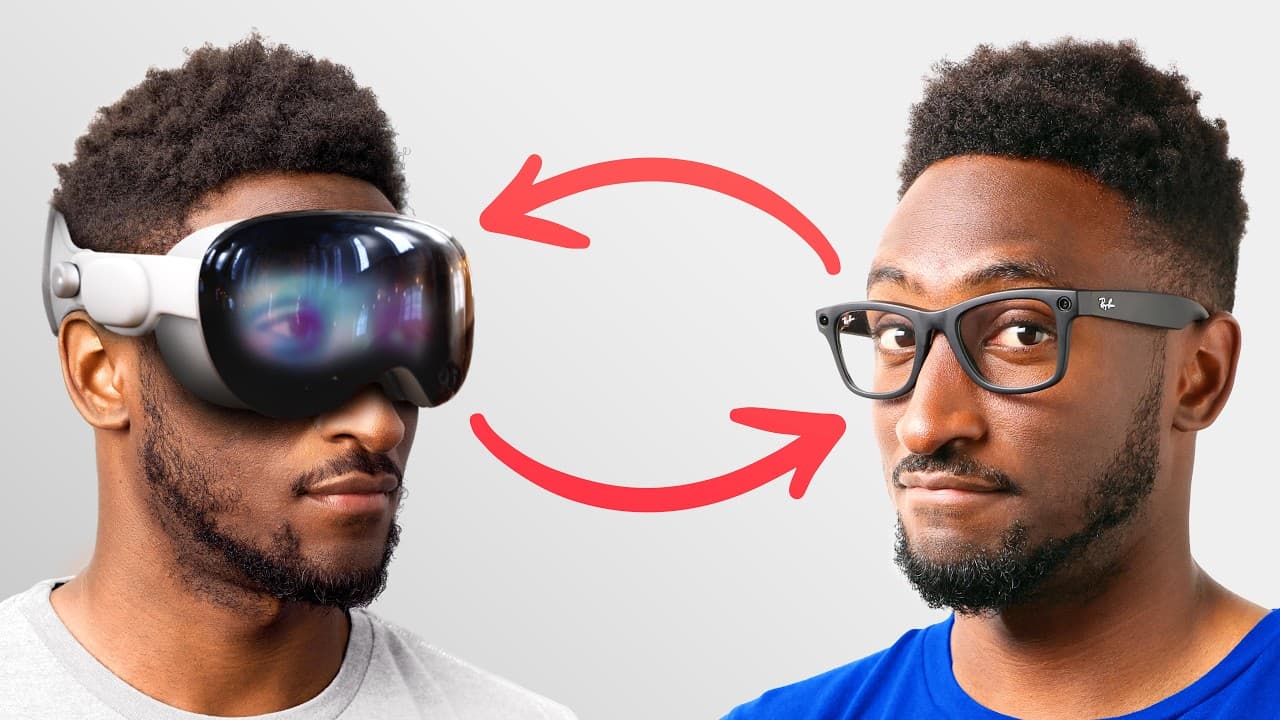
The future of mixed reality technologies involves both VR headsets, like Meta's Quest 3, and smart glasses, such as the RayBan Meta Smart Glasses. The Quest 3 offers improved pass-through capabilities for an immersive experience, while the smart glasses focus on discreet functionality but are currently limited. As tech advances, both forms will evolve, aiming for wider adoption and miniaturization.
Transcript
- All right, here's a theory I've been thinking about. Someday, maybe not next year or five or even 10 years, but maybe someday we'll all live in a world where we all have these wearable computers on our faces all the time. And a lot of these tech companies really believe in that future. Like I've never spoken to anyone on Planet Earth who believes... Read More
Key Insights
- 😒 VR headsets and smart glasses are competing to become the primary form of wearable technology for everyday use.
- 🎮 The Quest 3 VR headset offers impressive immersion and gameplay capabilities, making it a recommended choice for VR enthusiasts.
- 😎 The Meta Smart Glasses prioritize a discreet and normal appearance, with basic camera and audio functionality, but more advanced features are expected in the future.
- 😎 Tech companies like Meta are investing in both VR headsets and smart glasses, recognizing the potential for mass adoption of wearable devices.
- 😎 As technology advances, both VR headsets and smart glasses will continue to shrink in size and improve in functionality, potentially merging into a unified form of wearable computing.
- 🥹 The future of wearable tech on our faces holds exciting possibilities, with advancements that will make our current devices seem antiquated.
Install to Summarize YouTube Videos and Get Transcripts
Explore YouTube Video Summarizer or Get YouTube Transcript Extractor
Questions & Answers
Q: How is the pass-through feature of the Quest 3 VR headset improved compared to previous models?
The Quest 3 VR headset has additional sensors that provide color, stereo vision, low latency, and higher resolution in the pass-through mode. This allows for more intuitive setup and accurate mapping of the user's surroundings.
Q: Are the Meta Smart Glasses capable of displaying images or videos?
No, the Meta Smart Glasses do not have an integrated screen. They rely on audio and can be used to take first-person pictures and videos, but they have limited storage capacity and recording capabilities.
Q: Can you interact with the Meta Smart Glasses using voice commands?
Yes, the Meta Smart Glasses have a built-in voice assistant that allows users to ask questions, send and receive messages through compatible apps like WhatsApp Messenger, and perform limited tasks. However, it does not support setting alarms or accessing third-party services.
Q: How long does the battery of the Meta Smart Glasses last?
The battery life of the Meta Smart Glasses is limited due to their small size. On a single charge, they can last under two hours with intensive usage. However, the wireless charging case can provide up to 36 hours of battery life when recharging the glasses.
Key Insights:
- VR headsets and smart glasses are competing to become the primary form of wearable technology for everyday use.
- The Quest 3 VR headset offers impressive immersion and gameplay capabilities, making it a recommended choice for VR enthusiasts.
- The Meta Smart Glasses prioritize a discreet and normal appearance, with basic camera and audio functionality, but more advanced features are expected in the future.
- Tech companies like Meta are investing in both VR headsets and smart glasses, recognizing the potential for mass adoption of wearable devices.
- As technology advances, both VR headsets and smart glasses will continue to shrink in size and improve in functionality, potentially merging into a unified form of wearable computing.
- The future of wearable tech on our faces holds exciting possibilities, with advancements that will make our current devices seem antiquated.
- The choice between VR headsets and smart glasses is still uncertain, with companies exploring different strategies and technologies to determine which will become dominant in the market.
Summary & Key Takeaways
-
VR headsets, like the Quest 3 from Meta, are striving to become more comfortable and immersive for everyday use, with improved pass-through capabilities, high-resolution displays, and accurate hand tracking.
-
Smart glasses, such as Meta's RayBan Meta Smart Glasses, are designed to blend in with regular eyewear but currently have limited functionality, featuring a camera, speakers, and a computer. More powerful features are expected as technology advances.
-
Both VR headsets and smart glasses are being developed and invested in by tech companies, like Meta (formerly Facebook), as they explore which technology will gain mass adoption first.
Read in Other Languages (beta)
Share This Summary 📚
Summarize YouTube Videos and Get Video Transcripts with 1-Click
Try YouTube Summary with ChatGPT & Claude or YouTube Transcript Generator
Explore More Summaries from Marques Brownlee 📚



Summarize YouTube Videos and Get Video Transcripts with 1-Click
Try YouTube Summary with ChatGPT & Claude or YouTube Transcript Generator