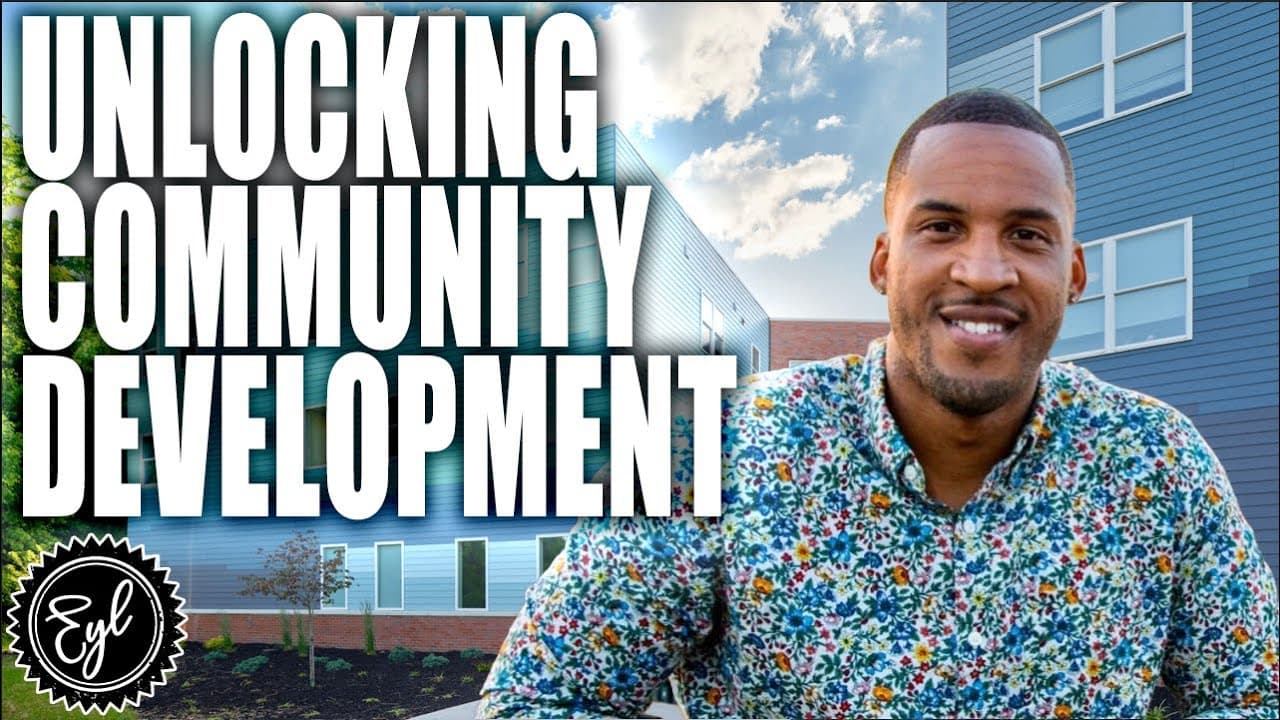
Unlocking Community Development with Brandon Rule
TL;DR
Starting out in real estate development often requires partnering with established developers, but branching out on your own is possible with financial backing and experience in community development projects.
Transcript
so you said last time like in order for a developer to really get into the game most time you have to like work under like a JV with an established developer right absolutely um so at what point can you Branch out on your own and not have to ride with another person in in the car uh from a the tax credit type perspective so Community Development le... Read More
Key Insights
- 💦 Real estate developers often need to work under a joint venture with an established developer to gain experience and credibility.
- ❓ Commercial real estate development can be pursued without a partnership if the developer has financial resources for hiring consultants.
- 🚕 Community development projects, particularly those involving tax credits, require a certain level of liquidity and net worth to become the developer.
- 📣 Partnerships can help developers overcome funding gaps and scale their projects.
- 🍉 Intentional planning and partnerships can help developers prepare for market changes and long-term goals.
- 🤩 Building relationships with key stakeholders, such as mayors and government officials, can lead to funding opportunities and support for development projects.
- 🤔 Grants and awards can be secured by submitting unique and well-thought-out proposals that align with the goals of the granting organization.
Install to Summarize YouTube Videos and Get Transcripts
Explore YouTube Video Summarizer or Get YouTube Transcript Extractor
Questions & Answers
Q: At what point can a developer branch out on their own without needing to partner with someone else?
It mostly depends on the type of development. In commercial real estate, having financial resources allows individuals to hire consultants and start their own projects. However, for community development projects involving tax credits, a developer typically needs a million dollars in liquid assets and 5 million net worth.
Q: How can partnerships help real estate developers scale their projects?
Partnerships can be beneficial when planning for the future or expanding the scope of projects. By partnering with other developers or consultants, developers can pool resources, expertise, and financial backing to take on larger developments and overcome funding gaps.
Q: How did the interviewee develop a relationship with Secretary Fudge and secure a $50 million grant?
The interviewee didn't personally know Secretary Fudge. However, through relationships with the mayor and councilwoman of Birmingham, who had connections with Secretary Fudge, the interviewee's development proposal and alignment with the city's goals caught the attention of Secretary Fudge, leading to the grant.
Q: How does the interviewee plan to scale their real estate development projects?
The interviewee plans to do multiple projects every year, focusing on affordable and market-rate developments in Birmingham. By building a pipeline of projects and partnering with other organizations, the interviewee aims to scale their real estate development efforts.
Summary & Key Takeaways
-
Developers often have to work with established developers as a joint venture in order to gain experience and credibility.
-
In commercial real estate, individuals with financial resources can hire development consultants and start their own projects.
-
Community development projects, especially those involving tax credits, require a certain level of liquidity and net worth to be a developer.
Read in Other Languages (beta)
Share This Summary 📚
Summarize YouTube Videos and Get Video Transcripts with 1-Click
Try YouTube Summary with ChatGPT & Claude or YouTube Transcript Generator
Explore More Summaries from Earn Your Leisure 📚




Summarize YouTube Videos and Get Video Transcripts with 1-Click
Try YouTube Summary with ChatGPT & Claude or YouTube Transcript Generator