Repairing Underground Power Cables Is Nearly Impossible
TL;DR
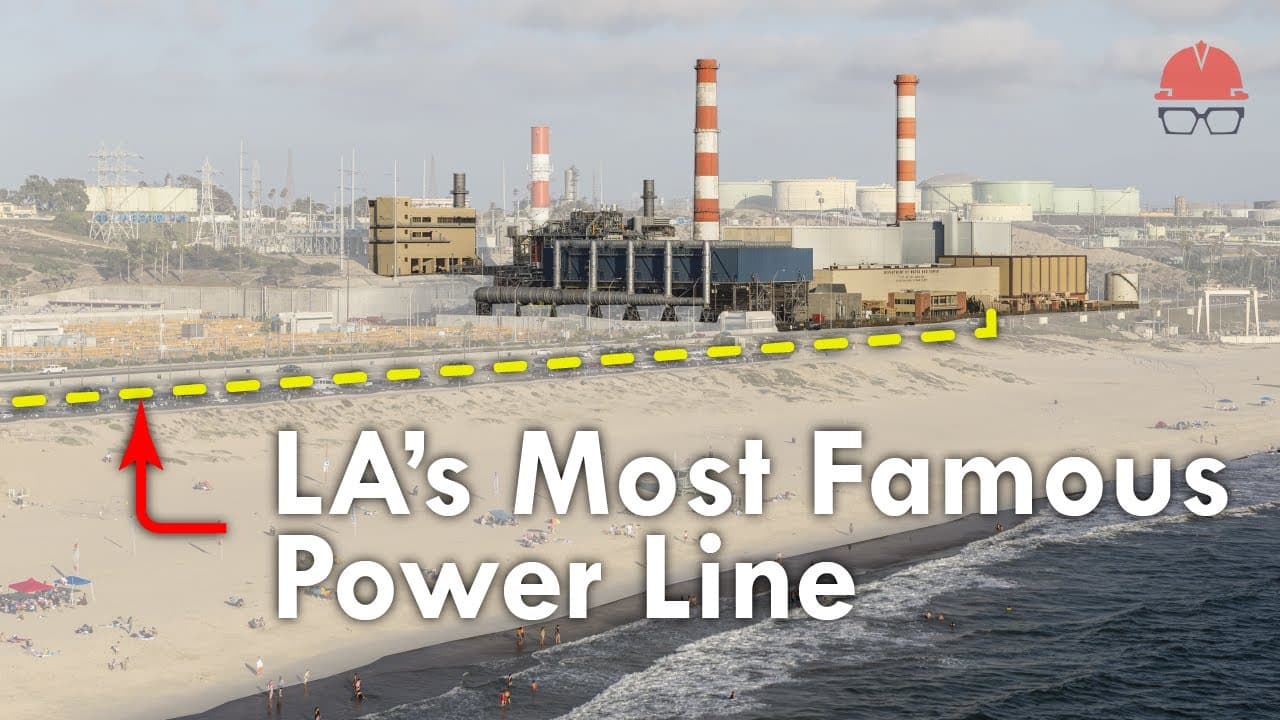
This video discusses the underground transmission line, Scattergood-Olympic, which involved innovative engineering and repair techniques.
Transcript
On an autumn evening in 1989, Tom McMahon noticed some unusual construction getting started in his Los Angeles neighborhood. As more and more trucks began showing up with bizarre power tools, test equipment, and tanks of liquid nitrogen, his curiosity got the better of him and he had to take a look. He learned that a high voltage undergrou... Read More
Key Insights
- ⚡ High voltage transmission lines increase electricity delivery efficiency but also create safety and arc formation challenges.
- 🫥 Underground transmission lines require innovative methods, such as fluid-filled cables and liquid dielectric insulation, to overcome obstacles.
- 🫥 Thermal mechanical bending and faults pose risks to underground transmission lines, requiring careful design and repairs.
Install to Summarize YouTube Videos and Get Transcripts
Explore YouTube Video Summarizer or Get YouTube Transcript Extractor
Questions & Answers
Q: How did the underground transmission line prevent arcs and maintain insulation?
The line used fluid-filled cables and liquid dielectric to create an insulative layer, prevent arc formation, and act as a heat sink to carry away heat generated from losses in the conductors.
Q: How was the fault in the underground line located?
Various methods were employed, including ground-penetrating radar, time-domain reflectometry, and the use of a thumper device that introduces impulses of high voltage to create an electrical arc at the fault location.
Q: How was the faulty insulated conductor repaired?
The oil-filled pipe surrounding the conductor was frozen using liquid nitrogen, creating solid plugs on either end of the section to be repaired. Preventative measures were implemented during long repairs to address splices in danger of experiencing faults.
Q: What were the updates to the Scattergood-Olympic line?
The line experienced continued degradation of insulation, leading to a replacement project using polyethylene-insulated cables. The original line remains as a backup if needed.
Summary & Key Takeaways
-
In the 1970s, engineers in LA decided to run high voltage transmission lines underground to deliver power from the Scattergood power plant to the Olympic substation.
-
The underground transmission line used fluid-filled cables and liquid dielectric to insulate and cool the conductors, increasing efficiency and preventing arc formation.
-
The line faced challenges such as thermal mechanical bending, faults, and repairs, leading to the development of a replacement project using polyethylene-insulated cables.
Read in Other Languages (beta)
Share This Summary 📚
Summarize YouTube Videos and Get Video Transcripts with 1-Click
Try YouTube Summary with ChatGPT & Claude or YouTube Transcript Generator
Explore More Summaries from Practical Engineering 📚




Summarize YouTube Videos and Get Video Transcripts with 1-Click
Try YouTube Summary with ChatGPT & Claude or YouTube Transcript Generator