How Water Towers Work
TL;DR
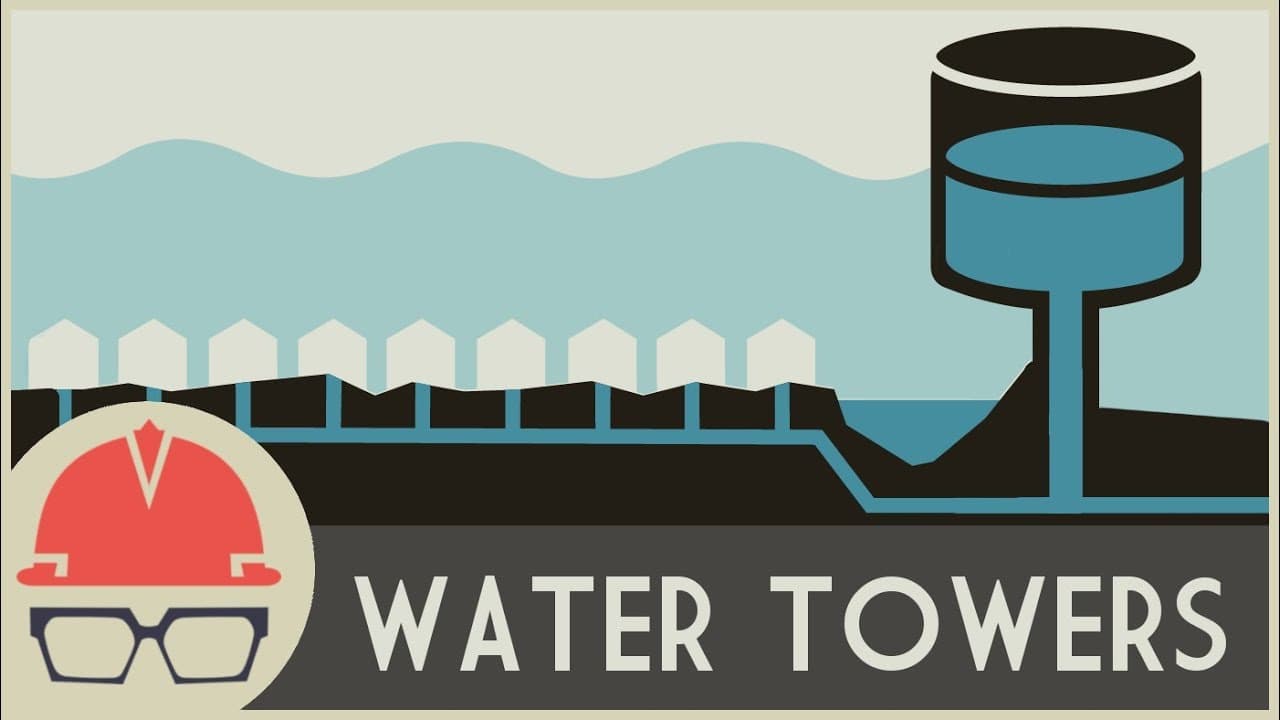
Water towers store and distribute water efficiently using gravity.
Transcript
Clean water is one of humanity’s most fundamental needs, and those of us who live in urban areas usually get our water from some kind of centralized public system. Operating a water system is a major responsibility that has implications for public health and safety. In dense urban areas, a clean and abundant supply of water is an absolute necessity... Read More
Key Insights
- Water towers are crucial for urban water systems, providing clean water for drinking, sanitation, and firefighting.
- Water demand fluctuates daily, peaking in the morning and evening, which requires efficient water storage solutions.
- Water towers store not only water but also the energy used to pressurize the water, making them energy-efficient.
- Elevated storage tanks help maintain system pressure, preventing contamination and ensuring reliable water supply during power outages.
- Water distribution relies on pressure zones to serve areas of different elevations, maintaining adequate pressure across urban landscapes.
- Tall buildings often require their own pumps and storage tanks to ensure water reaches upper floors effectively.
- Some cities can rely on natural elevation for water supply, minimizing the need for additional pressure systems.
- Water towers are a reliable component of water infrastructure, offering resilience against power outages and demand fluctuations.
Install to Summarize YouTube Videos and Get Transcripts
Explore YouTube Video Summarizer or Get YouTube Transcript Extractor
Questions & Answers
Q: How do water towers help manage fluctuating water demand?
Water towers help manage fluctuating water demand by storing water during low-demand periods and releasing it during peak demand. This ensures a steady supply and reduces the need for oversized pumps, thus saving on infrastructure costs and energy usage.
Q: Why is maintaining water pressure important in urban water systems?
Maintaining water pressure is crucial for preventing contamination and ensuring efficient water delivery. Adequate pressure prevents contaminants from entering the system through leaks and ensures that water reaches all parts of the distribution network, including high-rise buildings.
Q: What role do water towers play during power outages?
During power outages, water towers provide a crucial backup by maintaining system pressure and water supply without relying on pumps. The stored water and energy allow the system to function uninterrupted, ensuring that residents still have access to water.
Q: How do pressure zones work in water distribution systems?
Pressure zones in water distribution systems are designed to manage varying elevations within a city. Each zone has its own water tower or pressure system, ensuring that all areas receive adequate water pressure regardless of their elevation relative to the main water source.
Q: Why might tall buildings require their own water supply systems?
Tall buildings often need their own water supply systems because the city water pressure may not be sufficient to reach the upper floors. These buildings use pumps and sometimes additional storage tanks to ensure adequate water pressure and supply to all levels.
Q: How do some cities minimize the need for water towers?
Some cities minimize the need for water towers by utilizing natural elevation for their water supply. By sourcing water from higher altitudes, they can rely on gravity to maintain pressure, reducing the need for additional infrastructure like pumps and towers.
Q: What are the benefits of storing energy in water towers?
Storing energy in water towers allows for efficient use of electricity by running pumps during off-peak hours when energy is cheaper. This stored energy maintains water pressure during peak hours without additional energy costs, enhancing overall system efficiency.
Q: Why are water towers considered a reliable component of water infrastructure?
Water towers are considered reliable because they provide consistent water pressure and supply, even during power outages or peak demand periods. Their ability to store both water and energy makes them a resilient and cost-effective solution for urban water systems.
Summary & Key Takeaways
-
Water towers play a vital role in urban water systems by storing and distributing water efficiently. They help manage fluctuating water demand, especially during peak times, by using gravity to maintain pressure and supply.
-
Elevated storage tanks store both water and the energy used to pressurize it, offering a cost-effective and reliable solution for maintaining water supply in urban areas, even during power outages.
-
Water distribution systems often use pressure zones to serve areas at different elevations, ensuring consistent water pressure across cities. Tall buildings may require additional infrastructure to maintain adequate water supply on higher floors.
Read in Other Languages (beta)
Share This Summary 📚
Summarize YouTube Videos and Get Video Transcripts with 1-Click
Try YouTube Summary with ChatGPT & Claude or YouTube Transcript Generator
Explore More Summaries from Practical Engineering 📚




Summarize YouTube Videos and Get Video Transcripts with 1-Click
Try YouTube Summary with ChatGPT & Claude or YouTube Transcript Generator