Why Tunnels Don't Collapse
TL;DR
Engineers use rock bolts to stabilize tunnels and prevent collapse.
Transcript
Tunnels play an important role in our constructed environment as passageways for mines, conveyance for utilities, and routes for transportation. But, excavating a tunnel underground in unstable material can lead to some dangerous situations, like the 2010 mining accident in Chile when 33 men were trapped deep in subsurface for more than 2 months. H... Read More
Key Insights
- Tunnels are essential for transportation, utilities, and mining but pose risks of collapse if not properly stabilized.
- The pressure in the Earth's subsurface from overlying soil and rock creates compressive forces that tunnels disrupt.
- Soil loses strength when tensile forces pull particles apart, requiring tunnel linings to support the soil above.
- Rock has some tensile strength, unlike soil, but jointed rock behaves similarly to soil, needing support to prevent collapse.
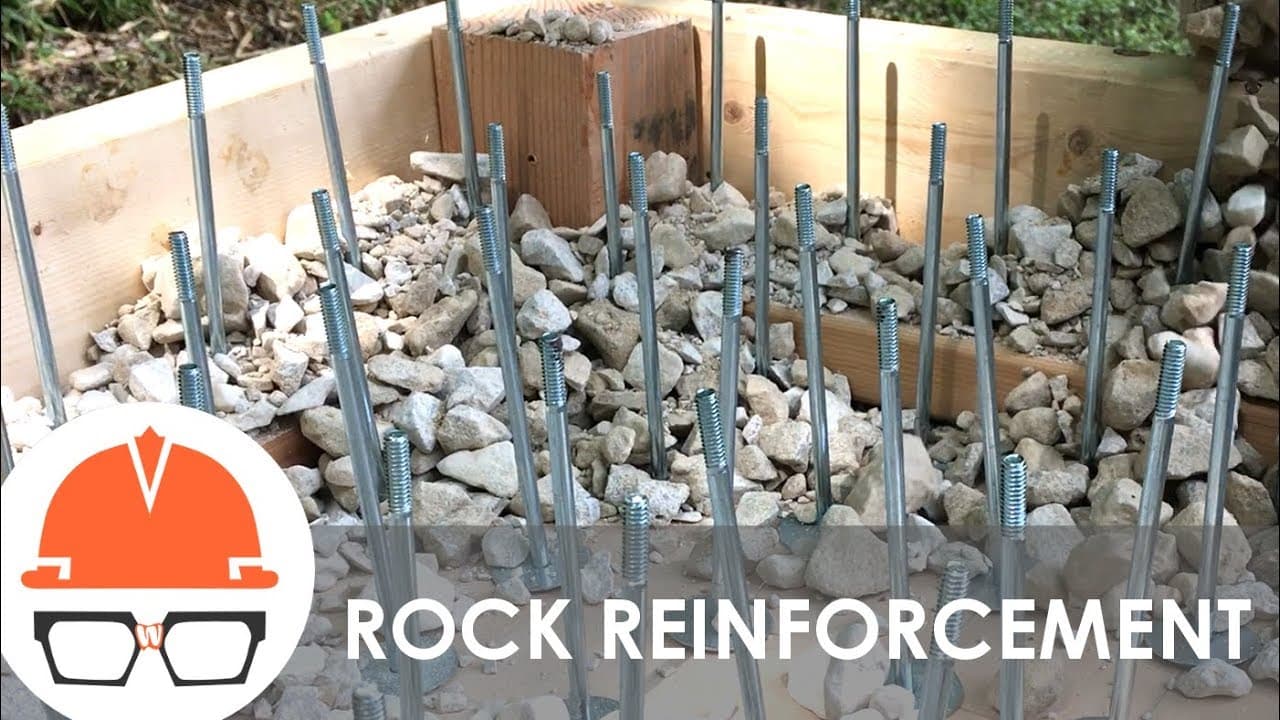
- Rock bolts, usually made from steel, stabilize rock excavations by reinforcing and creating a compression zone.
- The demonstration used gravel to simulate rock, showing how rock bolts can stabilize a tunnel roof by creating a bridge.
- Rock bolts are installed by drilling into native rock, and they can be anchored using wedges or grout.
- This method of reinforcement is cost-effective and crucial for public safety in tunneling projects.
Install to Summarize YouTube Videos and Get Transcripts
Explore YouTube Video Summarizer or Get YouTube Transcript Extractor
Questions & Answers
Q: How do engineers prevent tunnels from collapsing?
Engineers prevent tunnels from collapsing by using reinforcement techniques such as lining the tunnel walls with materials like steel or concrete, and installing rock bolts. These methods help transfer the load and stresses from the soil and rock above the tunnel, maintaining structural integrity and safety.
Q: What is the role of rock bolts in tunnel stabilization?
Rock bolts play a crucial role in tunnel stabilization by reinforcing the rock mass around the tunnel. They create a continuous zone of compression, effectively knitting the fractured rock together, which allows it to resist tensile stress. This method is cost-effective and enhances safety by preventing collapses in jointed rock formations.
Q: Why is it necessary to line tunnels with materials like steel or concrete?
Lining tunnels with materials like steel or concrete is necessary because it provides structural support to the tunnel walls, transferring the load of the overlying soil and rock. This is especially important in soil, which loses strength under tensile stress, ensuring the tunnel remains stable and safe for use.
Q: How do rock bolts differ from traditional tunnel linings?
Rock bolts differ from traditional tunnel linings in that they are used to reinforce the existing rock mass rather than providing a separate structural support. They are installed by drilling into the rock and tensioning the bolts, creating a compression zone that stabilizes the rock and prevents collapse, often at a lower cost than full linings.
Q: What challenges do jointed rock formations pose in tunnel construction?
Jointed rock formations pose challenges because they lack tensile strength, behaving more like soil with large particles. This makes them susceptible to collapse under tensile stress. Engineers must use reinforcement methods, such as rock bolts, to stabilize these formations and ensure tunnel safety and structural integrity.
Q: How does the demonstration using gravel illustrate tunnel stabilization?
The demonstration using gravel illustrates tunnel stabilization by simulating a rock mass with gravel and showing how rock bolts can create a compression zone. By installing bolts in a grid pattern and tensioning them, the gravel forms a bridge-like structure, demonstrating how rock bolts stabilize a tunnel roof by preventing collapse.
Q: What are the common methods for anchoring rock bolts?
Common methods for anchoring rock bolts include using wedge devices or pumping grout into the drilled holes. These methods secure the bolts in place, allowing them to create the necessary compression zone in the rock mass. This anchoring is crucial for the effectiveness of rock bolts in stabilizing tunnels.
Q: Why is public safety a priority in tunnel construction?
Public safety is a priority in tunnel construction because tunnels are integral to transportation and infrastructure, and their collapse can lead to catastrophic consequences. Ensuring tunnels are stable and safe protects the lives of those who use them and the surrounding environment, making safety a fundamental aspect of engineering projects.
Summary & Key Takeaways
-
Tunnels are crucial for various infrastructures but pose collapse risks when excavated in unstable materials. Engineers use techniques like lining and rock bolts to stabilize tunnels, ensuring safety and functionality.
-
Rock bolts, typically made from steel, are used to reinforce rock excavations by creating a zone of compression, effectively knitting the rock mass together to resist tensile stress and prevent collapse.
-
A demonstration using gravel illustrated how rock bolts stabilize tunnel roofs by creating a bridge-like structure. This method reduces construction costs and enhances safety, making it a vital practice in civil engineering.
Read in Other Languages (beta)
Share This Summary 📚
Summarize YouTube Videos and Get Video Transcripts with 1-Click
Try YouTube Summary with ChatGPT & Claude or YouTube Transcript Generator
Explore More Summaries from Practical Engineering 📚




Summarize YouTube Videos and Get Video Transcripts with 1-Click
Try YouTube Summary with ChatGPT & Claude or YouTube Transcript Generator