The Japanese Language
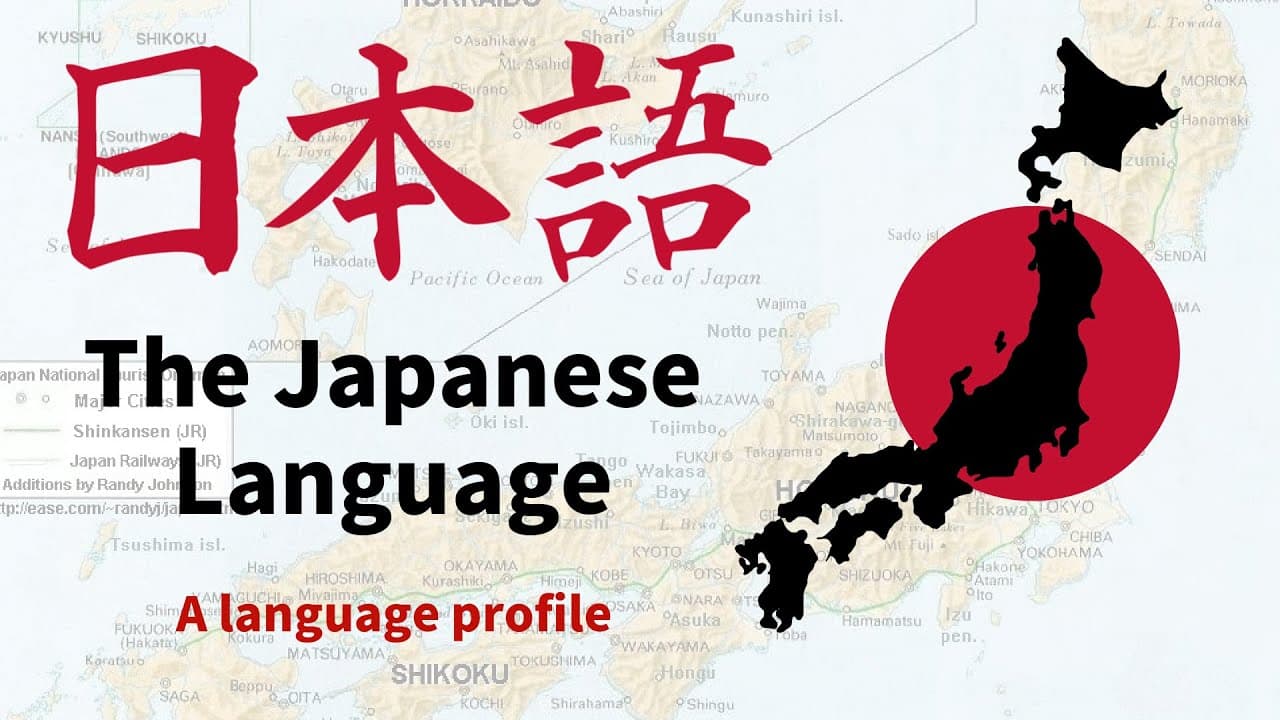
TL;DR
An exploration of Japanese language history, structure, and usage.
Transcript
Hello everyone. Welcome to the Langfocus channel, and my name is Paul. Today's topic is, The Japanese language. Or ❝Nihongo (日本語)❞ as it's called in Japanese. Japanese has around 126 million native speakers. Making it the 9th most spoken language in the world, if we focus on native speakers alone. It's spoken mainly in the North-East Asian nation o... Read More
Key Insights
- Japanese is the ninth most spoken language worldwide, with around 126 million native speakers, primarily in Japan.
- The Japanese language is part of the Japonic language family, which also includes the endangered Ryukyuan languages.
- Japanese writing evolved from Chinese characters, leading to the development of unique systems like Hiragana and Katakana.
- The Japanese language has absorbed a significant amount of vocabulary from Chinese, and later from European languages, especially during the Meiji period.
- Japanese phonology features five vowels and a pitch accent system, which can be challenging for learners.
- Japanese syntax follows a Subject-Object-Verb (SOV) order, and context often determines the omission of subjects and objects.
- The language uses particles like は (wa) and が (ga) to indicate topics and subjects, respectively, which are crucial for understanding sentence structure.
- Agglutination in Japanese allows for complex verb conjugations, conveying nuanced meanings through various suffixes and prefixes.
Install to Summarize YouTube Videos and Get Transcripts
Explore YouTube Video Summarizer or Get YouTube Transcript Extractor
Questions & Answers
Q: What is the origin and classification of the Japanese language?
The Japanese language belongs to the Japonic language family, which includes the endangered Ryukyuan languages. Its early history and connections to other languages are largely unknown, though some theories suggest a common ancestor with Korean or inclusion in the Altaic language family. However, these theories are debated and not widely accepted.
Q: How did the Japanese writing system develop?
The Japanese writing system initially adapted Chinese characters, with the earliest examples from the 8th century. Systems like Kanbun and Man'yōgana used Chinese characters for Japanese phonetics. Over time, simplified phonetic systems, Hiragana and Katakana, emerged to facilitate writing, leading to the modern Japanese writing system that incorporates Kanji, Hiragana, and Katakana.
Q: What role did Chinese influence play in the development of Japanese?
Chinese influence was significant in shaping Japanese language and culture, especially during the period from the 3rd to 9th centuries. Chinese characters became the first literary language in Japan. This resulted in a large influx of Chinese vocabulary into Japanese, with Chinese characters being adapted to represent Japanese sounds and meanings, forming a substantial part of the Japanese lexicon.
Q: How does the phonology of Japanese differ from English?
Japanese phonology is characterized by a simple vowel system with only five vowels, each with a long form. Unlike English, Japanese vowels are always fully articulated. The language also features a pitch accent system, where pitch distinguishes word meanings. Japanese syllables typically end in vowels, simplifying pronunciation compared to English's consonant clusters.
Q: What is the significance of pitch accent in Japanese?
Pitch accent in Japanese assigns either a high or low pitch to moras, influencing word meaning and pronunciation. While incorrect pitch rarely impedes communication, it can result in a noticeable foreign accent. Pitch accent varies across dialects, adding complexity for learners, but is crucial for native-like pronunciation and understanding regional variations.
Q: How does Japanese syntax differ from English?
Japanese syntax follows a Subject-Object-Verb (SOV) order, unlike the Subject-Verb-Object (SVO) order in English. The verb typically concludes the sentence. Context often allows the omission of subjects and objects, which are understood implicitly. Particles like は (wa) and が (ga) mark topics and subjects, respectively, providing essential grammatical information.
Q: What are the functions of particles は (wa) and が (ga) in Japanese?
In Japanese, the particle は (wa) marks the topic of a sentence, indicating what the sentence is about, often referring to known information. The particle が (ga) identifies the subject, introducing new information or emphasizing a specific element. These particles are crucial for understanding sentence focus and structure, guiding the listener's attention.
Q: What is agglutination in Japanese, and how does it affect verb conjugation?
Agglutination in Japanese involves adding affixes to a word stem to express additional meanings or grammatical functions. This is particularly evident in verbs, where suffixes modify tense, mood, and voice. For example, the verb stem 'okoru' (to get angry) can be altered with suffixes to form passive, causative, or negative forms, showcasing the language's morphological richness.
Summary & Key Takeaways
-
The Japanese language, known as Nihongo, is primarily spoken in Japan and has a rich history influenced by Chinese culture. Despite being the ninth most spoken language globally, its origins remain largely unknown, with some theories suggesting connections to Korean or the Altaic language family.
-
Japanese writing initially used Chinese characters, evolving into systems like Kanbun and Man'yōgana. Over time, simplified phonetic characters, Hiragana and Katakana, were developed to ease the writing process, leading to the modern Japanese writing system.
-
Japanese vocabulary is a blend of native words, Chinese loanwords, and European influences. The language's phonology is straightforward with five vowels, but pitch accent and agglutination in verbs add complexity. Japanese syntax is SOV, with particles marking grammatical relationships.
Read in Other Languages (beta)
Share This Summary 📚
Summarize YouTube Videos and Get Video Transcripts with 1-Click
Try YouTube Summary with ChatGPT & Claude or YouTube Transcript Generator
Explore More Summaries from Langfocus 📚






Summarize YouTube Videos and Get Video Transcripts with 1-Click
Try YouTube Summary with ChatGPT & Claude or YouTube Transcript Generator