What Happens When Reservoirs Run Dry Due to Drought?
TL;DR
When reservoirs run dry due to prolonged drought, water availability becomes a critical issue, often leading to higher costs and increased conservation efforts. Community water supply is affected economically rather than in a sudden emergency, forcing utilities to invest in alternative sourcing and infrastructure. The case of Optima Lake Dam in Oklahoma illustrates the challenges of managing water resources in a changing climate.
Transcript
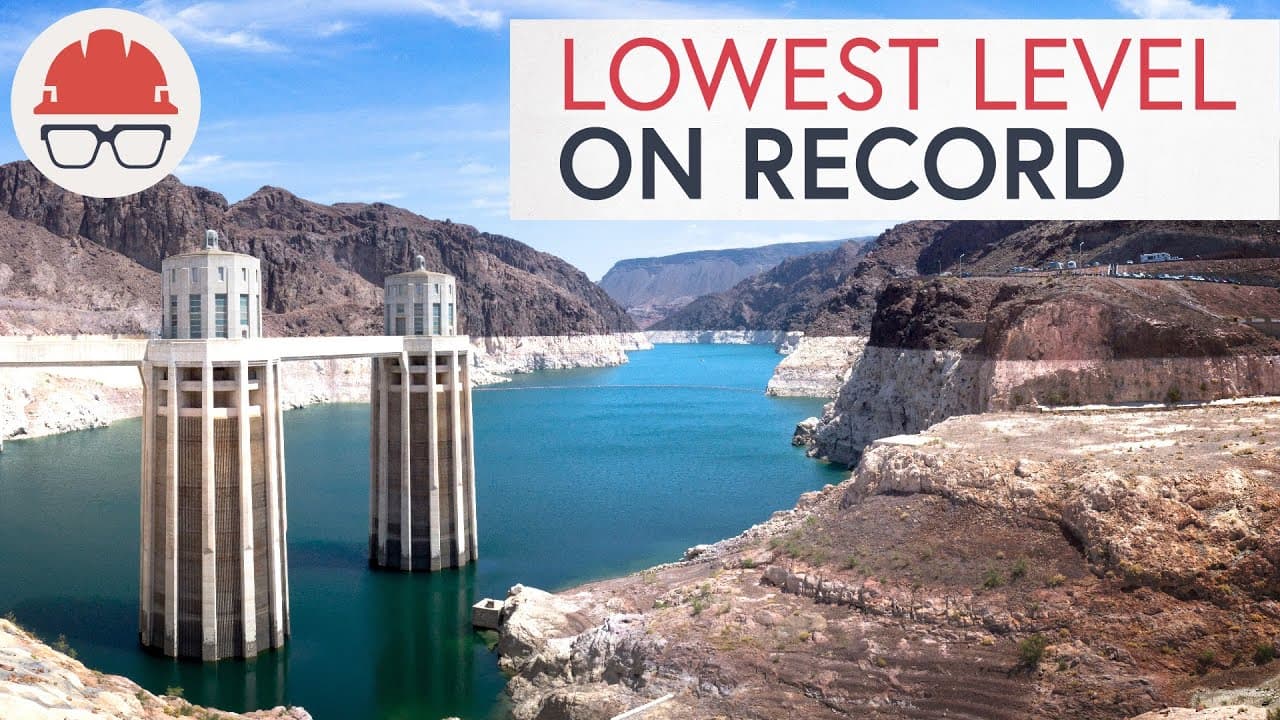
In June of 2022, the level in Lake Mead, the largest water reservoir in the United States formed by the Hoover Dam, reached yet another all-time low of 175 feet or 53 meters below full, a level that hasn’t been seen since the lake was first filled in the 1930s. Rusted debris, sunken boats, and even human remains have surfaced from beneath the r... Read More
Key Insights
- Lake Mead and other major reservoirs in the western U.S. are at critically low levels, highlighting severe water scarcity issues.
- The southwestern U.S. is experiencing a 'mega-drought,' the driest period in more than a thousand years, affecting water availability.
- Reservoirs serve as essential water storage facilities, providing a firm yield during droughts by storing excess water from wet periods.
- Dams are built to create reservoirs, utilizing natural topography to store massive volumes of water, essential for consistent supply.
- An empty reservoir is not inherently negative; it can indicate efficient use during droughts, as reservoirs are not built larger than needed.
- Water availability is largely an economic issue, with utilities investing in infrastructure and conservation to manage scarcity and costs.
- Climate change impacts long-term streamflows, complicating reservoir yield assessments and necessitating adaptive water management strategies.
- The Optima Lake Dam in Oklahoma serves as a cautionary tale of assumptions about water availability, as it never filled due to reduced streamflows.
Install to Summarize YouTube Videos and Get Transcripts
Explore YouTube Video Summarizer or Get YouTube Transcript Extractor
Questions & Answers
Q: What is the current state of Lake Mead and other major reservoirs?
Lake Mead, the largest reservoir in the U.S., and other major reservoirs like Lake Powell and Lake Shasta are at critically low levels. This is due to prolonged droughts in the western U.S., with water levels reaching unprecedented lows, highlighting severe water scarcity issues and the need for effective water management strategies.
Q: How do reservoirs help manage water supply variability?
Reservoirs are crucial for managing water supply variability by storing excess water during wet periods. This stored water provides a consistent supply during dry periods or droughts, ensuring a firm yield. Dams create reservoirs by utilizing natural topography, allowing for the storage of massive volumes of water that smooth out seasonal and yearly fluctuations in water availability.
Q: Why is an empty reservoir not necessarily a bad thing?
An empty reservoir can indicate efficient use of stored water during droughts, as reservoirs are not built larger than needed. They are designed to provide a firm water supply during dry periods, and using the available storage during droughts is a sign of good stewardship. Empty reservoirs sometimes reflect a successful balance between supply and demand in water management.
Q: How does climate change affect reservoir yield assessments?
Climate change impacts long-term streamflows, complicating reservoir yield assessments. Historical streamflow data may not accurately predict future conditions, as changing climate patterns alter precipitation and water availability. This necessitates adaptive water management strategies that account for potential changes in climate and streamflow patterns over the reservoir's lifetime.
Q: What economic factors influence water availability?
Water availability is largely influenced by economic factors, as utilities invest in infrastructure like pipelines, wells, and desalination plants to manage scarcity. These investments increase costs, which are passed on to ratepayers. Conservation efforts and higher water prices also impact availability, affecting sectors like agriculture and potentially altering regional economic dynamics.
Q: What lessons can be learned from the Optima Lake Dam case?
The Optima Lake Dam in Oklahoma serves as a cautionary tale about assumptions regarding water availability. It never filled due to reduced streamflows caused by groundwater pumping. This highlights the importance of considering changing environmental conditions and the need for adaptive management in planning and constructing water infrastructure, ensuring sustainable water supply solutions.
Q: What are the impacts of drying reservoirs on individuals and communities?
Drying reservoirs primarily impact individuals and communities economically. Increased costs for water infrastructure, conservation efforts, and higher water prices affect ratepayers. While most individuals may not face immediate water shortages, the economic implications, such as higher food costs and potential changes in agricultural practices, trickle down to affect broader community dynamics.
Q: How do utilities plan for future water supply and demand?
Utilities maintain long-term plans that project future water supply and demand, allowing them to develop new sources or implement conservation measures before shortages become emergencies. These plans involve infrastructure investments and strategies to manage water scarcity, ensuring a reliable supply for customers while adapting to changing environmental and economic conditions.
Summary & Key Takeaways
-
The video discusses the critical water levels in major reservoirs like Lake Mead due to prolonged droughts in the southwestern U.S., emphasizing the importance of reservoirs in managing water supply variability.
-
Reservoirs are essential for storing water during wet periods to ensure a firm yield during droughts, but climate change and economic factors complicate water management and availability.
-
The Optima Lake Dam in Oklahoma illustrates the challenges of predicting water availability, highlighting the need for adaptive management strategies in the face of changing climate conditions.
Read in Other Languages (beta)
Share This Summary 📚
Summarize YouTube Videos and Get Video Transcripts with 1-Click
Try YouTube Summary with ChatGPT & Claude or YouTube Transcript Generator
Explore More Summaries from Practical Engineering 📚



Summarize YouTube Videos and Get Video Transcripts with 1-Click
Try YouTube Summary with ChatGPT & Claude or YouTube Transcript Generator