How Can Soft Robots Explore the Deep Sea?
TL;DR
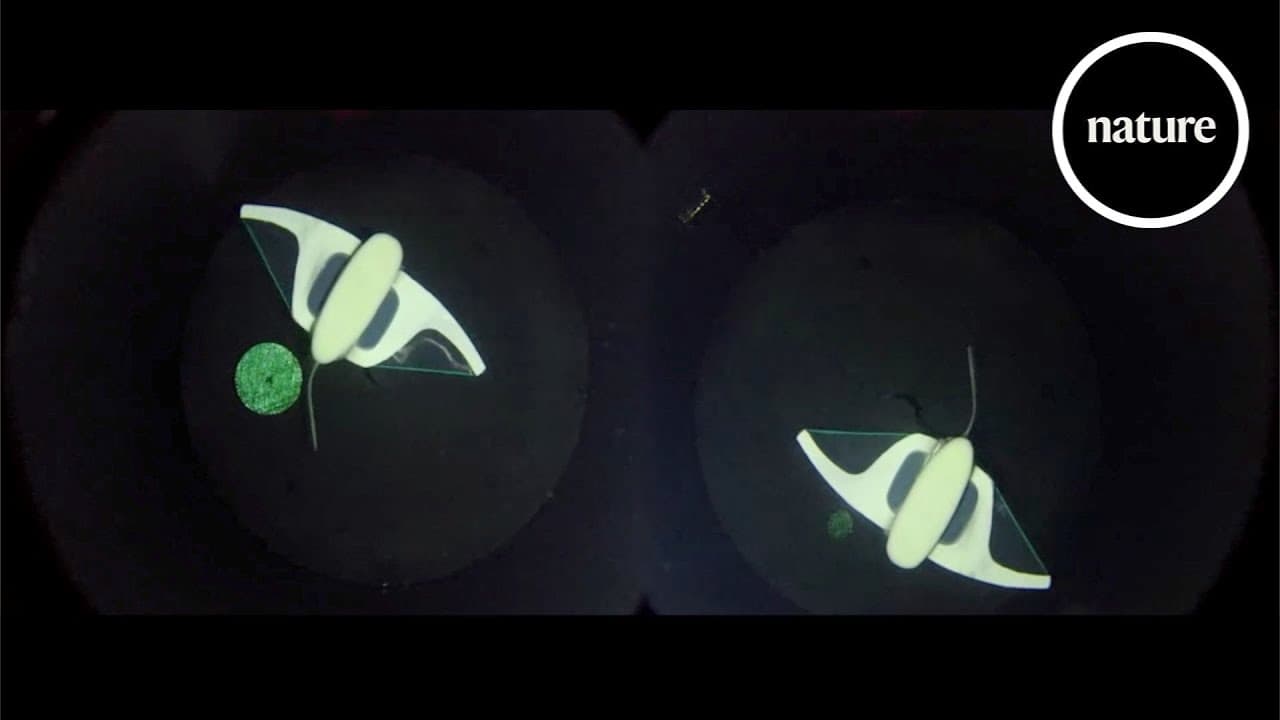
Soft robots offer a promising solution for deep-sea exploration, adapting to extreme pressures without the risk of catastrophic failure. Inspired by the mariana snailfish, researchers designed a flexible robot that successfully completed field tests, including a remarkable dive to nearly 11 kilometres deep. Future developments aim to enhance its capabilities, proving that innovation in robotics can stem from nature.
Transcript
for decades researchers have been devising new ways to explore the deep ocean and now a team of roboticists have taken inspiration from the weird and wonderful creatures they found there to build a new type of soft explorer this pliable box gently flies untethered through the deep its soft structure is designed to tackle the greatest engineering ch... Read More
Key Insights
- 🤢 Soft robotics are evolving as a viable alternative to traditional rigid robotic designs for deep-sea exploration, thanks to their ability to adapt to extreme environments.
- 🥺 Research into the mariana snailfish's adaptive structures has led to innovative engineering solutions for managing pressure in aquatic robotics.
- 🤖 The robot’s design considers safety for electronics by distributing components to reduce stress and potential failure.
- 🏆 Initial tests show promise for the robotic explorer, with successful operations in varying pressures confirming the robustness of the design.
- ✊ Future developments are anticipated to include enhancements to power, agility, and sensor integration for improved exploration capabilities.
- 🤔 The gradual prototyping and testing process underscores the intricate challenges of deep-sea robotics and the need for innovative thinking in engineering.
- ♻️ By learning from evolution, researchers are applying biological principles to solve contemporary engineering problems in extreme environments.
Install to Summarize YouTube Videos and Get Transcripts
Explore YouTube Video Summarizer or Get YouTube Transcript Extractor
Questions & Answers
Q: What inspired the design of the soft robotic explorer?
The design was inspired primarily by the mariana snailfish, the deepest living fish, known for its unique skeletal structure that helps it survive extreme pressures. Researchers sought to replicate the snailfish's design principles, particularly in distributing vulnerable electronics and utilizing flexible materials to better cope with deep-sea conditions.
Q: How does the soft structure of the robot compare to traditional deep-sea exploration vehicles?
Traditional deep-sea vehicles typically rely on rigid materials or pressure compensation systems, which can be weighty and inflexible. In contrast, the soft structure of this robot is designed to absorb and adapt to pressure rather than break, minimizing the risk of catastrophic failures associated with rigid components.
Q: What were some key tests conducted to evaluate the robot’s performance?
Key tests included initial swims in a controlled lab environment under pressurized conditions, followed by field tests in a lake and a depth of over three kilometers in the South China Sea. The ultimate test was at a depth of nearly 11 kilometers in the Mariana Trench, where it successfully functioned under extreme pressure for 45 minutes.
Q: What are the limitations of the current soft robotic explorer?
As it stands, the robot is described as slow, simple, and not particularly maneuverable, which limits its functionality in exploration. However, researchers consider this an initial proof of concept, suggesting that future designs could integrate advanced electronics and sensors to enhance performance and adaptability.
Summary & Key Takeaways
-
A team of roboticists has designed a soft, flexible robotic explorer inspired by deep-sea creatures, particularly the mariana snailfish, to combat extreme underwater pressures.
-
Traditional deep-sea vehicles face challenges with rigid materials that can lead to catastrophic failures, but the soft structure of this robot allows it to "squish" under pressure, reducing risk.
-
Field tests in various environments, including the Mariana Trench, demonstrated the robot's capabilities, validating the concept and highlighting potential improvements for future iterations.
Read in Other Languages (beta)
Share This Summary 📚
Summarize YouTube Videos and Get Video Transcripts with 1-Click
Try YouTube Summary with ChatGPT & Claude or YouTube Transcript Generator
Explore More Summaries from nature video 📚



Summarize YouTube Videos and Get Video Transcripts with 1-Click
Try YouTube Summary with ChatGPT & Claude or YouTube Transcript Generator