What Is the Dutch Language?
TL;DR
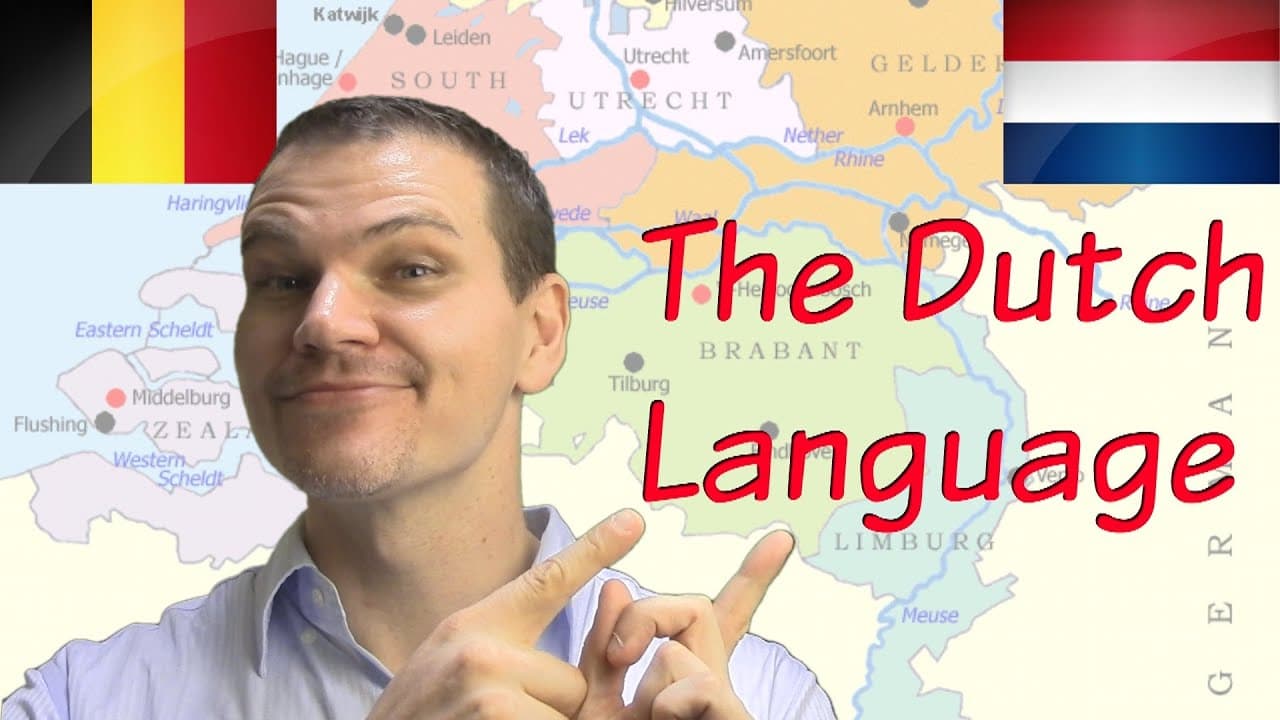
Dutch is a West Germanic language spoken by 23 million native speakers, primarily in the Netherlands and Belgium. It shares similarities with English and German, but is distinct in its grammar and vocabulary. Despite its complexities, English speakers may find Dutch somewhat familiar due to cognate vocabulary and similar sentence structures.
Transcript
If you're learning a language, I personally recommend Italki. Study with online tutors for around 30% of the price of offline tutors Buy your first lesson and get your second lesson free. Check out the link in the description Hello everyone. Welcome to the LangFocus channel and my name is Paul. Today's topic is the Dutch language. Dutch is a lan... Read More
Key Insights
- Dutch is spoken by 23 million native speakers, mainly in the Netherlands and Belgium.
- It is a member of the West Germanic branch, closely related to English and German.
- Dutch has three genders traditionally, but modern usage mainly distinguishes between common and neuter.
- The verb system in Dutch is similar to English, with verbs often placed at the end of sentences.
- Dutch pronunciation can be challenging due to unique sounds like the Dutch 'G'.
- Dutch has a rich literary history, with Middle Dutch being quite readable for modern speakers.
- Regional languages related to Dutch include Frisian, Low Saxon, and Limburgish.
- Standard Dutch is becoming more widespread, leading to a decline in regional dialects.
Install to Summarize YouTube Videos and Get Transcripts
Explore YouTube Video Summarizer or Get YouTube Transcript Extractor
Questions & Answers
Q: How many people speak Dutch natively?
Dutch is spoken by approximately 23 million native speakers. It is primarily spoken in the Netherlands, where it has around 16 million native speakers, and in Belgium, particularly in the northern region of Flanders, where about 6.5 million people speak it. Additionally, it is spoken by smaller communities in Surinam, Aruba, Curacao, and Sint Maarten.
Q: What languages are closely related to Dutch?
Dutch is closely related to other West Germanic languages, including English and German. It is part of the same language family as Afrikaans, Frisian, and Low Saxon. Afrikaans, in particular, is a daughter language of Dutch and is mutually intelligible to some extent. Frisian is more closely related to English than Dutch is, but Dutch is a close second.
Q: What are the challenges of learning Dutch pronunciation?
One of the hardest parts of learning Dutch is its pronunciation due to some unique sounds that can be challenging for learners. The Dutch 'G' sound and the 'CH' sound are particularly difficult, often requiring special effort. Additionally, Dutch has long words and sound combinations, such as 'sch' in 'school', which can be tricky for non-native speakers.
Q: How did Dutch develop historically?
Dutch developed from Proto-Germanic, spoken around 500 BCE. By the 2nd century CE, it began diverging into distinct dialects. Old Dutch, or Old Low Franconian, remained unaffected by changes that affected Old High German. Middle Dutch, spoken between 1150 and 1500 CE, was a rich literary period. Modern Dutch emerged by the 16th century, with standardization efforts influenced by Flanders and Brabant dialects.
Q: What is the grammatical structure of Dutch sentences?
Dutch grammar is similar to German, with verbs often placed at the end of sentences, following a Subject-Object-Verb (SOV) structure. However, the first verb typically appears in the second position after the subject, making simple sentences resemble the Subject-Verb-Object (SVO) structure of English. This structure can make Dutch somewhat familiar to English speakers.
Q: What role did the Statenvertaling play in Dutch language standardization?
The Statenvertaling, published in 1637, was the first major Dutch Bible translation. It was translated to be understood by people across the Netherlands, greatly aiding in the standardization of Dutch. This Bible was widely read and helped establish a common standard language, which was adopted in both the Netherlands and Flanders, the Dutch-speaking region of Belgium.
Q: What are some unique features of Dutch nouns?
Dutch traditionally has three genders: masculine, feminine, and neuter. However, in modern usage, the distinction between masculine and feminine has become less relevant, often referred to as common gender. Dutch nouns also have plural forms, typically ending in '-en' or '-s', with some exceptions. Additionally, Dutch used to have noun cases similar to German, but these have been largely dropped in modern usage.
Q: How is Dutch similar to and different from English?
Dutch and English share many cognate words and have similar sentence structures, making Dutch somewhat familiar to English speakers. However, Dutch grammar includes placing verbs at the end of sentences, and it has unique pronunciation challenges. While Dutch is not mutually intelligible with English, the shared vocabulary and grammatical similarities can aid English speakers in learning Dutch.
Summary & Key Takeaways
-
Dutch is a West Germanic language with 23 million native speakers, primarily in the Netherlands and Belgium. It shares similarities with English and German, but has unique grammatical and pronunciation features. Understanding Dutch can be challenging due to its pronunciation and regional dialects, but its cognate vocabulary helps English speakers.
-
The history of Dutch includes Old Dutch, Middle Dutch, and Modern Dutch, with significant literary contributions during the Middle Dutch period. Modern Dutch developed through standardization efforts, with influences from Flanders and Brabant dialects.
-
Dutch grammar includes a verb system similar to English, with verbs often placed at the end of sentences. It has traditionally three genders, though modern usage mainly distinguishes between common and neuter. Pronunciation challenges include unique sounds like the Dutch 'G'.
Read in Other Languages (beta)
Share This Summary 📚
Summarize YouTube Videos and Get Video Transcripts with 1-Click
Try YouTube Summary with ChatGPT & Claude or YouTube Transcript Generator
Explore More Summaries from Langfocus 📚
Summarize YouTube Videos and Get Video Transcripts with 1-Click
Try YouTube Summary with ChatGPT & Claude or YouTube Transcript Generator