This Bridge’s Bizarre Design Nearly Caused It To Collapse
TL;DR
Washington Bridge's design flaws led to its near-collapse.
Transcript
This is the Washington Bridge that carries I-195 over the Seekonk River in Providence, Rhode Island… or at least, it was the Washington Bridge. You can see that the westbound span is just about completely gone. In July of 2023, that part of the bridge, although marked as being in poor condition, received a passing inspection. Six months later, ... Read More
Key Insights
- The Washington Bridge in Providence had a complex design with both pre-tensioned and post-tensioned beams, leading to maintenance challenges.
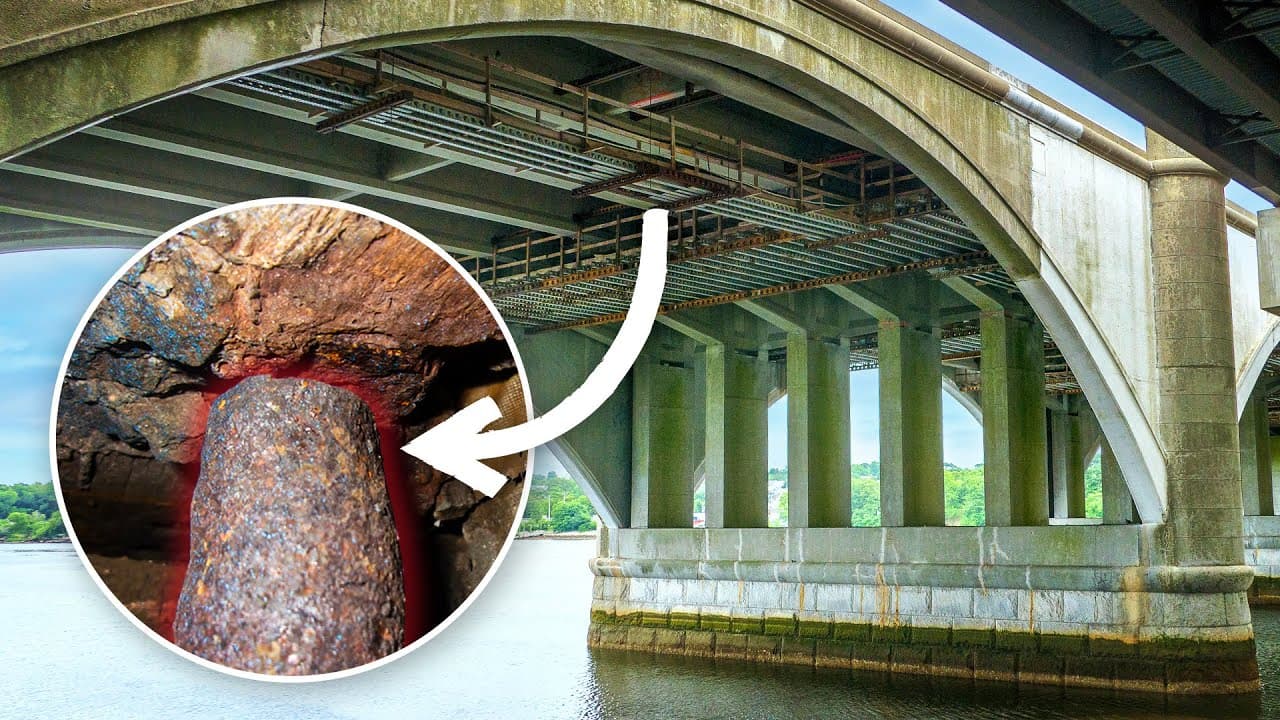
- The bridge's design included hidden structural elements like tie-downs and post-tension anchorages, which were difficult to inspect and maintain.
- A failed inspection process missed critical structural issues, leading to the bridge's sudden closure due to imminent collapse risk.
- The bridge's closure significantly impacted local traffic and economy, rerouting traffic and causing delays for over a year.
- Legal battles ensued, with the state suing inspection firms for failing to identify structural issues and facing a federal investigation for potential misuse of funds.
- The bridge demolition revealed further structural issues, complicating repair efforts and leading to a decision to rebuild entirely.
- The bridge's design decisions, driven by aesthetics and cost disputes, contributed to its structural vulnerabilities and eventual failure.
- The situation highlights the importance of accessible design for inspection and maintenance to prevent infrastructure failures.
Install to Summarize YouTube Videos and Get Transcripts
Explore YouTube Video Summarizer or Get YouTube Transcript Extractor
Questions & Answers
Q: What led to the Washington Bridge's near-collapse?
The Washington Bridge's near-collapse was primarily due to its complex design, which included hidden structural elements like tie-downs and post-tension anchorages that were difficult to inspect and maintain. A failed inspection process also missed critical structural issues, leading to the bridge's sudden closure due to imminent collapse risk.
Q: How did the bridge's closure impact the local community?
The bridge's closure significantly impacted the local community by causing major traffic disruptions and economic downturns. Westbound traffic was rerouted onto the eastbound bridge, leading to congestion and delays. Business owners in the area experienced a decline in economic activity due to the loss of this critical transportation link.
Q: What legal actions were taken following the bridge's closure?
Following the bridge's closure, the state of Rhode Island filed a lawsuit against 13 companies, including inspection firms, alleging that they failed to identify the bridge's structural issues earlier. Additionally, the US Department of Justice launched an investigation under the False Claims Act to examine potential misuse of federal funds in the bridge's maintenance and inspection processes.
Q: What were the challenges in repairing the Washington Bridge?
Repairing the Washington Bridge posed significant challenges due to the complexity of its design and the extent of structural damage. The hidden nature of critical elements like tie-downs and post-tension anchorages made inspection and maintenance difficult. Additionally, deteriorating concrete and corroded post-tension cables further complicated repair efforts, ultimately leading to the decision to demolish and rebuild the bridge.
Q: Why was the bridge's design considered flawed?
The bridge's design was considered flawed because it included hidden structural elements that were difficult to access for inspection and maintenance. These elements, such as tie-downs and post-tension anchorages, were critical to the bridge's structural integrity. The design decisions were influenced by aesthetic considerations and cost disputes, leading to vulnerabilities that contributed to the bridge's eventual failure.
Q: What lessons can be learned from the Washington Bridge case?
The Washington Bridge case highlights the importance of accessible design for infrastructure maintenance and inspection. It underscores the need for proactive infrastructure management, where potential issues are identified and addressed before they lead to failures. The case also emphasizes the risks of prioritizing aesthetics and cost over structural integrity and the importance of clear communication and planning in infrastructure projects.
Q: How did the bridge's design affect its inspection process?
The bridge's design affected its inspection process by making it difficult to access and inspect critical structural elements. The tie-downs and post-tension anchorages were hidden within the structure, limiting visibility and access for inspectors. This design flaw contributed to the failure to identify structural issues during inspections, ultimately leading to the bridge's closure and near-collapse.
Q: What was the outcome of the Washington Bridge's inspection failures?
The inspection failures of the Washington Bridge resulted in its sudden closure due to the risk of imminent collapse. The bridge's structural vulnerabilities, which were not identified during routine inspections, led to significant traffic disruptions and economic impacts. Legal actions were taken against inspection firms, and federal investigations were launched to determine potential misuse of funds in the bridge's maintenance and inspection processes.
Summary & Key Takeaways
-
The Washington Bridge in Providence, Rhode Island, faced imminent collapse due to design flaws and inspection oversights, leading to its closure and eventual demolition. The bridge's complex design included hidden structural elements, making maintenance difficult and contributing to its structural vulnerabilities.
-
The closure of the Washington Bridge caused significant traffic disruptions and economic impacts in the Providence area. Legal actions were taken against inspection firms, and federal investigations were launched to determine potential misuse of funds in the bridge's maintenance and inspection processes.
-
The Washington Bridge's case underscores the importance of accessible design for infrastructure maintenance and inspection. It serves as a cautionary tale about the risks of prioritizing aesthetics and cost over structural integrity and highlights the need for proactive infrastructure management.
Read in Other Languages (beta)
Share This Summary 📚
Summarize YouTube Videos and Get Video Transcripts with 1-Click
Try YouTube Summary with ChatGPT & Claude or YouTube Transcript Generator
Explore More Summaries from Practical Engineering 📚




Summarize YouTube Videos and Get Video Transcripts with 1-Click
Try YouTube Summary with ChatGPT & Claude or YouTube Transcript Generator