How to Clean Sewage with Gravity
TL;DR
Gravity is key in wastewater treatment, separating contaminants efficiently.
Transcript
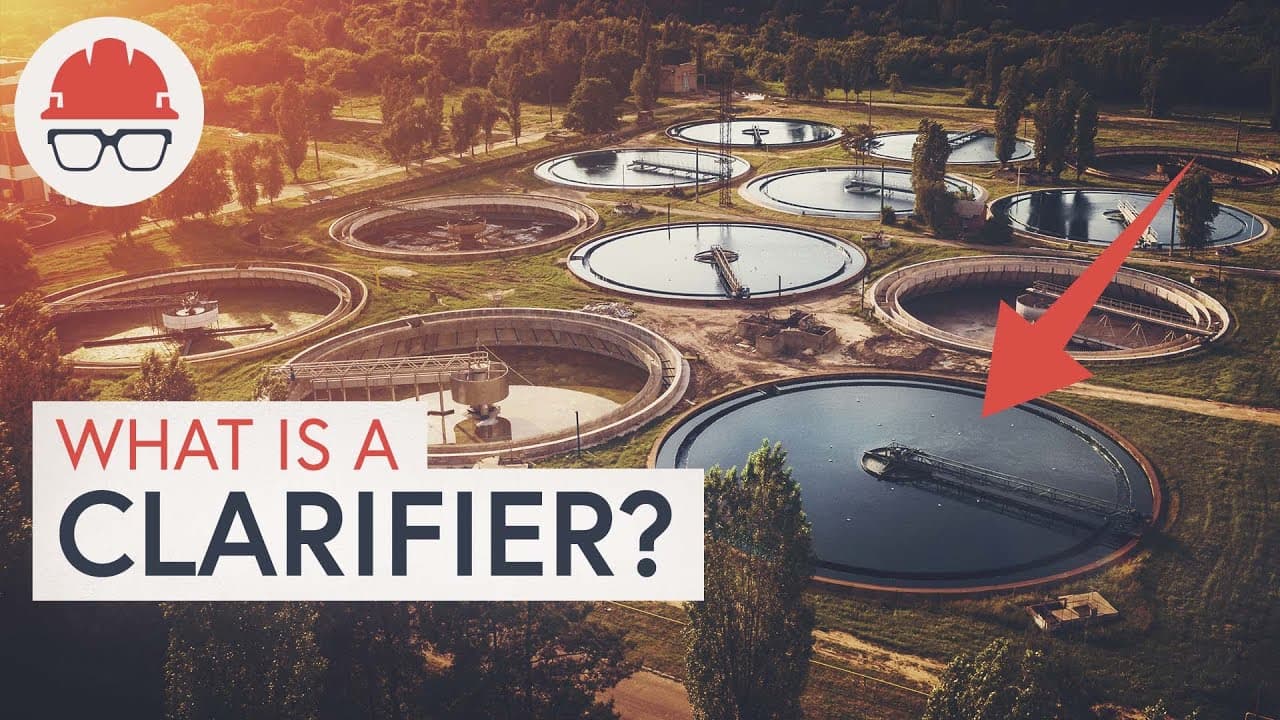
This is the Stickney Water Reclamation Plant in Chicago, the largest wastewater treatment plant in the world. It serves more than two million people in the heart of the Windy City, converting all their showers, flushes, and dirty dishwater, plus the waste from countless commercial and industrial processes into water safe enough to discharge int... Read More
Key Insights
- The Stickney Water Reclamation Plant in Chicago is the largest wastewater treatment plant globally, handling up to 700 million gallons of sewage daily.
- The initial step in wastewater treatment involves using gravity to separate suspended solids from water by slowing the flow, allowing contaminants to settle.
- Sedimentation basins expand the flow area, reducing water velocity and enabling particles to settle based on their size and terminal velocity.
- Engineers measure sedimentation efficiency by dividing the flow rate by the basin's surface area, determining the overflow or surface loading rate.
- Settlement processes are applied in both wastewater and drinking water treatment, with clarifiers used for secondary treatment to collect bacterial colonies.
- Chemical coagulants and flocculants are used in drinking water treatment to neutralize electrical charges and bond particles, promoting faster settling.
- Settlement is a cost-effective method to remove contaminants but cannot eliminate all impurities, necessitating additional treatment steps.
- Sedimentation is crucial in various industries, including water treatment, agriculture, and mining, highlighting its broad impact on public health and infrastructure.
Install to Summarize YouTube Videos and Get Transcripts
Explore YouTube Video Summarizer or Get YouTube Transcript Extractor
Questions & Answers
Q: What is the primary treatment method used at the Stickney Water Reclamation Plant?
The primary treatment method at the Stickney Water Reclamation Plant involves using gravity to separate suspended solids from wastewater. This is achieved by slowing down the water flow in sedimentation basins, allowing particles to settle out. This method is cost-effective and forms the first line of defense in removing contaminants from sewage.
Q: How do sedimentation basins work in wastewater treatment?
Sedimentation basins in wastewater treatment work by expanding the flow area, which reduces the velocity of water, allowing suspended particles to settle due to gravity. The efficiency of these basins is determined by the overflow or surface loading rate, calculated by dividing the incoming flow rate by the basin's surface area. This process effectively removes a significant portion of contaminants.
Q: Why is gravity considered an effective method for wastewater treatment?
Gravity is considered an effective method for wastewater treatment because it is a simple, cost-effective way to separate contaminants. By slowing down the flow of water in sedimentation basins, particles are given time to settle, reducing the need for more complex and expensive chemical treatments. This method efficiently removes a large percentage of impurities from sewage.
Q: What role do chemical coagulants play in drinking water treatment?
In drinking water treatment, chemical coagulants play a crucial role by neutralizing the electrical charges on suspended particles, allowing them to come together and form larger clumps called flocs. These flocs are heavier and settle out more quickly, making it easier to remove turbidity and impurities from the water, ensuring it is safe for consumption.
Q: How is sedimentation used in industries other than water treatment?
Sedimentation is used in various industries beyond water treatment, such as agriculture, mining, and fish hatcheries. It helps prevent silting in canals, protects pumps and pipes from damage, and aids in the separation of solids from liquids in numerous processes. This widespread application underscores its importance in maintaining infrastructure and ensuring environmental safety.
Q: What factors affect the settling velocity of particles in water?
The settling velocity of particles in water is affected by several factors, including particle size, shape, and density, as well as the viscosity of the fluid. Larger and denser particles tend to settle faster. Engineers often use empirical methods, such as timing particles as they fall through water, to determine settling velocities in practical applications.
Q: What is the significance of the overflow rate in sedimentation basins?
The overflow rate in sedimentation basins is significant because it determines the efficiency of particle removal. It is calculated by dividing the flow rate by the basin's surface area. Particles that settle faster than the overflow rate are retained, while those that do not may pass through, affecting the overall effectiveness of the wastewater treatment process.
Q: Why is sedimentation considered both the first and last step in wastewater treatment?
Sedimentation is considered both the first and last step in wastewater treatment because it initially removes large suspended solids and, in the final stages, clarifies water by settling out bacterial colonies used in secondary treatment. This dual role highlights its importance in both preparing sewage for further treatment and finalizing the purification process before discharge.
Summary & Key Takeaways
-
The Stickney Water Reclamation Plant in Chicago treats 700 million gallons of sewage daily using gravity as a primary method to separate contaminants. Sedimentation basins slow the flow, allowing particles to settle, making this a cost-effective initial step in wastewater treatment.
-
Sedimentation efficiency is measured by the overflow rate, calculated by dividing the flow rate by the basin's surface area. This process is applicable in both wastewater and drinking water treatment, with clarifiers used to collect secondary treatment bacteria.
-
Chemical coagulants and flocculants aid in drinking water treatment by neutralizing charges and forming flocs for faster settling. Sedimentation's role extends beyond water treatment, impacting various industries and ensuring public health through effective infrastructure.
Read in Other Languages (beta)
Share This Summary 📚
Summarize YouTube Videos and Get Video Transcripts with 1-Click
Try YouTube Summary with ChatGPT & Claude or YouTube Transcript Generator
Explore More Summaries from Practical Engineering 📚




Summarize YouTube Videos and Get Video Transcripts with 1-Click
Try YouTube Summary with ChatGPT & Claude or YouTube Transcript Generator