Why Do Bridge Fires Cause Collapses?
TL;DR
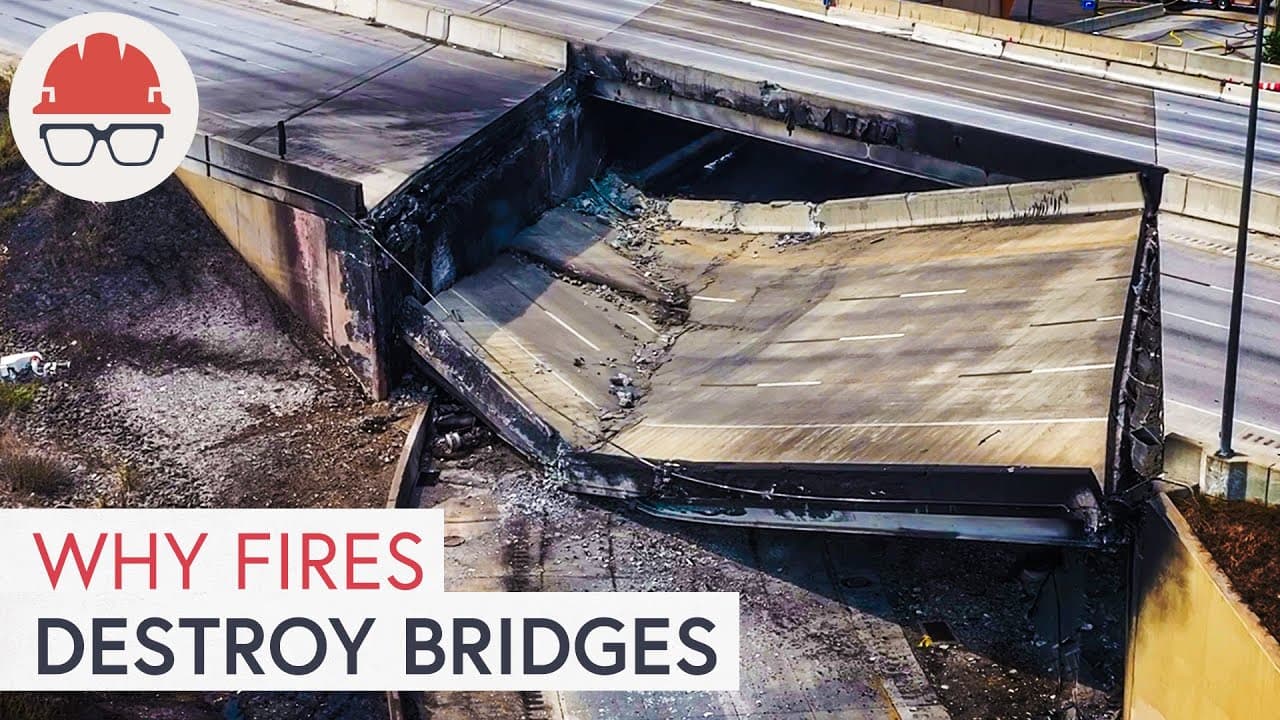
Bridge fires, often caused by tanker truck crashes, can lead to significant damage or collapse due to inadequate fire resistance in bridge design. Engineers face challenges in addressing fire hazards because current design codes lack guidelines for fire protection. The economic impact of bridge closures often outweighs the direct costs of reconstruction.
Transcript
Quick disclaimer: I’m moving to a new office, so forgive the mess, and the reverb. On Jun 11, 2023, a fuel tanker truck caught fire on an exit underneath Interstate 95 in Northeast Philadelphia. The fire severely damaged the northbound bridge, eventually causing it to collapse. Sadly, the driver of the truck was killed in the crash, but fortuna... Read More
Key Insights
- Bridge fires are typically caused by tanker truck crashes, leading to structural damage or collapse.
- Most bridges are not designed with fire resistance in mind, lacking guidelines in design codes.
- The economic impact of bridge closures can exceed reconstruction costs due to traffic disruptions.
- Temporary solutions, like embankments, can quickly restore traffic flow after bridge collapses.
- Foamed glass aggregate is used as a lightweight backfill to support temporary roadways.
- Fire resistance in bridges is rarely prioritized due to the low frequency of such failures.
- The National Fire Protection Association provides limited guidance on bridge fire protection.
- Accelerated construction methods can expedite bridge repairs but are costly.
Install to Summarize YouTube Videos and Get Transcripts
Explore YouTube Video Summarizer or Get YouTube Transcript Extractor
Questions & Answers
Q: How do tanker truck fires cause bridge collapses?
Tanker truck fires cause bridge collapses primarily due to the intense heat generated, which weakens the structural elements of a bridge. Most bridges are not designed with fire resistance in mind, leading to rapid deterioration of materials like steel and concrete when exposed to high temperatures. This can result in sagging and eventual collapse.
Q: Why aren't bridges designed to be fire-resistant?
Bridges are often not designed to be fire-resistant because fire-related failures are relatively rare compared to other causes like hydraulic damage. The current design codes lack specific guidelines for fire protection, and the economic costs of implementing fire resistance in all bridges may not be justified given the low frequency of such events.
Q: What temporary solutions are used after a bridge collapse?
After a bridge collapse, temporary solutions like constructing embankments with lightweight materials such as foamed glass aggregate are used to quickly restore traffic flow. These materials allow for rapid construction without overloading the foundation, enabling roads to reopen faster while permanent repairs are planned.
Q: What is foamed glass aggregate and why is it used?
Foamed glass aggregate is a lightweight backfill material used in temporary embankments to support roadways after bridge collapses. It is strong enough to bear the weight of traffic without causing settlement or damage to underlying structures, making it ideal for quick construction in emergency situations. However, it is more expensive than traditional backfill.
Q: How do economic impacts influence bridge repair decisions?
Economic impacts heavily influence bridge repair decisions because the indirect costs of a bridge closure, such as traffic disruptions and lost productivity, often exceed the direct costs of reconstruction. Accelerated construction methods are sometimes employed to minimize these impacts, despite their higher costs, to quickly restore essential transportation routes.
Q: Are there guidelines for fire protection in bridge design codes?
Currently, there are no comprehensive guidelines for fire protection in bridge design codes. The National Fire Protection Association provides some guidance, but it is limited and does not specify fire loads or protection methods. The lack of guidelines reflects the rarity of bridge fires and the prioritization of other design considerations.
Q: What challenges do engineers face in designing fire-resistant bridges?
Engineers face numerous challenges in designing fire-resistant bridges, including predicting the behavior of materials under extreme heat, determining appropriate fire loads, and addressing the lack of standardized guidelines. Each fire scenario presents unique variables, making it difficult to develop a one-size-fits-all approach to fire protection.
Q: What role does accelerated construction play in bridge repairs?
Accelerated construction plays a crucial role in bridge repairs by allowing projects to be completed faster, reducing the economic impact of closures. This approach involves dedicating resources exclusively to a single project, which can significantly shorten repair times. However, it is more costly and typically reserved for critical infrastructure where time is of the essence.
Summary & Key Takeaways
-
Bridge fires often result from tanker truck crashes, causing significant structural damage. Most bridges lack fire-resistant design, as current codes do not address fire hazards. Temporary solutions, such as embankments using foamed glass aggregate, can quickly restore traffic flow, but the economic impact of closures often exceeds reconstruction costs.
-
The video discusses the challenges engineers face in addressing bridge fires, highlighting the lack of guidelines in design codes for fire protection. It also explores the economic implications of bridge closures and the use of accelerated construction methods to expedite repairs, despite their high costs.
-
Engineers must consider various factors when designing fire-resistant bridges, including fuel source, flame intensity, and material behavior under high temperatures. The video emphasizes the complexity of predicting structural responses to fires and questions the necessity of incorporating fire protection in all bridge designs.
Read in Other Languages (beta)
Share This Summary 📚
Summarize YouTube Videos and Get Video Transcripts with 1-Click
Try YouTube Summary with ChatGPT & Claude or YouTube Transcript Generator
Explore More Summaries from Practical Engineering 📚



Summarize YouTube Videos and Get Video Transcripts with 1-Click
Try YouTube Summary with ChatGPT & Claude or YouTube Transcript Generator