How to Prevent Structures from Sinking
TL;DR
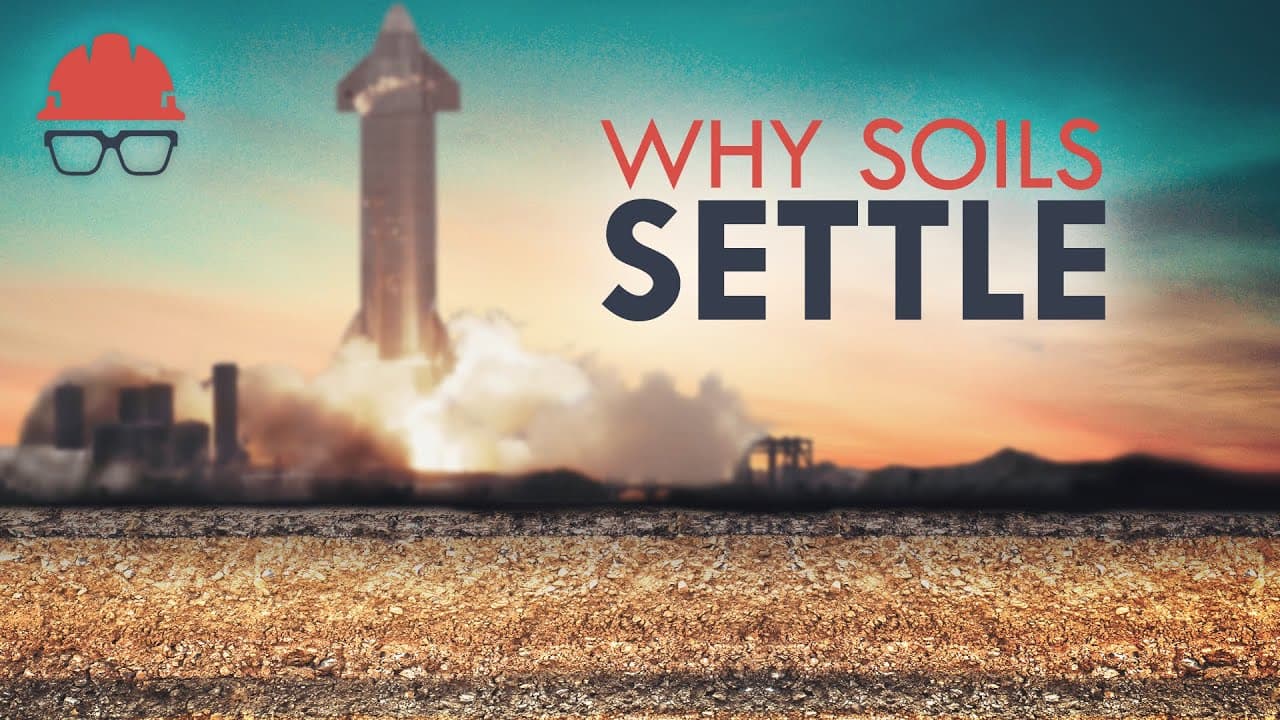
Foundations are crucial in preventing structures from sinking. SpaceX's South Texas launch facility began with a massive pile of dirt to consolidate the soil and avoid future settlement. Geotechnical engineering techniques like using wick drains and surcharge loading accelerate soil consolidation, ensuring stability before construction.
Transcript
This is the SpaceX South Texas launch facility on South Padre Island near Boca Chica… or at least it’s how the facility started out. Before the so-called Starbase supported crazy test launches of the Starship spaceflight program, it was just a pile of dirt. Contractors brought in truck after truck of soil, creating a massive mesa of more than 3... Read More
Key Insights
- Foundations are critical for preventing structures from sinking.
- The Texas coastline's poor soil required extra work for SpaceX's facility.
- Soil settlement can cause uneven structural movement.
- Consolidation is the main settlement mechanism in fine-grained soils.
- Wick drains and surcharge loading accelerate soil consolidation.
- Uniform settlement is less problematic than uneven settlement.
- Raft foundations and deep piles can mitigate settlement issues.
- Settlement prevention can involve pre-construction soil consolidation.
Install to Summarize YouTube Videos and Get Transcripts
Explore YouTube Video Summarizer or Get YouTube Transcript Extractor
Questions & Answers
Q: How does soil settlement affect structures?
Soil settlement can cause structures to sink or tilt, leading to potential structural damage. Uneven settlement is particularly problematic as it can cause different parts of a structure to move at different rates, resulting in cracks and other issues. Geotechnical engineering aims to prevent such problems by ensuring the soil can adequately support the structure.
Q: What is the purpose of a dirt pile in construction?
A dirt pile in construction, such as the one used by SpaceX, serves to consolidate the soil beneath. This process involves applying weight to the soil to force out water from its pores, reducing future settlement. By doing this before building, the ground is stabilized, preventing the structure from sinking or settling unevenly over time.
Q: Why are wick drains used in soil consolidation?
Wick drains are used to accelerate the consolidation process in clay soils by providing a path for water to escape. These vertical drains are inserted into the soil, allowing water to travel more easily to the surface. This reduces the time needed for consolidation, ensuring the soil is stable before construction begins.
Q: What is surcharge loading in construction?
Surcharge loading involves placing additional weight, often soil, on a site before construction to speed up soil consolidation. By applying extra stress, the process of water being forced out of the soil pores is accelerated, leading to faster settlement. This ensures that the soil is stable and won't settle further after construction is completed.
Q: How do raft foundations help prevent settlement?
Raft foundations, or mat foundations, distribute the load of a structure evenly across a large area, reducing the risk of uneven settlement. By acting like a raft, they help ensure that any settlement occurs uniformly, minimizing potential damage to the structure. This is especially useful in areas with poor soil conditions.
Q: What causes uneven settlement in structures?
Uneven settlement occurs when different parts of a structure settle at different rates, often due to variations in soil composition or load distribution. Factors like non-uniform loads, varying soil layers, and differences in soil moisture can contribute. Geotechnical engineering aims to address these issues through careful foundation design and soil preparation.
Q: Why is soil consolidation important in construction?
Soil consolidation is crucial because it stabilizes the ground, reducing the risk of future settlement. By compressing the soil and expelling water from its pores, consolidation ensures that the soil can support the weight of a structure over time. This process helps prevent structural issues like sinking or tilting, which can occur if the soil settles unevenly.
Q: How do geotechnical engineers prevent structural settlement?
Geotechnical engineers prevent structural settlement by ensuring the soil can support the structure's load. Techniques include soil consolidation, using wick drains, surcharge loading, and designing appropriate foundations like raft foundations or deep piles. These methods help stabilize the soil, reducing the risk of uneven settlement and ensuring long-term structural integrity.
Summary & Key Takeaways
-
SpaceX's South Texas launch facility used a large dirt pile to consolidate the soil, preventing future settlement. Foundations are crucial for stability, especially in areas with poor soil quality. Techniques like wick drains and surcharge loading help accelerate soil consolidation, ensuring structures remain stable over time.
-
Geotechnical engineering focuses on ensuring soil can support structures throughout their lifespan. Uneven settlement can cause structural issues, as seen in the Leaning Tower of Pisa. Techniques like raft foundations, deep piles, and pre-construction soil consolidation help mitigate these risks.
-
Settlement occurs when soil compresses under stress, often due to water being forced out of soil pores. Fine-grained soils like clay are particularly prone to consolidation. Using wick drains and surcharge loading can speed up this process, allowing construction to proceed on stable ground.
Read in Other Languages (beta)
Share This Summary 📚
Summarize YouTube Videos and Get Video Transcripts with 1-Click
Try YouTube Summary with ChatGPT & Claude or YouTube Transcript Generator
Explore More Summaries from Practical Engineering 📚


Summarize YouTube Videos and Get Video Transcripts with 1-Click
Try YouTube Summary with ChatGPT & Claude or YouTube Transcript Generator