Whale-cams reveal how much they really eat
TL;DR
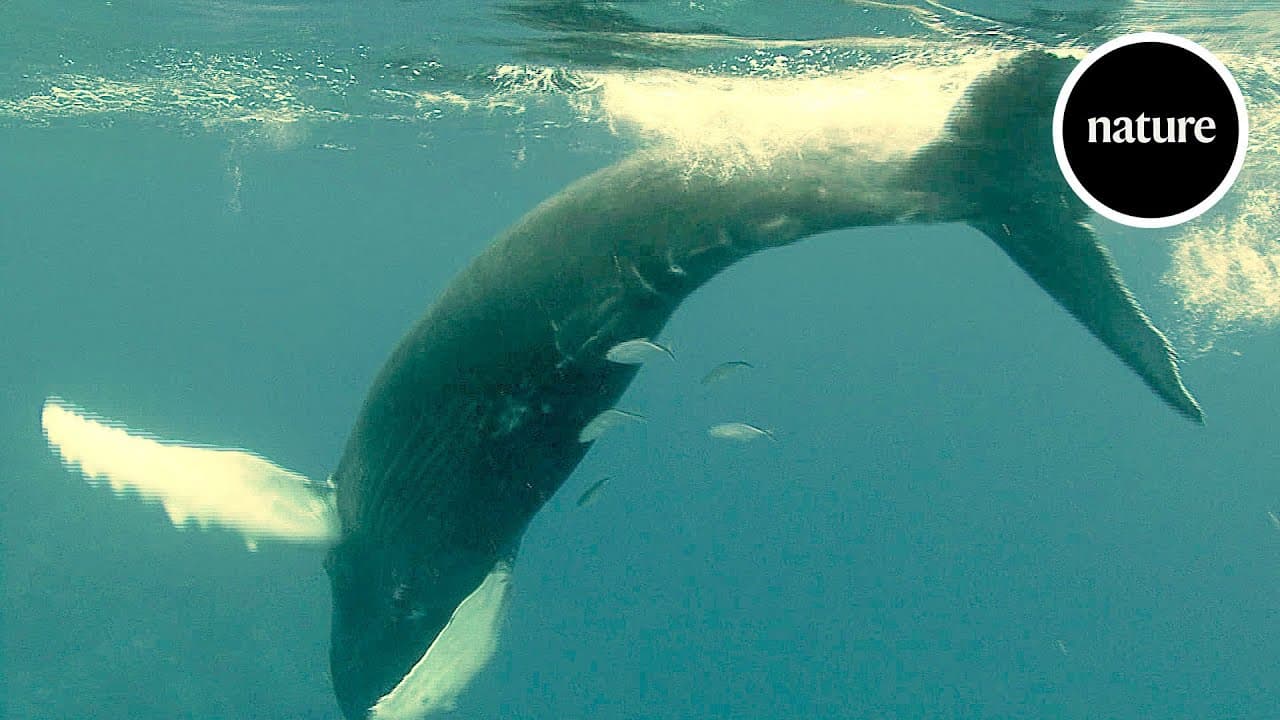
New research reveals whales consume more krill, significantly affecting marine ecosystems.
Transcript
most of whales lives are hidden to us you know we'll see whales at the surface that's only a very small fraction of the time that they're actually visible to human eyes most of the time they're underneath the water 10 50 100 meters oftentimes deeper we really had no idea until very very recently the last couple decades what they were doing down the... Read More
Key Insights
- 😋 A significant knowledge gap existed regarding the exact amount of food whales consume, which has now been addressed.
- 🧑⚕️ The research indicates that whale feeding patterns have intricate relationships with overall marine ecosystem health and stability.
- ♻️ Whales are essential for nutrient cycling in ocean environments, as their feces enhance phytoplankton growth, crucial for marine food chains.
- 🐳 The study highlights the importance of long-term monitoring of whale populations to assess their ecological impacts accurately.
- 🥺 Declining whale populations can lead to reduced marine productivity and affect numerous species dependent on healthy ocean conditions.
- 🐳 The findings provide valuable insights for conservation efforts aimed at protecting whale habitats and managing threats.
- 🧑⚕️ Understanding whale ecologies contributes not only to marine conservation but also to broader planetary health efforts related to climate change and biodiversity.
Install to Summarize YouTube Videos and Get Transcripts
Explore YouTube Video Summarizer or Get YouTube Transcript Extractor
Questions & Answers
Q: What motivated researchers to study whale feeding habits?
The researchers were initially driven by the realization that a fundamental question about whale feeding, specifically how much food they consume, was not well understood. Despite the assumption that such details were simple, this lack of data indicated a significant gap in the ecological understanding of these animals’ role in marine environments.
Q: How did researchers gather data on whale feeding behaviors?
Over a decade, researchers tagged 321 whales using small boats to closely approach them. This direct method allowed them to record movement patterns as the whales surfaced and dove. They combined this data with skin samples and fecal matter collection to analyze the whales' diets and feeding frequency.
Q: What surprising results came from the research on krill consumption?
The findings showed that whales consume approximately twice the amount of krill than previously estimated. This result suggests that the ecological impact of whales is much larger than previously thought, raising concerns about the potential consequences of declining whale populations on ocean ecosystems.
Q: What ecological role do whales play in marine ecosystems?
Whales significantly contribute to ocean health by consuming large quantities of prey and facilitating nutrient recycling. Their feces act as fertilizer, promoting the growth of phytoplankton, which are vital for carbon absorption, oxygen production, and supporting marine food webs.
Q: What threats are whales currently facing, and what might their decline mean for ecosystems?
Whales face numerous threats, including whaling, ship strikes, and climate-changing impacts. The decline in whale populations jeopardizes the balance within marine ecosystems, leading to decreased nutrient recycling, lower phytoplankton production, and ultimately diminished ocean productivity.
Q: How is technology assisting in the understanding of whale behaviors?
Technological advancements, particularly in tagging and data collection, have allowed scientists to observe whale behaviors and feeding habits in unprecedented detail. Drones have been used to measure whale size and capture valuable data on their feeding structures, contributing to a more comprehensive understanding of their ecological impact.
Summary & Key Takeaways
-
Researchers discovered that whales eat twice as much krill as previously estimated, highlighting their critical role in marine ecosystems.
-
Tagging 321 whales over ten years provided essential data on their feeding habits and the ecological consequences of their declining populations.
-
Understanding whales' consumption habits is crucial for conservation, as their absence can drastically impact phytoplankton growth and ocean health.
Read in Other Languages (beta)
Share This Summary 📚
Summarize YouTube Videos and Get Video Transcripts with 1-Click
Try YouTube Summary with ChatGPT & Claude or YouTube Transcript Generator
Explore More Summaries from nature video 📚




Summarize YouTube Videos and Get Video Transcripts with 1-Click
Try YouTube Summary with ChatGPT & Claude or YouTube Transcript Generator