How Do Potholes Work?
TL;DR
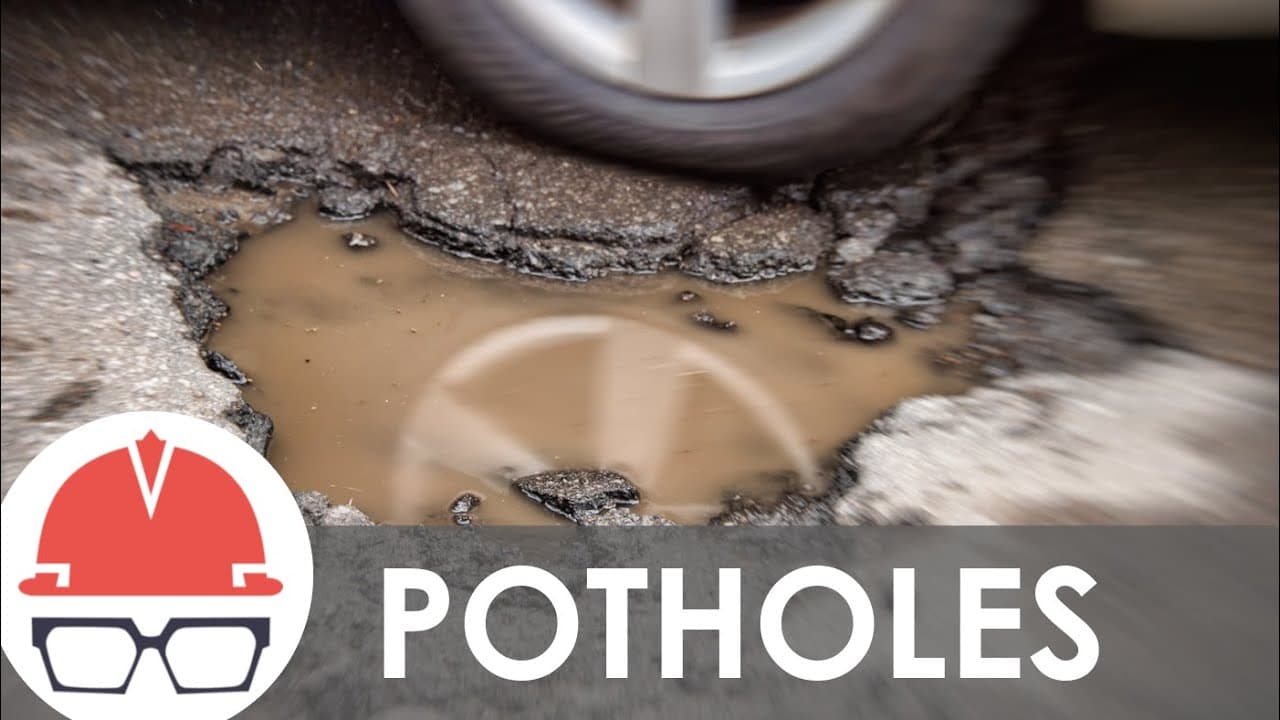
Potholes form due to water erosion and traffic pressure on roads.
Transcript
If you consider it, having paved roadways is somewhat of a luxury. Streets have always been around, but they haven’t always been safe, comfortable, or able to accommodate the enormous number and weight of vehicles that use our present system of roadways every day. Whether or not you love how much roads dominate the landscape, you have to marvel at ... Read More
Key Insights
- Paved roads are a luxury that facilitates convenient travel, but their condition can be a source of frustration when not maintained.
- Asphalt roadways, while cost-effective and durable, are not invincible and are prone to developing potholes over time.
- Potholes form through a process where water seeps into cracks, eroding the subgrade and weakening the pavement.
- In cold climates, freeze-thaw cycles exacerbate pothole formation by creating voids and accelerating erosion.
- Potholes cause significant damage to vehicles and pose safety risks, prompting costly repairs by roadway owners.
- Preventing potholes involves sealing cracks to prevent water intrusion and balancing initial construction costs with maintenance expenses.
- Road conditions reflect public investment in infrastructure, with maintenance decisions influenced by budget allocations and vehicle usage.
- Economic analysis is crucial in engineering decisions, highlighting the importance of cost-benefit evaluations over a structure's lifetime.
Install to Summarize YouTube Videos and Get Transcripts
Explore YouTube Video Summarizer or Get YouTube Transcript Extractor
Questions & Answers
Q: What causes potholes to form in asphalt roadways?
Potholes form in asphalt roadways primarily due to water intrusion through cracks in the pavement. This water erodes the subgrade beneath, weakening the pavement. Traffic pressure exacerbates the issue, as vehicles push water and soil particles out, creating a positive feedback loop of erosion and material loss.
Q: How do freeze-thaw cycles affect pothole formation?
Freeze-thaw cycles worsen pothole formation by expanding water trapped between the pavement and subgrade, creating voids when the water freezes. Upon thawing, the ice melts, leaving gaps that further weaken the pavement. This process accelerates erosion and increases the likelihood of pothole development, particularly in colder climates.
Q: Why is it challenging to prevent potholes entirely?
Preventing potholes entirely is challenging due to the inherent vulnerabilities of asphalt roadways to water intrusion and erosion. While sealing cracks can extend pavement life, it requires ongoing maintenance and investment. Additionally, balancing the initial construction costs with long-term maintenance expenses is complex, given the vast areas covered by roadways.
Q: What are the economic implications of pothole repair and prevention?
The economic implications of pothole repair and prevention involve significant costs for roadway owners, who must balance initial construction expenses with ongoing maintenance. Pothole repairs are costly, and preventing them requires regular sealing of cracks. Public investment in infrastructure, reflected in budget allocations, influences these decisions, impacting road conditions and vehicle safety.
Q: How does public investment impact road conditions?
Public investment impacts road conditions by determining the level of maintenance and repair funding allocated to infrastructure. Budget decisions influence the frequency and quality of pothole repairs and preventive measures, affecting the overall safety and durability of roadways. The condition of roads reflects the importance placed on vehicle travel and infrastructure maintenance.
Q: What role does engineering education play in addressing pothole issues?
Engineering education plays a crucial role in addressing pothole issues by equipping engineers with the skills needed for economic analysis and cost-benefit evaluations. However, traditional education often lacks a focus on these areas, highlighting the need for supplementary learning resources, such as Brilliant, which emphasize problem-solving and practical applications in engineering.
Q: Why is asphalt a popular choice for road construction?
Asphalt is a popular choice for road construction due to its cost-effectiveness and ability to create a smooth, durable surface. It strikes a balance between affordability and performance, making it suitable for widespread use. However, its susceptibility to water intrusion and erosion necessitates regular maintenance to prevent issues like potholes.
Q: What are the safety risks associated with potholes?
Potholes pose significant safety risks by causing vehicle damage and creating hazards for drivers. Vehicles may swerve to avoid potholes, leading to accidents, while hitting a pothole can damage tires, shocks, and wheels. For motorcycles, bikes, or scooters, encountering a pothole can result in severe accidents, emphasizing the need for prompt repairs.
Summary & Key Takeaways
-
Potholes are a common issue in asphalt roadways, forming due to water intrusion and erosion of the subgrade beneath the pavement. The process is accelerated by traffic pressure and freeze-thaw cycles, leading to significant damage and safety risks for vehicles.
-
Preventing potholes involves regular maintenance, such as sealing cracks to prevent water intrusion. This requires balancing the initial construction costs with long-term maintenance expenses, reflecting public investment in infrastructure and the importance placed on vehicle travel.
-
Economic analysis plays a vital role in engineering decisions, emphasizing cost-benefit evaluations over a structure's lifetime. This highlights the need for skills not traditionally covered in engineering education, as demonstrated by Brilliant's problem-solving approach.
Read in Other Languages (beta)
Share This Summary 📚
Summarize YouTube Videos and Get Video Transcripts with 1-Click
Try YouTube Summary with ChatGPT & Claude or YouTube Transcript Generator
Explore More Summaries from Practical Engineering 📚

Summarize YouTube Videos and Get Video Transcripts with 1-Click
Try YouTube Summary with ChatGPT & Claude or YouTube Transcript Generator