What Is the Irish Language's History?
TL;DR
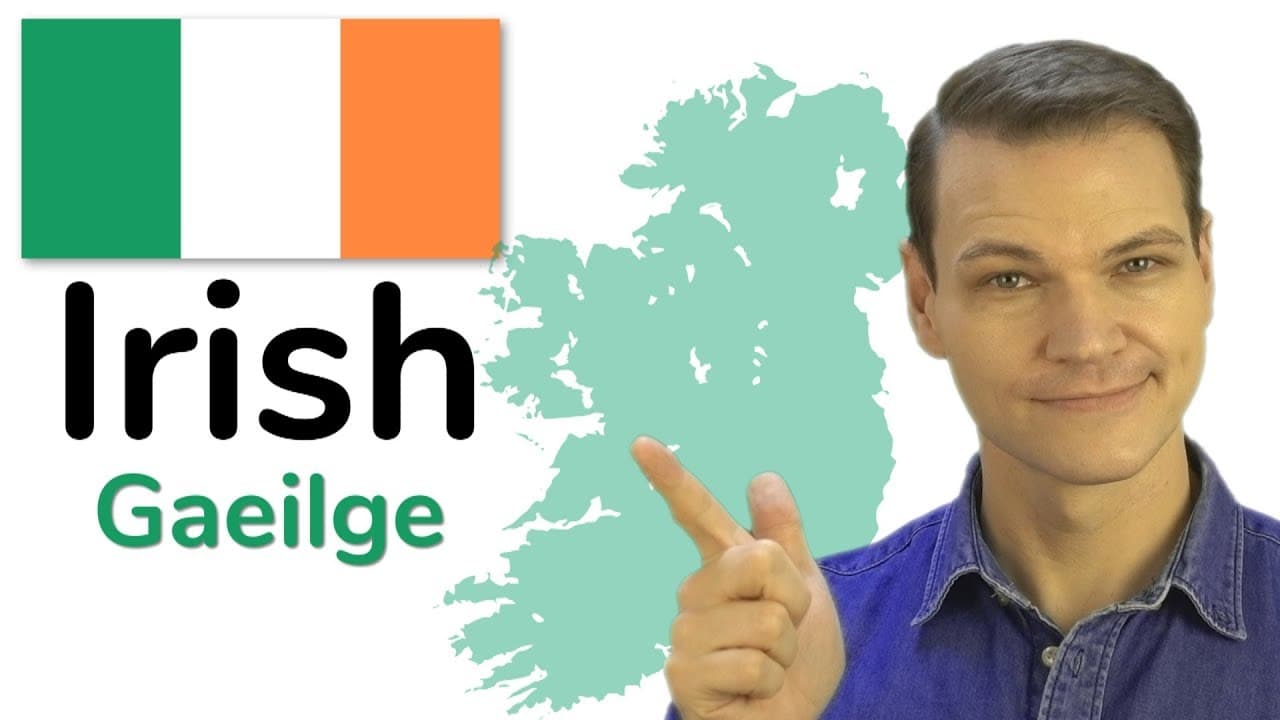
Irish, or Gaeilge, is part of the Gaelic language group, with a rich history dating back over 2,500 years. Despite being endangered, it remains a vital cultural language in Ireland, taught in schools and spoken by a small community of native speakers. Its phonology features unique broad and slender consonants, and initial consonant mutations that reflect its historical linguistic evolution.
Transcript
hello everyone welcome to the langfocus channel and my name is paul today's topic is the irish language or as it's called in irish in english we have the word gaelic which may refer to irish but irish people generally don't call it gaelic in english and they don't call it irish gaelic many people will insist it's irish just irish irish is a member ... Read More
Key Insights
- Irish is part of the Gaelic language group, one of the two groups of insular Celtic languages.
- There are three main dialects of Irish: Munster, Connacht, and Ulster.
- Irish is a required subject in schools in the Republic of Ireland, though it remains endangered.
- The history of Irish includes significant influence from Norse and Norman French, contributing loanwords.
- Irish phonology includes broad and slender consonants, indicated by surrounding vowels.
- Initial consonant mutations, like lenition and eclipses, occur in specific grammatical contexts.
- Prepositions in Irish can take pronominal suffixes, indicating possession and other relationships.
- Irish verbs are categorized into first and second conjugation, with complex tense and mood variations.
Install to Summarize YouTube Videos and Get Transcripts
Explore YouTube Video Summarizer or Get YouTube Transcript Extractor
Questions & Answers
Q: How many people speak Irish fluently?
According to the Republic of Ireland census of 2016, there are around 74,000 daily speakers of Irish outside the education system, representing less than two percent of the population. Additionally, there are over four thousand native speakers in Northern Ireland, and close to two million second language speakers with some knowledge of Irish.
Q: What are the main dialects of the Irish language?
The Irish language has three main dialects: Munster, Connacht, and Ulster. These dialects show variations in pronunciation, vocabulary, and grammar, reflecting the regional linguistic diversity within Ireland.
Q: What historical influences have shaped the Irish language?
The Irish language has been influenced by Norse during the Viking raids, introducing loanwords related to ships and navigation. The Norman invasion introduced Norman French, leaving its mark with loanwords like 'carson' meaning church. These influences have contributed to the language's vocabulary without significantly affecting its grammar.
Q: What are initial consonant mutations in Irish?
Initial consonant mutations in Irish are changes to the initial consonant of a word in specific grammatical contexts. There are two main types: lenition, which often changes stops to fricatives, and eclipses, which can change voiceless stops to voiced or voiced stops to nasals. These mutations reflect historical phonetic environments and indicate grammatical information.
Q: How is possession expressed in Irish?
Possession in Irish is often expressed using prepositions with pronominal suffixes. For instance, the preposition 'ag' (at) can be combined with pronominal endings to indicate possession, as in 'Tá bráthair agam' meaning 'I have a brother', where 'agam' means 'at me'.
Q: What is unique about Irish verb conjugations?
Irish verb conjugations are categorized into first and second conjugation, involving a combination of synthetic and analytic endings. These endings indicate person and number, with synthetic endings not requiring a pronoun. Irish verbs have complex tense and mood variations, including present, imperfect, preterit, future, and conditional.
Q: How does Irish handle numbers and counting?
Irish has a complex number system with three types of cardinal numbers: disjunctive, non-human conjunctive, and human conjunctive numbers. Disjunctive numbers are used for calculations and other contexts, while conjunctive numbers differ when counting non-human and human nouns. Numbers 2 to 6 cause lenition, and numbers 7 to 10 cause eclipses in the counted noun.
Q: What challenges do learners face with Irish pronunciation?
Learners of Irish often struggle with authentic pronunciation, particularly the distinction between broad and slender consonants. Many Irish teachers may not be familiar with authentic phonology, leading to the teaching of Irish with English phonemes. This lack of authentic pronunciation can be a significant challenge for learners aiming to master the language's phonological nuances.
Summary & Key Takeaways
-
Irish, or Gaeilge, is a Gaelic language with a rich history and three main dialects: Munster, Connacht, and Ulster. It has evolved from archaic Irish, influenced by Norse and Norman French, and features unique phonological elements like broad and slender consonants.
-
Despite being endangered, Irish is the first official language of the Republic of Ireland and is taught in schools. It includes complex verb conjugations and initial consonant mutations that reflect its historical linguistic evolution.
-
Prepositions in Irish can take pronominal suffixes, and the language uses a distinct number system. Its grammar and phonology are intricate, with features like lenition and eclipses that indicate grammatical information.
Read in Other Languages (beta)
Share This Summary 📚
Summarize YouTube Videos and Get Video Transcripts with 1-Click
Try YouTube Summary with ChatGPT & Claude or YouTube Transcript Generator
Explore More Summaries from Langfocus 📚
Summarize YouTube Videos and Get Video Transcripts with 1-Click
Try YouTube Summary with ChatGPT & Claude or YouTube Transcript Generator