Rebuilding the Oroville Dam Spillways
TL;DR
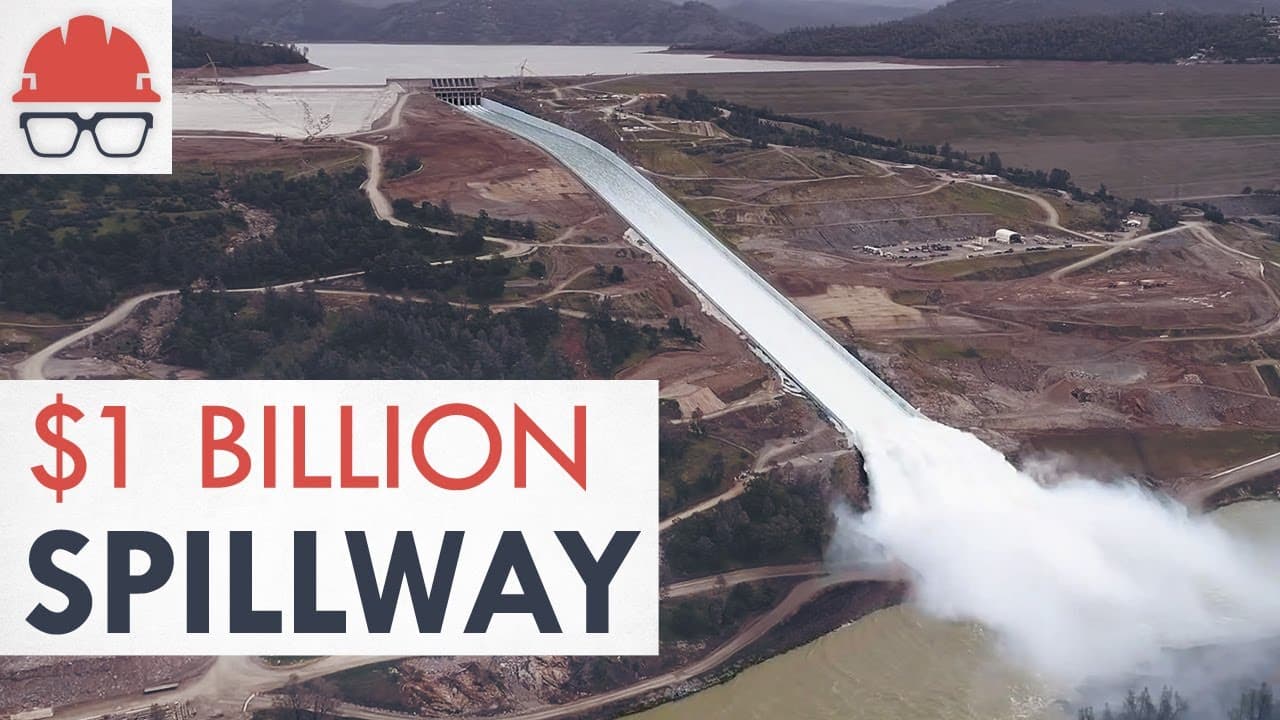
The video details the reconstruction of Oroville Dam spillways after catastrophic failure.
Transcript
This video is sponsored by Warby Parker. More on them later. In February 2017, the world watched as the main spillway on one of the largest dams in the world suffered a catastrophic failure, prompting a series of events that led to the evacuation of nearly 200,000 people downstream and hundreds of millions of dollars of damage to critical water... Read More
Key Insights
- The catastrophic failure of the Oroville Dam spillway in 2017 led to a massive reconstruction project to restore its functionality before the next flood season.
- A variety of engineering solutions were considered, including 'Use the Hole,' 'Bridge the Hole,' and 'Fill the Hole,' with the latter being chosen for its feasibility and lower risk.
- Roller-compacted concrete (RCC) played a crucial role in the reconstruction, providing a quick and efficient method to rebuild the spillway using local materials.
- The reconstruction project was divided into two phases to ensure the spillway could handle potential flood events by the 2017-2018 winter season.
- Extensive collaboration between the California Department of Water Resources, federal agencies, and engineering firms was essential to meet tight deadlines and regulatory requirements.
- The failure highlighted systemic issues in dam management and regulation, emphasizing the need for proactive maintenance and oversight to prevent similar incidents.
- The project involved significant geotechnical investigations to address underlying soil and rock conditions that contributed to the original failure.
- The successful reconstruction of the spillway was a major engineering achievement, restoring one of California’s key water infrastructures to its full operational capacity.
Install to Summarize YouTube Videos and Get Transcripts
Explore YouTube Video Summarizer or Get YouTube Transcript Extractor
Questions & Answers
Q: What led to the reconstruction of the Oroville Dam spillways?
In February 2017, the main spillway of the Oroville Dam suffered a catastrophic failure, leading to the evacuation of nearly 200,000 people and significant damage to water infrastructure. The reconstruction was necessary to restore the dam's operational capacity before the next flood season and to ensure the safety and stability of the structure.
Q: What were the main engineering solutions considered for the reconstruction?
The engineering team considered several solutions categorized as 'Use the Hole,' 'Bridge the Hole,' and 'Fill the Hole.' 'Use the Hole' involved utilizing the existing scour hole as a new water path, 'Bridge the Hole' proposed constructing the spillway above the damaged area, and 'Fill the Hole' focused on restoring the spillway to its original configuration. The 'Fill the Hole' approach was chosen for its feasibility and lower risk.
Q: How was roller-compacted concrete used in the reconstruction?
Roller-compacted concrete (RCC) was a key material in the reconstruction of the Oroville Dam spillways. It is a unique blend of conventional concrete ingredients with less water, allowing it to be placed using paving equipment and compacted with vibratory rollers. RCC was chosen for its quick curing time, strength, and ability to be produced on-site using local materials, facilitating the aggressive construction schedule.
Q: What challenges did the project face in terms of timeline?
The reconstruction project faced a tight timeline, with the next flood season only six months away. The design, regulatory reviews, and construction steps, which typically take months or years, needed to be compressed into weeks. To meet this deadline, the project was divided into two phases, with Phase 1 focusing on achieving an operational spillway before the 2017-2018 winter season.
Q: What was the role of the California Department of Water Resources in the project?
The California Department of Water Resources (DWR) led the reconstruction effort, assembling a team of consultants, engineering firms, and federal agencies to plan and execute the project. DWR was responsible for coordinating the design and construction processes, managing regulatory approvals, and ensuring the project met its critical deadlines to restore the dam's functionality.
Q: How did the project address the original spillway's design deficiencies?
The reconstruction addressed the original spillway's design deficiencies by increasing the thickness of the concrete slabs, adding more steel reinforcement with epoxy coating to prevent corrosion, installing flexible waterstops at the joints, and implementing an extensive drainage system. These improvements aimed to enhance the spillway's durability and prevent water from undermining the structure.
Q: What lessons were learned from the Oroville Dam spillway failure?
The Oroville Dam spillway failure highlighted the importance of proactive maintenance, regular inspections, and robust regulatory oversight to prevent similar incidents. It underscored the need for dam owners and regulators to address inherent structural flaws and prioritize safety to protect communities and infrastructure. The incident served as a wake-up call for the global dam management community.
Q: How did the reconstructed spillway perform during its first test after completion?
The reconstructed spillway was tested for the first time in April 2019, two years after the reconstruction began. During heavy rain and snowfall, the spillway gates were opened, and the new structure successfully managed the water releases without issues. This successful test was a significant relief for the engineers, project managers, construction workers, and the public, confirming the spillway's restored functionality.
Summary & Key Takeaways
-
In 2017, the Oroville Dam spillway suffered a catastrophic failure, prompting a large-scale reconstruction effort to restore its functionality before the next flood season. The project faced significant challenges, including tight timelines and complex engineering requirements, but was successfully completed using roller-compacted concrete.
-
The reconstruction involved a collaborative effort between the California Department of Water Resources, federal agencies, and engineering firms. Various solutions were considered, but the 'Fill the Hole' approach was chosen for its feasibility, lower risk, and ability to reuse local materials. The project was completed in two phases to meet urgent deadlines.
-
The Oroville Dam spillway failure highlighted systemic issues in dam management and regulation, underscoring the importance of proactive maintenance and oversight. The successful reconstruction restored the dam's operational capacity, ensuring it can effectively manage flood events and serve its critical role in California's water infrastructure.
Read in Other Languages (beta)
Share This Summary 📚
Summarize YouTube Videos and Get Video Transcripts with 1-Click
Try YouTube Summary with ChatGPT & Claude or YouTube Transcript Generator
Explore More Summaries from Practical Engineering 📚



Summarize YouTube Videos and Get Video Transcripts with 1-Click
Try YouTube Summary with ChatGPT & Claude or YouTube Transcript Generator