How Do Sinkholes Form and Why Are They Dangerous?
TL;DR
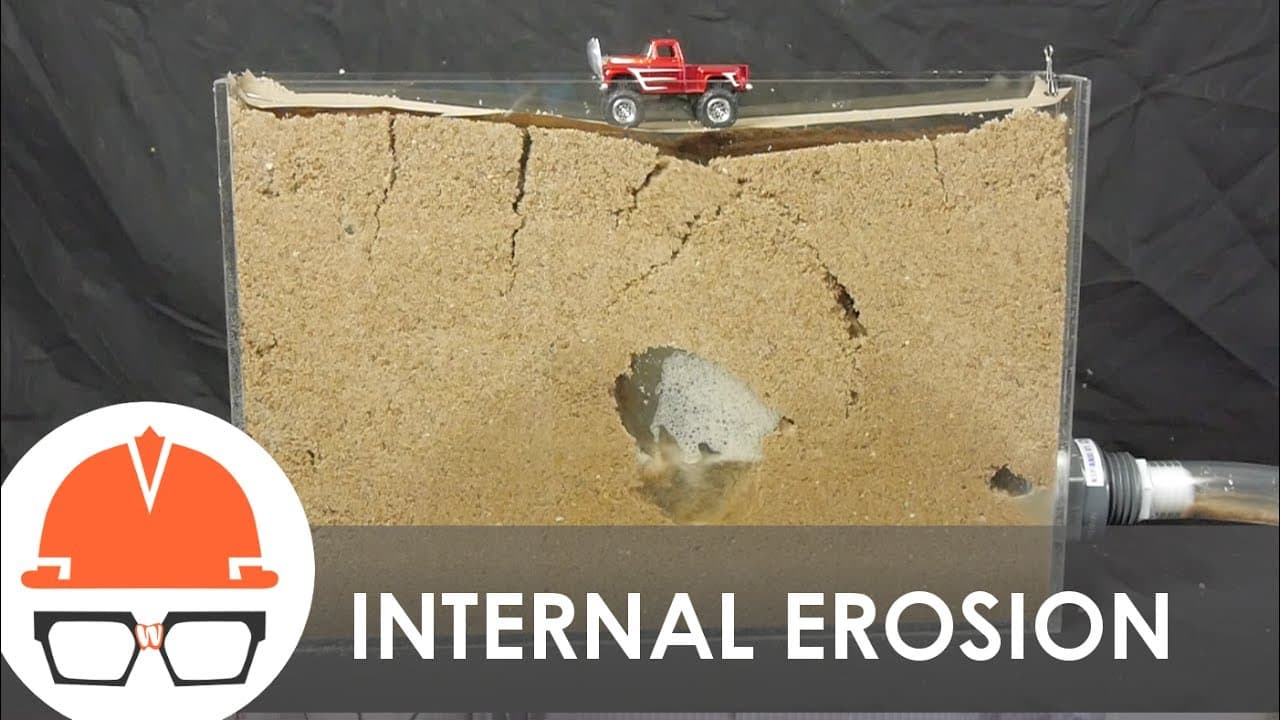
Sinkholes form when groundwater erodes soluble rocks like limestone, creating underground voids that can collapse. Both natural processes and human activities, such as leaking pipes, contribute to sinkhole formation. Engineers must address internal erosion risks to prevent structural failures and protect public safety.
Transcript
Some of the most complex civil engineering problems stem from the interaction of water and the ground. It sounds mundane but, there’s a good chance you’ve seen one of these on the news. How is it possible for the ground to simply open up and indiscriminately swallow anything or anyone that happens to be around? I’m Grady and this is Practical Engin... Read More
Key Insights
- Sinkholes are primarily caused by the interaction of water with the ground, leading to internal erosion.
- Water is a powerful eroding force, capable of shaping the earth by moving soil and rock both on the surface and subsurface.
- Natural sinkholes often occur in areas with carbonate rocks like limestone, where groundwater dissolves the rock over time.
- Human activities, such as faulty pipes, can also lead to sinkholes by allowing water to erode soil beneath the surface.
- Subsurface erosion can go unnoticed for long periods, as there are often no visible signs on the surface until a collapse occurs.
- Internal erosion is a significant concern for civil engineers, especially in designing structures interacting with water.
- Piping, a type of internal erosion, is a common cause of failure in earthen levees and dams, as seen with the Teton Dam disaster.
- Both natural and human-induced factors contribute to the complexity of sinkhole formation, highlighting the importance of careful engineering.
Install to Summarize YouTube Videos and Get Transcripts
Explore YouTube Video Summarizer or Get YouTube Transcript Extractor
Questions & Answers
Q: What causes natural sinkholes to form?
Natural sinkholes form primarily in areas with large deposits of carbonate rocks, such as limestone. Groundwater flowing through these areas can dissolve the rock over long periods, creating voids and tunnels underground. These voids allow water to flow more quickly, eroding the soil above and eventually leading to a sinkhole.
Q: How do human activities lead to sinkholes?
Human activities can lead to sinkholes when infrastructure, like water, sewer, or stormwater drainage pipes, becomes compromised. A small gap or settlement in these pipes can allow water to erode the surrounding soil, creating a subsurface void. Over time, this void can grow unnoticed until the surface collapses, forming a sinkhole.
Q: Why is water considered a significant eroding force?
Water is considered a significant eroding force because it can move soil and rock efficiently, both on the surface and beneath it. The speed and turbulence of water flow increase its erosive power, and it can also dissolve soluble materials like limestone. This ability to shape the earth makes water a critical factor in erosion processes.
Q: What is internal erosion, and why is it important?
Internal erosion occurs when water erodes the subsurface materials, creating voids and tunnels underground. It is important because it can lead to significant structural failures, such as sinkholes, without visible warning signs on the surface. Engineers must consider internal erosion when designing structures that interact with water to prevent potential disasters.
Q: How do engineers address the risk of sinkholes in infrastructure design?
Engineers address the risk of sinkholes by carefully assessing the geological conditions of an area before construction. They design infrastructure to minimize water leakage and ensure proper drainage to prevent erosion. Regular maintenance and monitoring of underground utilities are also crucial to detect and address potential issues before they lead to sinkholes.
Q: What role do carbonate rocks play in sinkhole formation?
Carbonate rocks, such as limestone, play a significant role in sinkhole formation because they are soluble in water. Groundwater can dissolve these rocks over time, creating voids and tunnels underground. These voids allow for faster water flow and soil erosion, increasing the risk of sinkhole formation above them.
Q: Can sinkholes form in areas without carbonate rocks?
Yes, sinkholes can form in areas without carbonate rocks, especially due to human activities. Infrastructure like pipes can leak, allowing water to erode the surrounding soil and create voids. These human-induced sinkholes can occur in any geological setting where subsurface erosion is possible, highlighting the importance of proper infrastructure maintenance.
Q: What is the significance of the Teton Dam disaster in understanding internal erosion?
The Teton Dam disaster is significant in understanding internal erosion because it highlights how piping, a type of internal erosion, can lead to catastrophic structural failures. The dam's failure in 1976, which resulted in loss of life and extensive damage, underscores the importance of considering internal erosion in the design and maintenance of earthen structures like levees and dams.
Summary & Key Takeaways
-
Sinkholes form through natural processes involving water dissolving carbonate rocks like limestone, creating voids underground. Human activities can also cause sinkholes, such as when water pipes leak and erode the surrounding soil. Internal erosion is a major concern for civil engineers, as it can lead to significant structural failures.
-
Water is a powerful erosive agent, capable of shaping the earth's surface and subsurface. Natural sinkholes occur when groundwater dissolves rocks like limestone, while human-induced sinkholes can result from faulty infrastructure. Engineers must consider these factors when designing structures that interact with water.
-
The video explains how both natural and human-made processes contribute to sinkhole formation through internal erosion. It highlights the importance of understanding water's role in erosion and the potential risks to infrastructure, emphasizing the need for careful engineering to prevent structural failures.
Read in Other Languages (beta)
Share This Summary 📚
Summarize YouTube Videos and Get Video Transcripts with 1-Click
Try YouTube Summary with ChatGPT & Claude or YouTube Transcript Generator
Explore More Summaries from Practical Engineering 📚



Summarize YouTube Videos and Get Video Transcripts with 1-Click
Try YouTube Summary with ChatGPT & Claude or YouTube Transcript Generator