What Is Norwegian Language: Origins and Variants
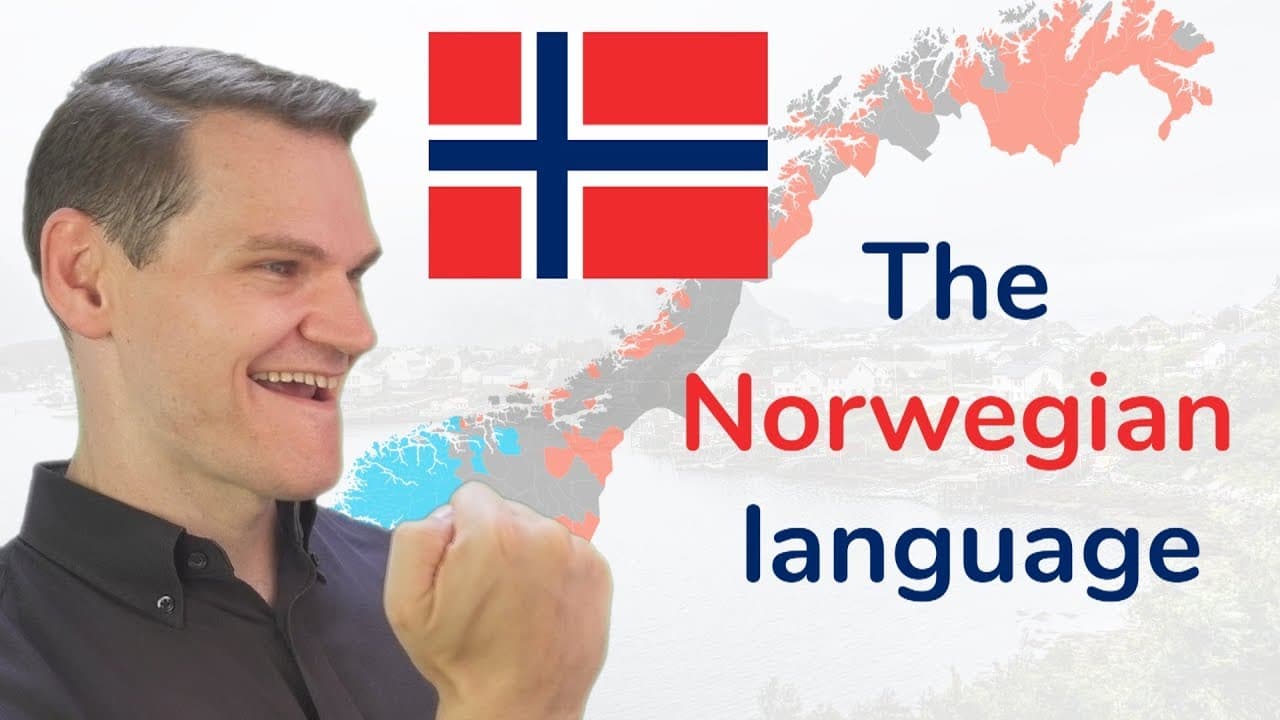
TL;DR
Norwegian, a North Germanic language, is spoken by around five million people primarily in Norway. It has two official written standards: Bokmål and Nynorsk. Bokmål is influenced by Danish, while Nynorsk is based on rural dialects. Despite mutual intelligibility in writing with Swedish and Danish, spoken Norwegian varies widely due to regional dialects.
Transcript
you know what Mickey we need to make this channel more popular we need more views more likes okay how about this 10 lit swear words in Spanish okay well how about this idea tell your boss to go to hell in 50 different languages what do you mean no way that would be the biggest video on the whole channel no way oh wait you mean Norway sure let's do ... Read More
Key Insights
- Norwegian is a North Germanic language spoken by about five million people in Norway.
- There are two official written standards in Norway: Bokmål and Nynorsk.
- Bokmål is derived from Danish-influenced Norwegian, while Nynorsk is based on rural dialects.
- Norwegian shares high mutual intelligibility in writing with Swedish and Danish.
- The language has a complex dialect continuum, affecting spoken intelligibility.
- Norwegian grammar is relatively simple, with a straightforward verb conjugation system.
- Bokmål and Nynorsk have different vocabularies and grammatical structures.
- Norwegian pronunciation varies significantly across regions, with multiple accents and dialects.
Install to Summarize YouTube Videos and Get Transcripts
Explore YouTube Video Summarizer or Get YouTube Transcript Extractor
Questions & Answers
Q: How does Norwegian compare to other Germanic languages?
Norwegian, as a North Germanic language, shares a close relationship with Swedish and Danish, particularly in written form, where there's high mutual intelligibility. However, spoken Norwegian can vary significantly due to dialects. Compared to other Germanic languages like English or German, Norwegian grammar is simpler, with fewer verb conjugations and a straightforward sentence structure.
Q: What are the main differences between Bokmål and Nynorsk?
Bokmål is influenced by Danish and is more commonly used in urban areas, reflecting a more standardized form of Norwegian. Nynorsk, on the other hand, is based on rural dialects and preserves more elements from Old Norse, making it linguistically purer. Vocabulary, spelling, and some grammatical structures differ between the two, though both are officially recognized in Norway.
Q: Why does Norway have two standard written forms of Norwegian?
Norway's two standard written forms, Bokmål and Nynorsk, stem from historical and cultural influences. Bokmål developed from Danish-influenced Norwegian during the Danish-Norwegian union, while Nynorsk was created to reflect a more authentic Norwegian language, drawing from rural dialects. This duality acknowledges Norway's linguistic diversity and regional dialects.
Q: What is the role of dialects in the Norwegian language?
Dialects play a significant role in Norwegian, with a complex dialect continuum affecting spoken intelligibility. Each region in Norway has distinct dialects, which can vary greatly in pronunciation and vocabulary. This diversity is embraced in Norwegian culture, with dialects being used in formal and informal settings, adding depth and richness to the language.
Q: How does Norwegian grammar compare to English?
Norwegian grammar is relatively simple compared to English. It has a straightforward verb conjugation system with minimal variation across different pronouns. Norwegian uses three grammatical genders (feminine, masculine, and neuter) and has simpler sentence structures. The language's word order often mirrors English, making it more accessible to English speakers.
Q: What are the pronunciation challenges in learning Norwegian?
Norwegian pronunciation varies widely across regions, with multiple accents and dialects. Key challenges include mastering the pitch accent, which can change the meaning of words, and understanding regional variations in consonant and vowel sounds. Despite these challenges, all pronunciations are considered correct, reflecting the language's diversity.
Q: How is Norwegian taught to non-native speakers?
Norwegian is often taught focusing on Bokmål, as it is more widely used and considered more straightforward for learners. Courses typically cover basic grammar, vocabulary, and pronunciation, emphasizing mutual intelligibility with other Scandinavian languages. Learners are also introduced to Nynorsk and dialectal variations to provide a comprehensive understanding of the language.
Q: What cultural insights can be gained from studying Norwegian?
Studying Norwegian offers insights into Norway's cultural and linguistic heritage. The coexistence of Bokmål and Nynorsk reflects the country's historical influences and regional diversity. Understanding dialects and pronunciation nuances provides a deeper appreciation of Norwegian identity and social dynamics, highlighting the importance of language in cultural expression and communication.
Summary & Key Takeaways
-
Norwegian is a North Germanic language with two official written standards: Bokmål and Nynorsk. Bokmål, influenced by Danish, and Nynorsk, based on rural dialects, reflect Norway's linguistic diversity. Despite high mutual intelligibility in writing with Swedish and Danish, spoken Norwegian is marked by a complex dialect continuum.
-
The language's grammar is relatively simple compared to other languages, with straightforward verb conjugation and gender-specific nouns. However, Norwegian pronunciation is diverse, with significant regional variations, making it both accessible and challenging for learners.
-
Norwegian's linguistic depth is evident in its dialects and dual standards. While Bokmål is more commonly used, Nynorsk preserves traditional elements from Old Norse. This duality enriches the language, offering learners a unique insight into Norway's cultural and linguistic heritage.
Read in Other Languages (beta)
Share This Summary 📚
Summarize YouTube Videos and Get Video Transcripts with 1-Click
Try YouTube Summary with ChatGPT & Claude or YouTube Transcript Generator
Explore More Summaries from Langfocus 📚
Summarize YouTube Videos and Get Video Transcripts with 1-Click
Try YouTube Summary with ChatGPT & Claude or YouTube Transcript Generator