What Are the Challenges of Hawaii's Isolated Power Grids?
TL;DR
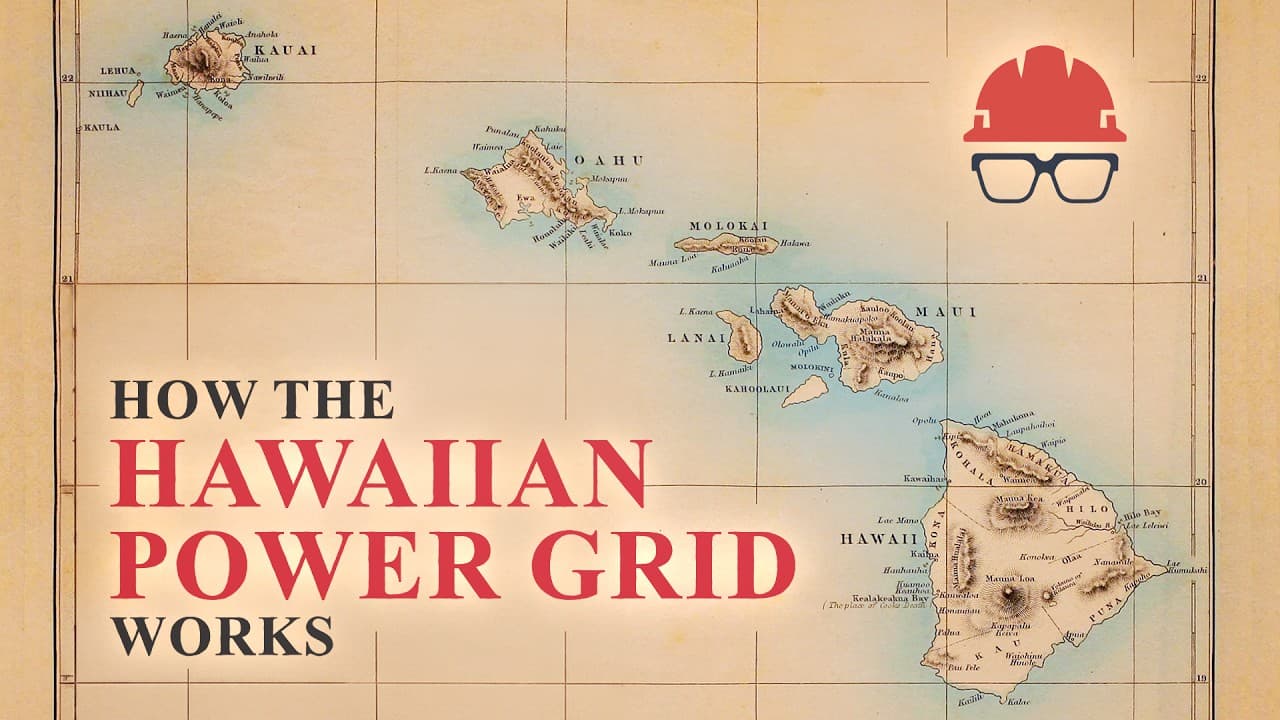
Hawaii faces significant challenges with its isolated power grids, primarily due to each island relying on independent systems. These grids must manage intermittent renewable sources, like solar and wind, which complicate stability. Additionally, heavy dependence on imported petroleum for power drives up costs and affects energy reliability, prompting innovative solutions as Hawaii aims for a renewable energy future.
Transcript
In January of 2024, right on the heels of a serious drought across the state, a major storm slammed into the Hawaiian islands of Oahu and Kauai. Severe winds caused damage to buildings, and heavy rain flooded roadways. At the Waiau Steam Turbine plant, the rain reached some of the generator unit controls, tripping two units and knocking 100 meg... Read More
Key Insights
- Hawaii's power grid is unique because each island operates its own independent electrical system, making inter-island connectivity a significant challenge.
- The state's reliance on imported petroleum for 75% of its electricity makes it vulnerable to international market fluctuations and increases energy costs.
- Renewable energy sources, such as solar and wind, account for 25% of Hawaii's power, but their intermittent nature presents unique operational challenges.
- Distributed energy resources, like rooftop solar installations, bring power closer to demand but create complexities in grid management and stability.
- Hawaii's Clean Energy Initiative aims to completely eliminate fossil fuel use by 2045, pushing the state to innovate in renewable energy integration.
- The lack of natural gas reserves in Hawaii means the state cannot rely on it as a transitional fuel, forcing a direct leap to renewable energy.
- Smart grid technologies and time-of-use rates are being explored to improve grid efficiency and manage demand fluctuations.
- The high cost of reliability in isolated grids is a major issue, as each island bears the full cost of maintaining its power infrastructure.
Install to Summarize YouTube Videos and Get Transcripts
Explore YouTube Video Summarizer or Get YouTube Transcript Extractor
Questions & Answers
Q: What are the main challenges of Hawaii's power grid?
Hawaii's power grid faces challenges due to its isolated systems on each island, which prevent inter-island connectivity. The state's reliance on imported petroleum makes energy costs volatile and expensive. Additionally, integrating renewable energy sources like solar and wind presents operational challenges due to their intermittent nature and the need for innovative grid management.
Q: How does Hawaii manage its renewable energy sources?
Hawaii manages its renewable energy sources by incorporating distributed energy resources, such as rooftop solar installations, which bring power closer to demand. However, this creates complexities in grid management, as these sources can cause voltage and frequency fluctuations. The state is exploring smart grid technologies and time-of-use rates to enhance efficiency and manage demand fluctuations.
Q: What is Hawaii's Clean Energy Initiative?
Hawaii's Clean Energy Initiative, launched in 2008, aims to meet 70% of the state's energy needs through renewables and increased efficiencies by 2030. The initiative was expanded in 2014 with a goal to completely eliminate fossil fuel use by 2045. This ambitious plan pushes Hawaii to innovate in renewable energy integration and become a leader in energy independence.
Q: Why is Hawaii's energy cost higher than the US average?
Hawaii's energy costs are higher than the US average due to its reliance on imported petroleum for 75% of its electricity, making it vulnerable to international market fluctuations. Additionally, maintaining isolated power grids on each island increases infrastructure costs, which are passed down to consumers. The state's ambitious renewable energy goals also contribute to higher costs.
Q: What role do smart grid technologies play in Hawaii's power grid?
Smart grid technologies in Hawaii's power grid aim to improve efficiency by adding sensors and communication tools to automate fault detection, recovery, and restoration. These technologies enable better management of distributed energy resources and help smooth out demand fluctuations, reducing the need for expensive generators that are only used during peak hours.
Q: How does Hawaii's power grid handle distributed energy resources?
Hawaii's power grid handles distributed energy resources, such as rooftop solar installations, by integrating them into the grid. However, these sources can create unexpected loads on circuits and equipment not designed for bidirectional power flow, affecting voltage and frequency stability. The grid operator has limited control over these resources, which can complicate grid management.
Q: What impact does Hawaii's reliance on imported petroleum have on its power grid?
Hawaii's reliance on imported petroleum for 75% of its electricity makes the state susceptible to international market fluctuations, affecting energy costs and stability. This dependence also increases the overall cost of electricity, as the state must import fuel from foreign countries, leading to higher retail energy prices compared to the US average.
Q: What are the benefits and challenges of Hawaii's renewable energy integration?
The benefits of Hawaii's renewable energy integration include reduced CO2 emissions and decreased exposure to fuel supply chain complexities. However, challenges arise from the intermittent nature of renewables, requiring storage solutions and firm baseload options. Additionally, integrating distributed energy resources into the grid presents management challenges, such as voltage and frequency stability.
Summary & Key Takeaways
-
Hawaii's power grid is composed of isolated systems on each island, creating unique challenges in maintaining reliability and managing costs. The state's heavy reliance on imported petroleum makes energy prices volatile and expensive. With ambitious renewable energy goals, Hawaii is a testing ground for integrating renewables into small-scale grids.
-
Renewable energy sources, such as solar and wind, present challenges due to their intermittent nature. Distributed energy resources, like rooftop solar, require innovative grid management to maintain stability. Hawaii's Clean Energy Initiative aims to eliminate fossil fuel use by 2045, necessitating advancements in renewable integration.
-
Smart grid technologies and time-of-use rates are being explored to enhance grid efficiency and manage demand. The high cost of maintaining isolated grids is a significant issue, as each island must independently bear the infrastructure costs. Hawaii serves as a case study for renewable energy integration in isolated power systems.
Read in Other Languages (beta)
Share This Summary 📚
Summarize YouTube Videos and Get Video Transcripts with 1-Click
Try YouTube Summary with ChatGPT & Claude or YouTube Transcript Generator
Explore More Summaries from Practical Engineering 📚




Summarize YouTube Videos and Get Video Transcripts with 1-Click
Try YouTube Summary with ChatGPT & Claude or YouTube Transcript Generator