Retinal repair: Bringing stem cells into focus
TL;DR
Retinal diseases threaten vision; groundbreaking research offers hope for regeneration.
Transcript
the eyes are our windows onto the world by far the most sophisticated component of the eye is the retina the thin layer of tissue at the back that converts light into chemical and electrical signals sadly it's estimated that by 2020 almost 200 million people will lose their sites because of diseases of the retina age-related macular degeneration or... Read More
Key Insights
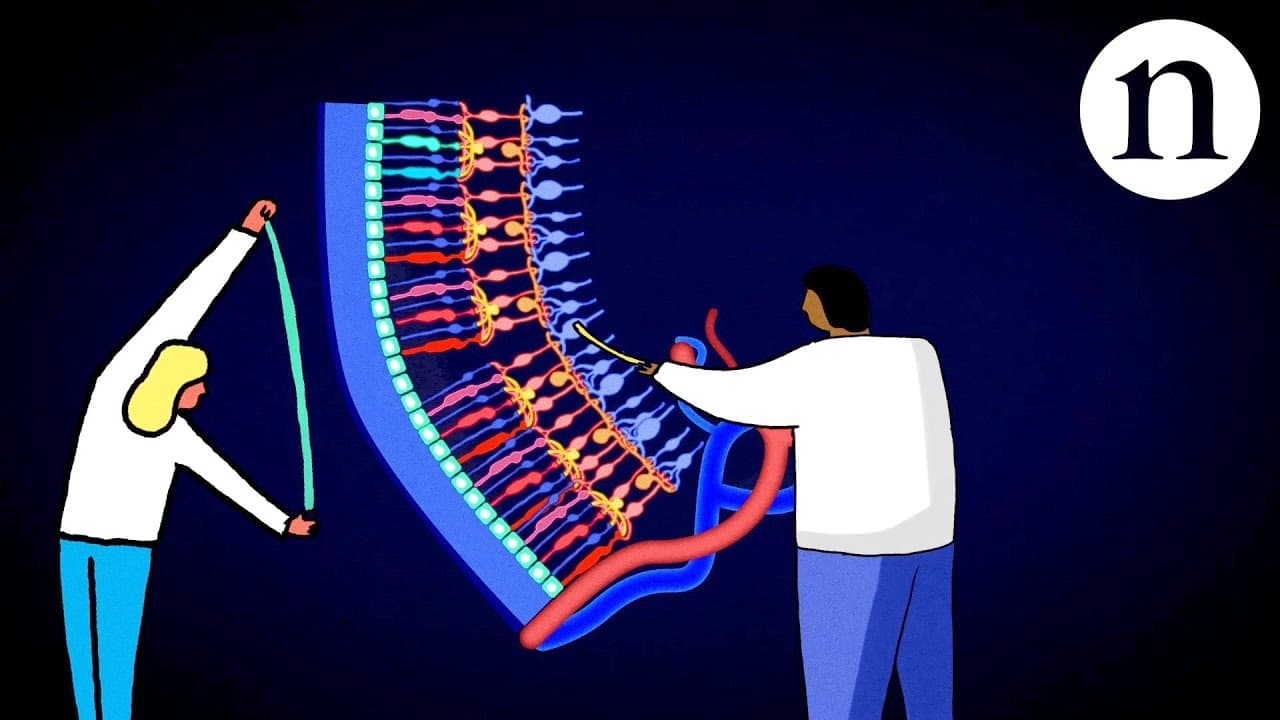
- 💁 The retina is a complex structure containing five types of neurons that process visual information, creating a sophisticated circuit essential for vision.
- 💄 Damage to the RPE layer is not reversible, which contributes to the progression of retinal diseases, making protective and regenerative strategies critically important.
- 👨🔬 Innovative research is moving towards stem cell therapies that could restore vision by replacing damaged RPE and photoreceptors, potentially changing the landscape of treatment for retinal disorders.
- 👶 Clinical trials are essential in validating the safety and effectiveness of new therapies, as both RPE injections and 3D retinas are still in experimental stages.
- 💉 The rise in retinal diseases like AMD emphasizes the need for greater awareness and investment in ocular health research and therapies.
- 😷 Understanding and recreating retinal structures in lab settings offer exciting possibilities for medical advancements and personalized medicine in ophthalmology.
- 💨 Current advancements aim to not only provide treatments but also enhance our understanding of retinal diseases and their individual variations, paving the way for targeted therapies.
Install to Summarize YouTube Videos and Get Transcripts
Explore YouTube Video Summarizer or Get YouTube Transcript Extractor
Questions & Answers
Q: What role does the retinal pigment epithelium play in the eye?
The retinal pigment epithelium (RPE) serves a crucial function in maintaining retinal health. It is responsible for transporting nutrients from the bloodstream to the retina and removing harmful waste products that accumulate during photoreceptor activity. Without a healthy RPE, photoreceptors cannot function properly, which can lead to irreversible vision loss.
Q: What is age-related macular degeneration, and why is it significant?
Age-related macular degeneration (AMD) is the most common retinal degenerative disease, primarily affecting individuals over 50. It leads to the deterioration of the macula, the area of the retina responsible for sharp central vision necessary for tasks like reading. With no current cure, the rising prevalence of AMD poses a serious public health challenge.
Q: What are the two main approaches researchers are using to replace damaged RPE cells?
Researchers are exploring two key approaches to replace damaged RPE cells: the first involves injecting a suspension of stem cell-derived RPE cells directly into the retina. The second, more promising method, involves injecting preformed sheets of stem cell-derived RPE cells, which have shown early improvement in vision for some patients in clinical trials.
Q: What potential future applications do 3D miniature retinas hold?
3D miniature retinas could revolutionize retinal treatment and research. They may provide transplantable tissue that can replace damaged areas in patients. Additionally, these models can aid in studying genetic diseases affecting retinal development and tailor treatments based on individual responses, potentially leading to more effective therapies.
Summary & Key Takeaways
-
Retinal diseases, particularly age-related macular degeneration (AMD), pose a significant risk to vision, affecting nearly 200 million people. There are currently no cures, highlighting the urgency of research in this area.
-
The retinal pigment epithelium (RPE) is essential for retinal health, supporting photoreceptors by providing nutrients and removing toxic byproducts. Damage to the RPE is irreversible, leading to vision loss.
-
Current research focuses on stem cell therapies, including the injection of new RPE cells and the development of 3D miniature retinas that could aid in retinal disorders and drug responses.
Read in Other Languages (beta)
Share This Summary 📚
Summarize YouTube Videos and Get Video Transcripts with 1-Click
Try YouTube Summary with ChatGPT & Claude or YouTube Transcript Generator
Explore More Summaries from nature video 📚




Summarize YouTube Videos and Get Video Transcripts with 1-Click
Try YouTube Summary with ChatGPT & Claude or YouTube Transcript Generator