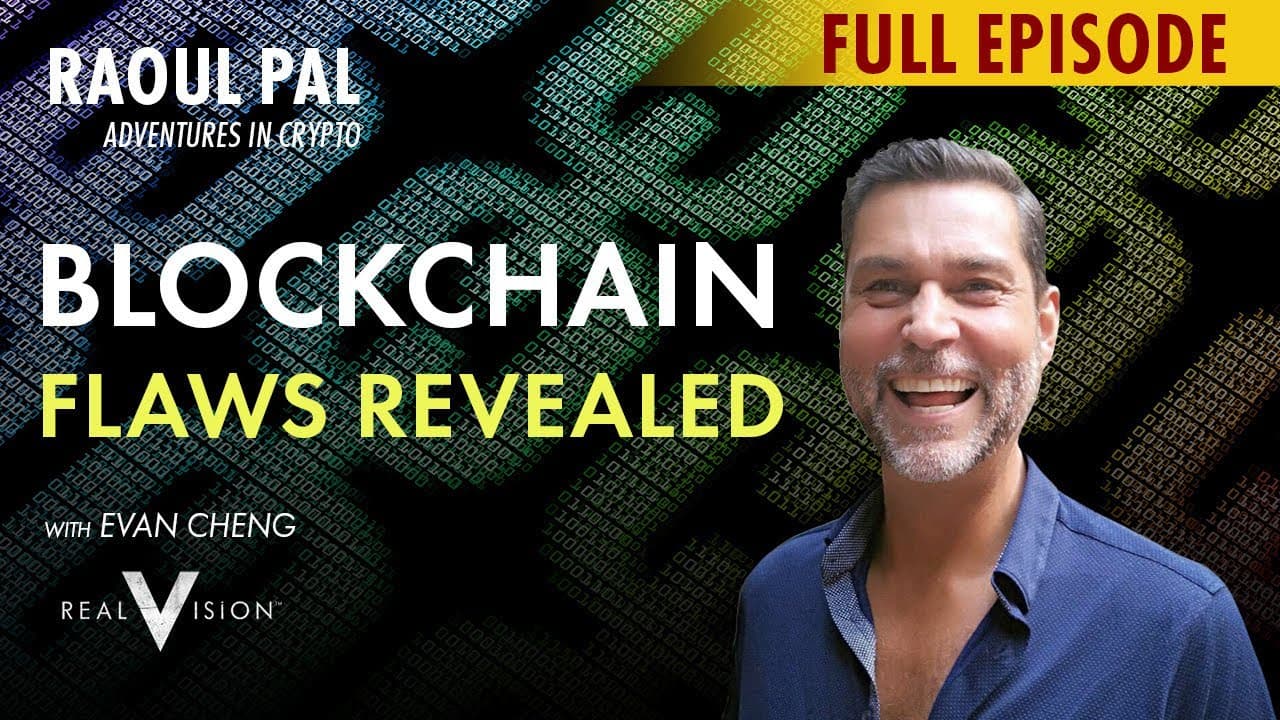
What's Wrong With Existing Blockchain Models? w/ Evan Cheng
TL;DR
Evan Cheng discusses flaws in blockchain models and Sui's solutions.
Transcript
this episode of Raul's adventures in crypto is sponsored by Masterworks the AI boom is here or is it the markets are only surviving thanks to just seven Mega cap tech stocks the equal weight s p is dead in the water up less than two percent that's a larger disparity than the.com bubble billionaire investors like Ken Griffin warned the system was br... Read More
Key Insights
- Evan Cheng, co-founder of Mysten Labs, believes existing blockchain models are fundamentally flawed, especially in data and programming models.
- Cheng identifies that the current blockchain model relies heavily on centralized entities, which contradicts the peer-to-peer premise of the internet.
- Sui, developed by Mysten Labs, addresses these flaws by introducing a new data model where assets are treated as objects, allowing for more efficient and scalable transactions.
- The traditional blockchain model's inefficiency is due to its inability to track dependencies between assets, leading to unnecessary sequencing of transactions.
- Sui's object-oriented approach allows for parallel processing of transactions, significantly improving scalability and efficiency.
- Cheng emphasizes the importance of disintermediation, where software replaces human intermediaries to ensure transparency and fairness in transactions.
- Sui's tokenomics encourages healthy competition among validators, promoting efficiency and cost-effectiveness without compromising on security.
- The ultimate goal for Sui and similar technologies is to integrate seamlessly into everyday applications, making web3 ubiquitous without users even realizing it.
Install to Summarize YouTube Videos and Get Transcripts
Explore YouTube Video Summarizer or Get YouTube Transcript Extractor
Questions & Answers
Q: What are the main flaws in existing blockchain models according to Evan Cheng?
Evan Cheng identifies that existing blockchain models are fundamentally flawed due to their reliance on centralized entities, inefficient data models, and programming structures. These models often require unnecessary sequencing of transactions and lack the capacity to efficiently track dependencies between assets. As a result, they fail to fully realize the potential of blockchain technology for decentralization and disintermediation.
Q: How does Sui's approach differ from traditional blockchain models?
Sui, developed by Mysten Labs, introduces a new data model where assets are treated as objects. This allows for more efficient and scalable transactions by enabling parallel processing. Unlike traditional models that sequence all transactions, Sui tracks dependencies between assets, allowing for independent processing and significantly improving scalability and efficiency.
Q: What is the significance of disintermediation in blockchain technology?
Disintermediation is crucial in blockchain technology as it replaces human intermediaries with software, ensuring transparency and fairness in transactions. By eliminating centralized control, blockchain can empower users to have more control over their data and transactions, reducing costs and improving efficiency. Sui aims to embody this principle by creating a more decentralized and transparent system.
Q: How does Sui's tokenomics promote efficiency and cost-effectiveness?
Sui's tokenomics encourages a competitive environment among validators, where they strive to offer better returns for staking by improving their service efficiency. This competition drives a race to the bottom in terms of costs, promoting efficiency and cost-effectiveness without compromising security. Validators are incentivized to optimize their operations, benefiting the entire network.
Q: What is the long-term vision for Sui and similar blockchain technologies?
The long-term vision for Sui and similar blockchain technologies is to become seamlessly integrated into everyday applications, making web3 ubiquitous without users even realizing it. By abstracting complex blockchain concepts, these technologies aim to provide a user-friendly experience that encourages widespread adoption and fundamentally changes how products and services are designed and delivered.
Q: Why is scalability a challenge in traditional blockchain systems?
Scalability is a challenge in traditional blockchain systems due to their reliance on sequential processing and lack of efficient dependency tracking between transactions. This results in congestion and inefficiencies, as all transactions are processed in a linear fashion regardless of their independence. Sui addresses this by enabling parallel processing and independent transaction handling, significantly improving scalability.
Q: How does Sui ensure security while improving scalability?
Sui ensures security while improving scalability by maintaining the core attributes of blockchain, such as immutability and transparency, while introducing a more efficient transaction processing model. By treating assets as objects and enabling parallel processing, Sui can handle a higher volume of transactions without compromising security. The system's design allows for continuous validation and verification, maintaining trust and integrity.
Q: What role does object-oriented programming play in Sui's blockchain model?
Object-oriented programming plays a central role in Sui's blockchain model by allowing assets to be treated as objects with rich attributes and histories. This approach enables more dynamic and flexible interactions with assets, allowing for real-time updates and changes. It also facilitates parallel processing and efficient dependency tracking, significantly enhancing scalability and efficiency compared to traditional blockchain models.
Summary & Key Takeaways
-
Evan Cheng, co-founder of Mysten Labs, discusses the inherent flaws in existing blockchain models, particularly in their data and programming structures. He argues that the current systems are inefficient and rely too heavily on centralized entities, which contradicts the initial peer-to-peer premise of the internet.
-
Sui, a new blockchain developed by Mysten Labs, aims to address these issues by treating assets as objects, allowing for more efficient and scalable transactions. This object-oriented approach enables parallel processing of transactions, significantly improving scalability and efficiency compared to traditional models.
-
Cheng highlights the importance of disintermediation, where software replaces human intermediaries to ensure transparency and fairness in transactions. Sui’s tokenomics fosters competition among validators, promoting efficiency and cost-effectiveness. The long-term vision is for web3 technologies to become seamlessly integrated into everyday applications.
Read in Other Languages (beta)
Share This Summary 📚
Summarize YouTube Videos and Get Video Transcripts with 1-Click
Try YouTube Summary with ChatGPT & Claude or YouTube Transcript Generator
Explore More Summaries from Real Vision 📚





Summarize YouTube Videos and Get Video Transcripts with 1-Click
Try YouTube Summary with ChatGPT & Claude or YouTube Transcript Generator