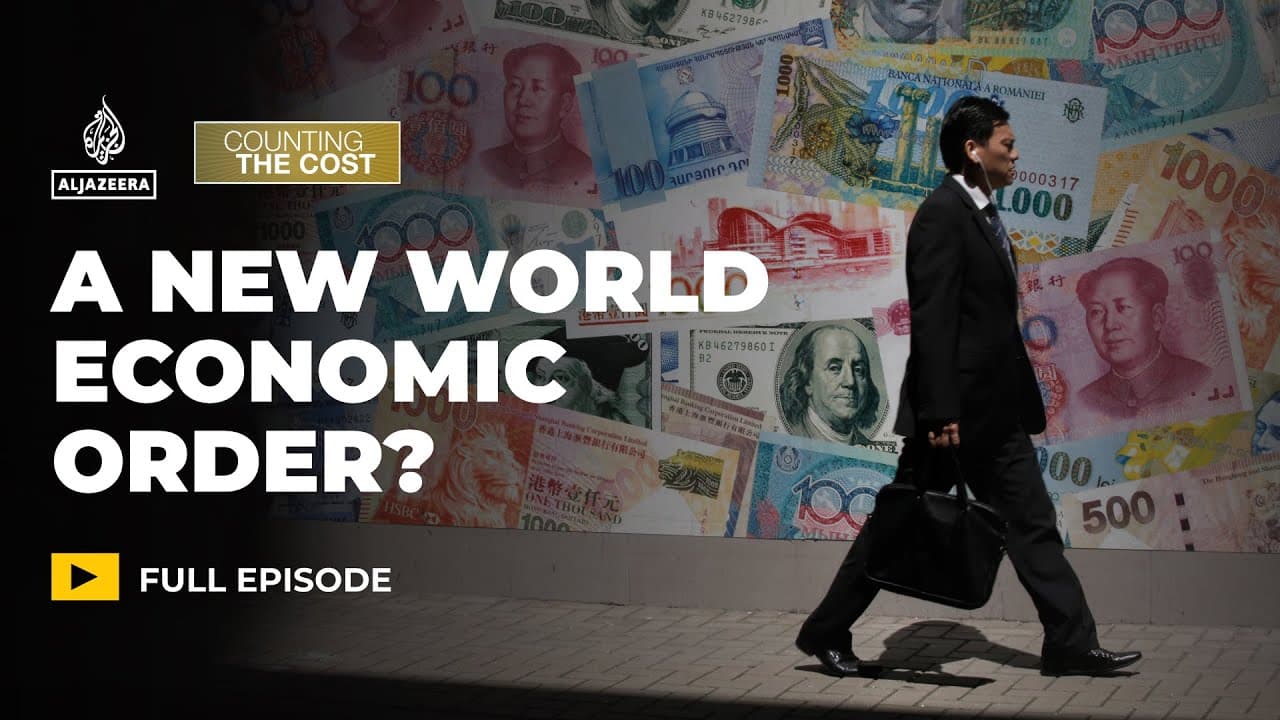
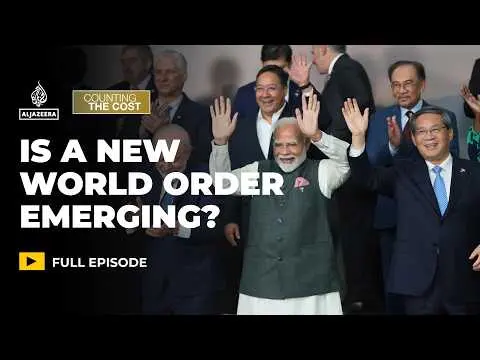
Is a new world economic order emerging? | Counting the Cost
TL;DR
The geopolitical tensions between the US and China indicate a major shift in the global economic order.
Transcript
hello I'm Adrian finigan and this is counting the cost on aler your weekly look at the world of business and economics this week the US has dominated the global economy for decades but the world is fractured by geopolitical tensions and globalization is facing a backlash is the economic order changing is it the US versus China the trade war between... Read More
Key Insights
- 🌐 The current global economic order is experiencing significant strain due to geopolitical tensions, primarily between the US and China.
- 🌍 BRICS nations are seeking to establish an alternative framework to counter Western economic dominance, specifically the reliance on the US dollar and institutions like the IMF.
- 😮 The rise of nationalism is reshaping trade policies, with countries prioritizing security and industrial interests over global market ideals.
- ❓ Historical parallels to Cold War dynamics suggest a nuanced confrontation that focuses more on economic competition than ideological supremacy.
- 🌐 The potential for a fragmented international trading system is growing, posing risks for smaller nations and global economic cooperation.
- 🧘 The responses from emerging markets aim to leverage their positions uniquely, creating potential pathways for reform in international economic governance.
- 🤙 Calls for reevaluation of existing financial institutions are gaining momentum, reflecting a demand for a more inclusive and representative global economic system.
Install to Summarize YouTube Videos and Get Transcripts
Explore YouTube Video Summarizer or Get YouTube Transcript Extractor
Questions & Answers
Q: What is causing the current upheaval in the global economic order?
The upheaval is largely due to escalating geopolitical tensions between the US and China, which has prompted countries to rethink their economic alliances and trading systems. The US has imposed tariffs and restrictions on China, which in turn has altered trade flows and pushed countries to form new economic blocs that aim to bolster autonomy from traditional Western-led institutions.
Q: How are developing nations responding to the current economic challenges?
Developing nations are forming economic alliances like BRICS to promote equitable trade practices and reduce dependence on Western financial systems. This coalition seeks to create alternatives to institutions like the IMF and World Bank, with a focus on cooperative models that reflect the current global realities and ensure a fairer distribution of resources.
Q: Are the BRICS nations likely to replace the current economic order?
While BRICS nations aspire to challenge the existing economic frameworks, experts argue that they do not have a cohesive enough strategy or shared objectives to entirely replace the current order. The success of their endeavors will depend on their ability to navigate complex geopolitical relationships while pushing for reforms in international governance that accommodate their interests.
Q: What role does the US dollar play in the changing global economy?
The US dollar has traditionally been the dominant world reserve currency. However, the growing sentiment among nations, particularly within alliances like BRICS, illustrates a desire to trade using local currencies. This shift may diminish the dollar's hegemony, but its future as the leading currency will depend on global confidence and economic performance across differing nations.
Q: What are the potential implications of a weakened World Trade Organization (WTO)?
A weakened WTO may lead to a fragmented global trading system where larger economies prioritize their national interests over multilateral cooperation. This fragmentation could hinder smaller nations from benefiting fairly in trade agreements and may result in increased economic isolationism, limiting growth opportunities for developing countries reliant on open markets.
Q: Might the current economic climate lead to a new Cold War?
Many experts suggest that while tensions between the US and China resemble Cold War dynamics, the reality may be more about economic competition rather than a strict ideological battle. The competition is largely centered on technological and commercial superiority, indicating a complex and multifaceted global arena rather than a binary conflict.
Summary & Key Takeaways
-
The longstanding US-led economic order is being challenged by rising geopolitical tensions, particularly between the US and China, leading to calls for a more equitable global economic governance.
-
Developing nations have formed alliances like BRICS to counteract Western dominance, aiming for increased trade autonomy and alternative economic systems that can operate outside of the US dollar.
-
Experts suggest that while the old order is under strain, it may not completely collapse; instead, its principles might adapt to include new partnerships and more balanced structures among various nations.
Read in Other Languages (beta)
Share This Summary 📚
Summarize YouTube Videos and Get Video Transcripts with 1-Click
Try YouTube Summary with ChatGPT & Claude or YouTube Transcript Generator
Explore More Summaries from Al Jazeera English 📚


Summarize YouTube Videos and Get Video Transcripts with 1-Click
Try YouTube Summary with ChatGPT & Claude or YouTube Transcript Generator