The Kurdish Language
TL;DR
Kurdish is a diverse language with multiple dialects.
Transcript
If you're learning a language, practicing with native speakers is the fastest way to become fluent. Take effective online lessons with native teachers on italki. Buy your first lesson and get your second lesson free. Link in description. Hello everyone. Welcome to the Langfocus channel and my name is Paul. Today I'm going to talk about the Kurd... Read More
Key Insights
- Kurdish is spoken by approximately 30 million people, primarily in Turkey, Iraq, Iran, and Syria, with a significant diaspora in Germany.
- The Kurdish language belongs to the Indo-Iranian branch of the Indo-European language family, with dialects that are not mutually intelligible.
- There are three main Kurdish dialects: Kurmanji, Sorani, and Pehlewani, each with distinct linguistic features and alphabets.
- Kurdish has been historically suppressed in countries like Turkey, Syria, and Iraq, impacting its development and standardization.
- Kurmanji is written in the Latin alphabet, Sorani in the Perso-Arabic script, and Pehlewani can be written in either.
- Kurdish exhibits linguistic features like ergativity, which is uncommon in most Indo-European languages.
- Kurdish autonomy in regions like Iraqi Kurdistan and Rojava in Syria has fostered the use and teaching of the Kurdish language.
- Learning Kurdish can be challenging due to its dialectal variations and lack of standardized learning materials.
Install to Summarize YouTube Videos and Get Transcripts
Explore YouTube Video Summarizer or Get YouTube Transcript Extractor
Questions & Answers
Q: Where is the Kurdish language predominantly spoken?
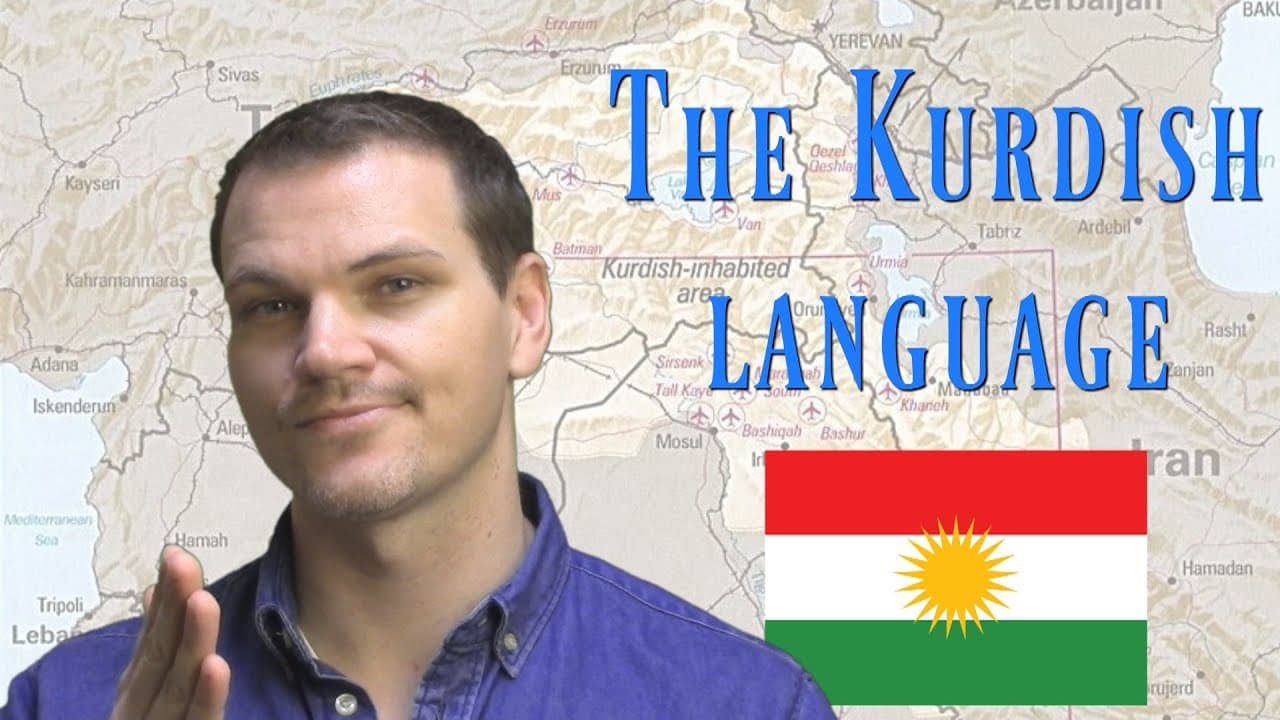
The Kurdish language is predominantly spoken in the Kurdistan region, which spans southeastern Turkey, northeastern Syria, northern Iraq, and northwestern Iran. Additionally, there is a significant Kurdish diaspora in countries like Germany. Kurdish is the majority language in these areas, with approximately 30 million native speakers.
Q: What are the main dialects of the Kurdish language?
The main dialects of the Kurdish language are Kurmanji, Sorani, and Pehlewani. Kurmanji is the most widely spoken dialect, primarily in Turkey and Syria. Sorani is mainly spoken in Iraq and Iran, while Pehlewani is spoken in certain areas of Iran and Iraq. These dialects have low mutual intelligibility.
Q: How has the Kurdish language been historically treated in the countries where it is spoken?
Historically, the Kurdish language has faced suppression in countries like Turkey, Syria, and Iraq. In Turkey, it was illegal to print Kurdish materials, and its use in public and government institutions was banned. Similar restrictions existed in Syria and Iraq. In contrast, Iran discouraged Kurdish but did not aggressively suppress it.
Q: What linguistic features are notable in the Kurdish dialect of Kurmanji?
Kurmanji, a dialect of Kurdish, is characterized by features such as gendered nouns, four noun cases, and a sentence structure that is generally subject-object-verb (SOV). It also exhibits ergativity, where the subject of a verb can function like an object in past tense sentences, a feature uncommon in most Indo-European languages.
Q: How does Sorani differ from Kurmanji in terms of linguistic structure?
Sorani differs from Kurmanji in several linguistic aspects. Sorani does not have case distinctions for pronouns, unlike Kurmanji. It uses the Perso-Arabic script, whereas Kurmanji uses the Latin alphabet. Sorani also employs subject affixes before verbs in past tense sentences, contrasting with Kurmanji's use of object suffixes.
Q: What impact has Kurdish autonomy had on the language's development?
Kurdish autonomy in regions like Iraqi Kurdistan and Rojava in Syria has positively impacted the language's development. In these areas, Kurdish is used as the language of instruction in schools and in the media. This autonomy has facilitated the promotion and potential standardization of Kurdish, strengthening its presence and usage.
Q: What challenges might learners face when studying the Kurdish language?
Learners of Kurdish may face challenges due to the dialectal variations and the lack of a standardized form of the language. Additionally, linguistic features like ergativity can be difficult for those unfamiliar with them. The limited availability of learning materials further complicates the study of Kurdish for non-native speakers.
Q: How does prior knowledge of Persian aid in learning Kurdish?
Prior knowledge of Persian can significantly aid in learning Kurdish due to the shared linguistic roots in the Indo-Iranian branch of the Indo-European language family. Both languages share similarities in vocabulary and grammatical structures, providing a foundation that can facilitate the learning process for those already familiar with Persian.
Summary & Key Takeaways
-
Kurdish is a language spoken by the Kurdish people in regions across Turkey, Iraq, Iran, and Syria. It comprises several dialects, primarily Kurmanji, Sorani, and Pehlewani, which are not mutually intelligible. The language has faced historical suppression, affecting its development and standardization.
-
Kurmanji and Sorani are the most widely spoken Kurdish dialects, each with unique linguistic features. Kurmanji is known for its use of the Latin alphabet and ergativity, while Sorani uses the Perso-Arabic script. Despite challenges, Kurdish is gaining strength in autonomous regions.
-
The Kurdish language is part of the Indo-Iranian branch of the Indo-European family and shares similarities with Persian. Kurdish autonomy in Iraq and Syria has led to increased use and teaching of the language. However, dialectal variation and limited learning resources pose challenges for learners.
Read in Other Languages (beta)
Share This Summary 📚
Summarize YouTube Videos and Get Video Transcripts with 1-Click
Try YouTube Summary with ChatGPT & Claude or YouTube Transcript Generator
Explore More Summaries from Langfocus 📚

Summarize YouTube Videos and Get Video Transcripts with 1-Click
Try YouTube Summary with ChatGPT & Claude or YouTube Transcript Generator