Ten years of DNA origami
TL;DR
Scientists create tiny robots using DNA origami techniques for precise structure and function.
Transcript
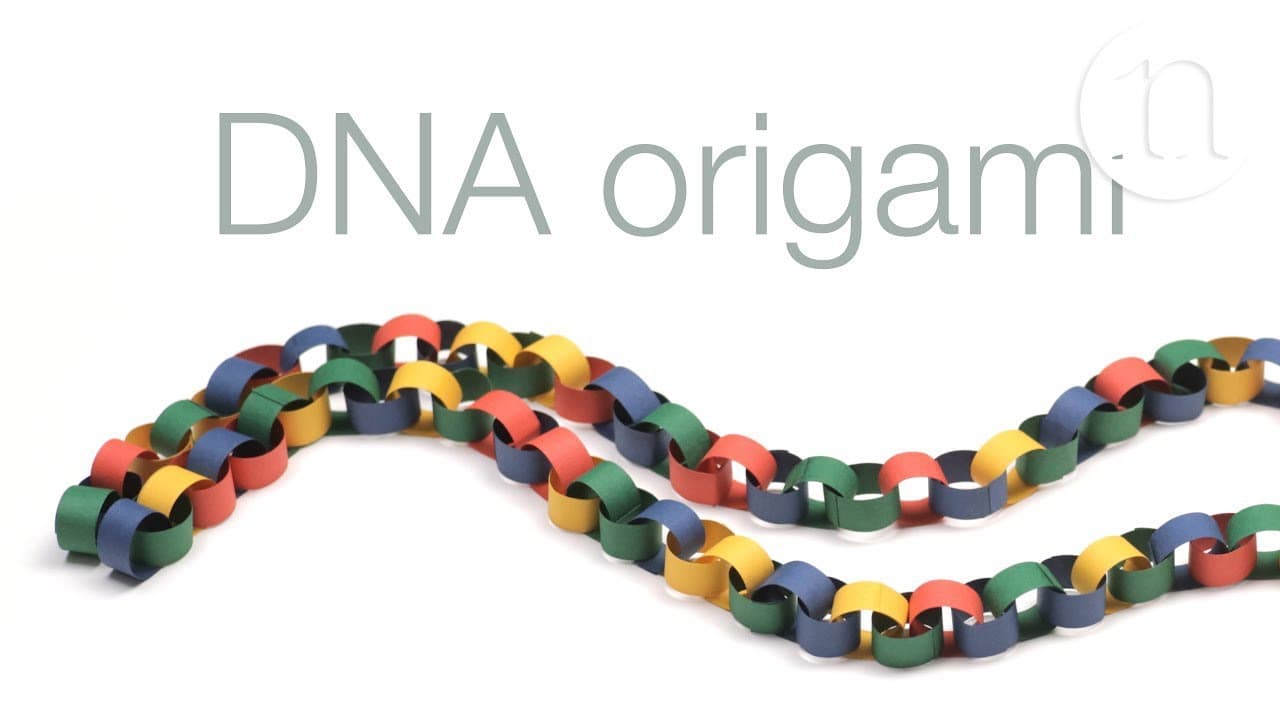
we know that DNA makes people and plants and puppies so why not robots could it be possible to make tiny robots out of DNA in 2006 Paul rman found a way to make all sorts of tiny shapes out of DNA even miniature smiley faces he called the technique DNA origami here's how it works you start with a long piece of single strand DNA and you fold it just... Read More
Key Insights
- 👻 DNA origami represents a significant advancement in nanotechnology, allowing for the construction of various shapes at the nanoscale using biological material.
- 🙏 The self-folding property of DNA simplifies the design process, as specific sequences ensure accurate structural formation with minimal manual intervention.
- 🎨 Over the last decade, DNA origami has advanced from 2D designs to incorporate functional 3D structures capable of moving and interacting with their environment.
- 🚚 Applications in medicine have emerged, such as drug-delivery systems that can respond to particular biological conditions, significantly improving treatment efficacy and minimizing side effects.
- 😒 Understanding DNA base pairing allows scientists to create highly specific and stable structures, enhancing the reliability of DNA origami for practical uses.
- 🤩 The integration of mechanical properties into DNA structures is a key area of research, enabling the development of responsive nanosystems.
- 🔬 Collaboration between genetic engineering, nanotechnology, and materials science is crucial for accelerating breakthroughs in DNA origami applications.
Install to Summarize YouTube Videos and Get Transcripts
Explore YouTube Video Summarizer or Get YouTube Transcript Extractor
Questions & Answers
Q: What is DNA origami and who developed it?
DNA origami is a technique that allows the assembly of nanoscale structures using DNA through folding single-strand DNA and securing it with staple strands. Developed by Paul Rotman in 2006, this innovative approach has opened new avenues for creating functional nano-sized objects, expanding beyond simple shapes to complex structures.
Q: How does DNA facilitate the construction of stable structures?
DNA molecules consist of four chemical bases that always pair in specific ways: green with blue and red with yellow. This predictable pairing ensures that when staple strands bind with a single-strand DNA, they create a stable double helix structure. The more staples added, the more stable the final shape becomes, allowing for intricate designs.
Q: What are some applications of DNA origami beyond static shapes?
Beyond simple 2D shapes, researchers have developed 3D DNA structures capable of dynamic functions, like the DNA box created by Danish scientists that can open to release drug molecules. These advancements showcase the capability of DNA origami to support applications in drug delivery and targeted therapy by incorporating sensing mechanisms.
Q: How could DNA origami lead to the development of nanorobots?
The combination of DNA origami with sensors and circuits enables precise control over the movements of DNA structures, which paves the way for creating nanorobots. These programmable entities can be designed to perform specific tasks, such as targeted drug delivery or detection of biomarkers, enhancing medical applications.
Summary & Key Takeaways
-
DNA origami is a technique developed by Paul Rotman that allows the creation of various shapes like smiley faces through the folding of single-strand DNA fixed with staple strands.
-
The unique properties of DNA, including its self-folding ability and predictable pairing of chemical bases, make it ideal for building stable and complex three-dimensional structures for potential nanorobotic applications.
-
Recent advancements have led to the development of DNA-based structures that can perform specific tasks, such as drug delivery, by incorporating sensors and circuits into the DNA framework.
Read in Other Languages (beta)
Share This Summary 📚
Summarize YouTube Videos and Get Video Transcripts with 1-Click
Try YouTube Summary with ChatGPT & Claude or YouTube Transcript Generator
Explore More Summaries from nature video 📚
Summarize YouTube Videos and Get Video Transcripts with 1-Click
Try YouTube Summary with ChatGPT & Claude or YouTube Transcript Generator