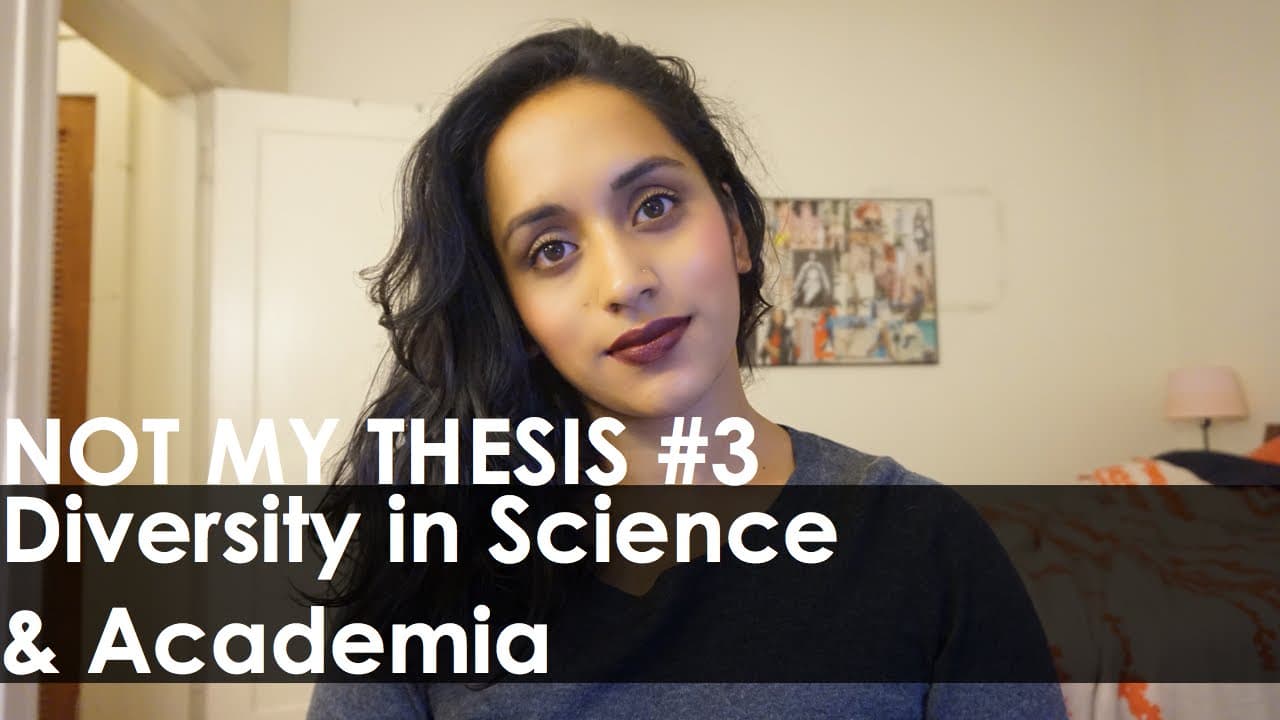
Diversity in Science & Academia | NOT MY THESIS #3
TL;DR
Diversity is essential in science but faced with gender and racial disparities, impacting collaboration and perceptions in academia.
Transcript
hi this is daboki and over the past week I've been talking a bit about books and diversity thanks uh to the booktube diverseathon and I wanted to carry over some of those ideas now to talk a little bit about diversity in science and Academia I think science in particular has a pretty notorious reputation for being pretty weak at diversity um there'... Read More
Key Insights
- 🔬 Diversity challenges in science include gender and racial disparities.
- 🖤 Lack of diversity impacts collaboration and academic perceptions.
- 😐 Practical solutions like science camps and gender-neutral toys encourage girls in STEM.
- 🧔♀️ Workplace attitudes towards women in science can create a negative environment.
- 🔬 Encouraging diversity in science is essential for progress and innovation.
- 🖐️ Representation and positive role models play a crucial role in promoting diversity.
- ♻️ Addressing sexism and misogyny in academia is essential for creating a supportive environment.
Install to Summarize YouTube Videos and Get Transcripts
Explore YouTube Video Summarizer or Get YouTube Transcript Extractor
Questions & Answers
Q: What are the main challenges of diversity in science?
The main challenges include gender and racial disparities, impacting collaboration and perceptions in academia. Lack of diversity hinders progress and innovation in the field.
Q: How can we encourage girls in science?
Practical solutions like science camps for girls and gender-neutral toys can spark interest and maintain curiosity in STEM fields. Positive role models and representations are essential in promoting diversity.
Q: Why is diversity important in science?
Diversity in science enhances collaboration, brings varied perspectives, and maximizes the potential for innovation. Representation from different backgrounds contributes to a more inclusive and productive scientific community.
Q: How do workplace attitudes affect women in science?
Workplace attitudes towards female colleagues can create a negative environment, impacting their ability to thrive and contribute effectively. Addressing sexism and misogyny in academia is crucial for fostering a supportive environment.
Summary & Key Takeaways
-
Science faces challenges of gender and racial disparities.
-
Lack of diversity affects collaboration and perception in academia.
-
Encouraging girls in science through practical solutions is crucial.
Read in Other Languages (beta)
Share This Summary 📚
Summarize YouTube Videos and Get Video Transcripts with 1-Click
Try YouTube Summary with ChatGPT & Claude or YouTube Transcript Generator
Explore More Summaries from okidokiboki 📚





Summarize YouTube Videos and Get Video Transcripts with 1-Click
Try YouTube Summary with ChatGPT & Claude or YouTube Transcript Generator