Turning Two Segmented Bowls on the Lathe - Maple with Mahogany Accents
TL;DR
Experimenting with intersecting surfaces on lathe-turned bowls.
Transcript
ever since I got interested in the lathe I've been fascinated with the idea of intersecting surfaces to generate unique patterns in my last video I explored the intersection of a curved surface of a bowl with the flat surfaces of colored plywood I got to thinking about what you could create by intersecting a curved surface to another curved surface... Read More
Key Insights
- The creator is fascinated by intersecting surfaces and explores this concept through lathe-turned bowls, aiming to create unique patterns.
- The project involves using segmented hard maple and African mahogany to create two bowls with contrasting accents through dowels.
- The process includes multiple glue cycles, jointing, and turning the bowl on a lathe to achieve the desired shape and finish.
- Challenges included the lathe's indexing limitations and inconsistencies in hole drilling due to the jig's slop, affecting the symmetry and design.
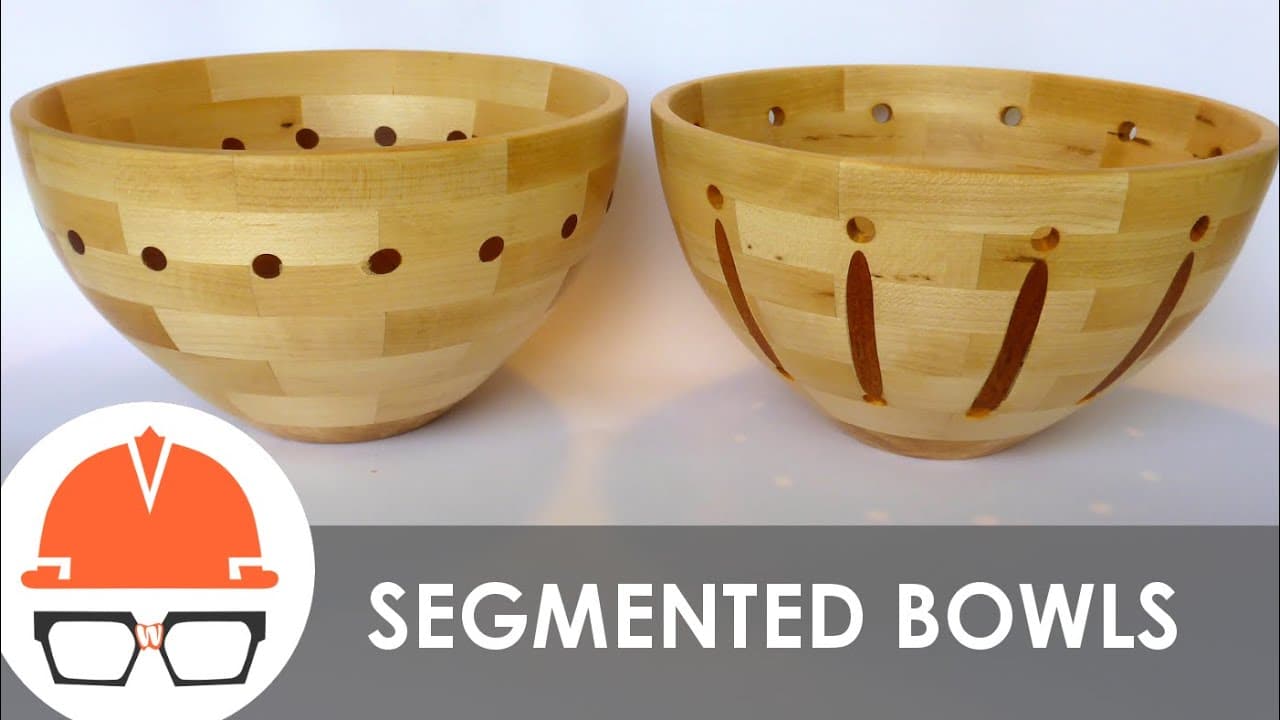
- The first bowl's design resulted in subtle polka dot accents, which, although unintended, were aesthetically pleasing.
- The second bowl faced issues with tear-out and inconsistent dowel lengths, leading to a unique design resembling leather stitching.
- Finishing the bowls with Danish oil enhanced their appearance and durability, offering a varnish-like quality.
- The experiment provided valuable insights and inspiration for future projects, particularly in using dowels for more dramatic shapes.
Install to Summarize YouTube Videos and Get Transcripts
Explore YouTube Video Summarizer or Get YouTube Transcript Extractor
Questions & Answers
Q: What inspired the creator to experiment with intersecting surfaces?
The creator was inspired by the concept of intersecting surfaces and the unique patterns they can create. This interest was sparked by previous experiments with curved and flat surfaces, leading to the idea of intersecting two curved surfaces, such as a bowl and dowels, to explore new design possibilities.
Q: What materials were used in creating the bowls?
The bowls were made using segmented hard maple and African mahogany. The maple served as the primary material for the bowl structure, while the mahogany was used for creating contrasting accents through dowels inserted into drilled holes, enhancing the visual appeal of the finished pieces.
Q: What challenges did the creator face during the project?
The creator faced several challenges, including the lathe's indexing limitations, which affected the symmetry of the design. Additionally, the drilling process was hindered by a sloppy jig, leading to inconsistent hole placement and tear-out. These issues impacted the overall appearance and symmetry of the bowls.
Q: How did the creator address the issue of inconsistent dowel lengths?
To address the inconsistent dowel lengths, the creator drilled additional holes at the top and bottom of each accent, intending to glue in more dowels for a consistent look. However, they ultimately decided to keep the holes, as they resembled leather stitching, adding a unique aesthetic to the bowl.
Q: What finishing technique was used for the bowls?
The bowls were finished using Danish oil, which is a mixture of varnish and linseed oil. The specific product used was pure polymerized linseed oil, which provided a durable, varnish-like finish. This was the creator's first time using this finish, and they were pleased with the results.
Q: What was the outcome of the first bowl's design?
The first bowl's design resulted in subtle polka dot-like accents due to drilling holes at an angle. Although this was not the creator's original vision, the outcome was aesthetically pleasing, with the understated design offering a unique and charming appearance that the creator appreciated.
Q: What was the creator's impression of the second bowl's appearance?
The creator found the second bowl's appearance to be unique, resembling leather stitching. Despite the initial issues with inconsistent dowel lengths, the additional holes drilled at the top and bottom of each accent created a look akin to heavy leather stitching, which the creator found visually appealing.
Q: What future plans does the creator have based on this experiment?
The creator plans to further explore the use of dowels in lathe-turned projects, aiming for more dramatic shapes and designs. This experiment provided valuable insights and inspiration for future projects, encouraging the creator to continue experimenting with intersecting surfaces and contrasting materials in woodworking.
Summary & Key Takeaways
-
The video explores the concept of intersecting surfaces in woodworking, focusing on turning segmented bowls on a lathe. The creator uses hard maple and African mahogany to create unique patterns through dowels. Despite challenges with the drilling process, the finished bowls offer valuable insights for future projects.
-
The creator's experimentation with lathe-turned bowls involves multiple glue cycles and turning techniques. The first bowl features polka dot-like accents, while the second bowl's design resembles leather stitching. Both bowls are finished with Danish oil, enhancing their appearance and durability.
-
Despite challenges with symmetry and drilling inconsistencies, the project successfully demonstrates the potential of intersecting surfaces in woodworking. The use of dowels creates contrasting accents, and the experiment inspires future exploration of more dramatic shapes and designs in lathe-turned projects.
Read in Other Languages (beta)
Share This Summary 📚
Summarize YouTube Videos and Get Video Transcripts with 1-Click
Try YouTube Summary with ChatGPT & Claude or YouTube Transcript Generator
Explore More Summaries from Practical Engineering 📚






Summarize YouTube Videos and Get Video Transcripts with 1-Click
Try YouTube Summary with ChatGPT & Claude or YouTube Transcript Generator