How Power Blackouts Work
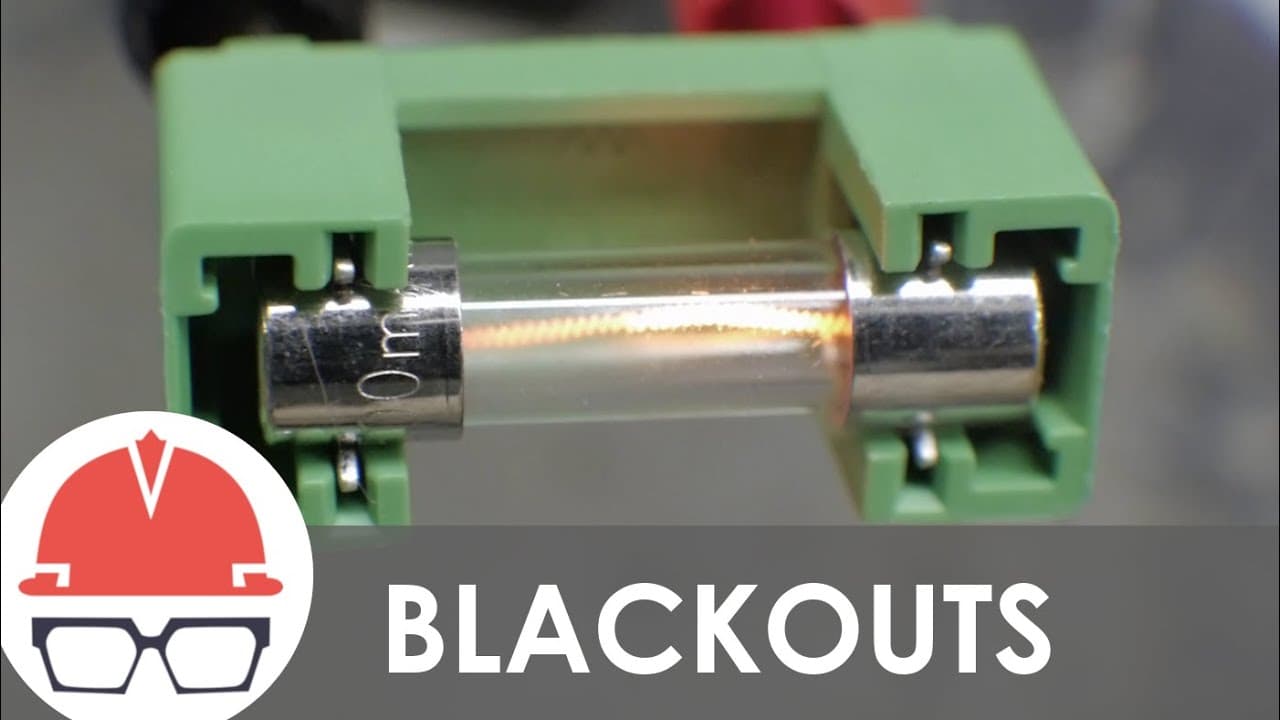
TL;DR
The power grid uses protective systems to prevent and manage blackouts.
Transcript
We usually think of the power grid in terms of its visible parts: power plants, high-voltage lines, and substations. But, much of the complexity of power grid comes in how we protect it when things go wrong. Because of the importance of electricity in our modern world, it’s critical that we be able to prevent damage to equipment and perform repairs... Read More
Key Insights
- The power grid is a complex interconnected system that requires protective measures to prevent small issues from escalating into widespread blackouts.
- Power system protection involves isolating faults quickly to minimize damage and ensure efficient repairs, maintaining the grid's resiliency.
- Transmission lines can sag under high demand, potentially causing faults when they contact tree limbs, leading to short circuits.
- Short circuits create low resistance paths to ground, causing unwanted consequences like energy waste, equipment damage, and potential fires.
- Protective devices like relays and circuit breakers help isolate faults by measuring parameters such as current, voltage, and frequency.
- Managed failures, such as rolling blackouts, are necessary to protect the grid during times of insufficient generation capacity.
- Cascading failures can occur if faults are not managed correctly, leading to large-scale outages like the 2003 blackout in the U.S. northeast.
- Restoring power after a major blackout, known as a black start, is a complex process requiring careful planning and engineering.
Install to Summarize YouTube Videos and Get Transcripts
Explore YouTube Video Summarizer or Get YouTube Transcript Extractor
Questions & Answers
Q: What causes transmission lines to sag and potentially create faults?
Transmission lines sag due to the heat generated when high electrical currents pass through them. The resistance in the lines causes energy loss as heat, leading to metal expansion and sagging. This sagging can cause lines to contact tree limbs, creating a path to ground and resulting in short circuits.
Q: How do protective devices help prevent damage to the power grid?
Protective devices, such as relays and circuit breakers, help prevent damage by isolating faults quickly. They measure parameters like current, voltage, and frequency to detect anomalies. When a fault is identified, these devices activate to isolate the affected equipment, minimizing damage and facilitating efficient repairs.
Q: What are managed failures in the context of the power grid?
Managed failures refer to intentional service interruptions, such as rolling blackouts, implemented to protect the power grid during times of insufficient generation capacity. By shedding non-critical electrical loads, utilities can prevent further damage and maintain grid stability, ensuring that critical infrastructure remains operational.
Q: What are cascading failures, and how can they impact the power grid?
Cascading failures occur when a fault in one part of the power grid leads to a series of subsequent failures in other parts. This can happen if the electrical load from a faulted line is redistributed to other lines, pushing them beyond their limits. Such failures can result in widespread blackouts, as seen in the 2003 U.S. northeast outage.
Q: Why is restoring power after a major blackout challenging?
Restoring power after a major blackout is challenging because it requires careful coordination and planning, known as a black start. Large power plants often need some power to operate, creating a chicken and egg situation. Engineers must decide which equipment to bring online first to ensure a stable and efficient restoration process.
Q: What role do relays play in power system protection?
Relays play a crucial role in power system protection by monitoring electrical parameters such as current, voltage, and frequency. They help identify faults by detecting anomalies in these parameters and activate circuit breakers to isolate the affected equipment. This isolation prevents damage and ensures efficient fault management and repair.
Q: How do circuit breakers identify faults in a power grid?
Circuit breakers identify faults primarily based on the amount of electrical current flowing through them. If the current exceeds a predefined threshold, indicating a potential fault, the breaker trips to disconnect the circuit. This prevents high current from causing damage to equipment and conductors, ensuring the grid's stability and safety.
Q: What is the importance of isolation in power system protection?
Isolation is essential in power system protection because it helps contain faults, preventing them from escalating and causing widespread damage. By establishing zones of protection around major grid components, faults can be quickly identified and isolated, minimizing the impact on the grid and facilitating efficient repairs and maintenance.
Summary & Key Takeaways
-
The power grid is an interconnected system requiring protective measures to prevent small issues from causing widespread blackouts. Protective devices isolate faults quickly to minimize damage and ensure efficient repairs. Transmission lines can sag under high demand, potentially causing faults when they contact tree limbs, leading to short circuits.
-
Short circuits create low resistance paths to ground, causing unwanted consequences like energy waste, equipment damage, and potential fires. Protective devices like relays and circuit breakers help isolate faults by measuring parameters such as current, voltage, and frequency. Managed failures, such as rolling blackouts, are necessary to protect the grid.
-
Cascading failures can occur if faults are not managed correctly, leading to large-scale outages like the 2003 blackout in the U.S. northeast. Restoring power after a major blackout, known as a black start, is a complex process requiring careful planning and engineering to ensure a speedy and cost-effective repair to the fault.
Read in Other Languages (beta)
Share This Summary 📚
Summarize YouTube Videos and Get Video Transcripts with 1-Click
Try YouTube Summary with ChatGPT & Claude or YouTube Transcript Generator
Explore More Summaries from Practical Engineering 📚




Summarize YouTube Videos and Get Video Transcripts with 1-Click
Try YouTube Summary with ChatGPT & Claude or YouTube Transcript Generator