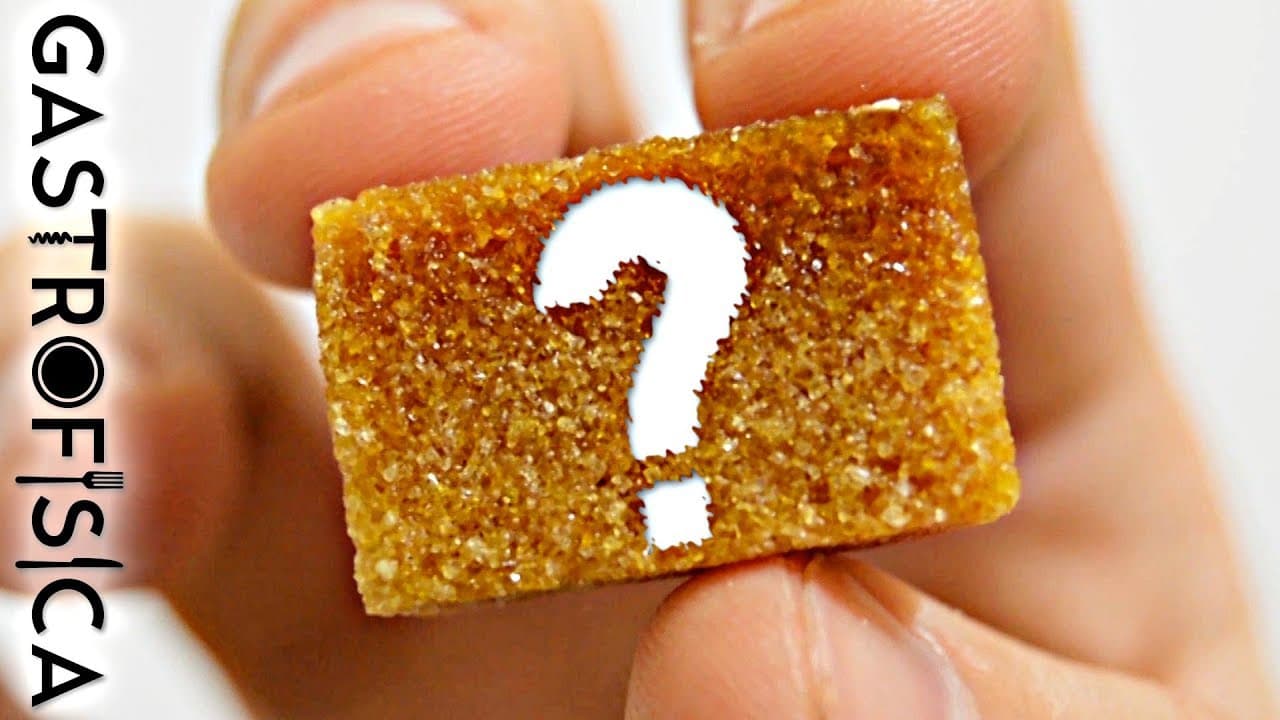
The Physics of Caramel: How To Make a Caramelized Sugar Cube
TL;DR
Refined sugar transforms into caramel through the process of caramelization, which involves complex chemical reactions and the breakdown of sucrose into glucose and fructose.
Transcript
When I first saw the following video - which is in Spanish - I wanted to share it with my friends. Even those who don't speak Spanish. So, in collaboration with Arcadi Garcia, who made the original, here is Gastrofisica in English. Sugar - or, at least, refined sugar- is a white, odorless, fine-grained material, which means that, in some ways, it b... Read More
Key Insights
- ❓ Caramelization is a complex chemical process that involves the creation of numerous compounds and reactions, contributing to the flavor and texture of caramel.
- 🫠 The melting point of sugar can vary depending on heating speed, but the sugar itself does not melt; instead, it breaks down into glucose and fructose.
- 🫠 Controlling the temperature during the caramelization process can yield different results, allowing for the creation of caramel without traditional melting.
- 🥺 Understanding the physics of caramelization can lead to creative culinary applications and the production of caramel with distinct characteristics.
- 😘 Caramelized sugar cubes can be created by dry-caramelizing sugar at a lower temperature for a more extended period.
- ⌛ Caramelization involves a balance of time and temperature to achieve desired caramel flavors and textures.
- 🥹 The process of caramelization still holds many unanswered questions and areas of scientific exploration.
Install to Summarize YouTube Videos and Get Transcripts
Explore YouTube Video Summarizer or Get YouTube Transcript Extractor
Questions & Answers
Q: What is the process of caramelization?
Caramelization is a complex chemical process that involves the heating of refined sugar, resulting in the creation of various compounds and chemical reactions that give caramel its distinct taste, color, and texture.
Q: Why is the caramelization process not well understood?
The process of caramelization is not fully understood due to its complexity. It involves numerous chemical reactions and the formation of numerous compounds, making it challenging to pinpoint specific mechanisms and reactions involved.
Q: Can sugar melt at different temperatures?
Different studies yield conflicting temperature points at which sugar melts. The melting point of sugar can depend on various factors, including the speed at which it is heated. However, sugar does not technically melt as it breaks down into glucose and fructose instead of changing from a solid to a liquid state.
Q: How can caramel be made without melting anything?
By controlling the temperature at around 150ºC [300°F] for an extended period, the sucrose in sugar can be broken down into glucose and fructose, resulting in caramelization without traditional melting. This can be achieved in an oven or a pot.
Summary & Key Takeaways
-
Refined sugar behaves like a liquid due to its fine-grained nature and can be transformed into caramel through a process called caramelization.
-
Caramelization is a complex chemical process that creates hundreds of different compounds and involves various chemical reactions.
-
Sugar does not actually melt when heated; instead, it breaks down into its components, glucose and fructose.
Read in Other Languages (beta)
Share This Summary 📚
Summarize YouTube Videos and Get Video Transcripts with 1-Click
Try YouTube Summary with ChatGPT & Claude or YouTube Transcript Generator
Explore More Summaries from minutephysics 📚


Summarize YouTube Videos and Get Video Transcripts with 1-Click
Try YouTube Summary with ChatGPT & Claude or YouTube Transcript Generator