How to Install a Water Line Under Railroad Tracks Safely?
TL;DR
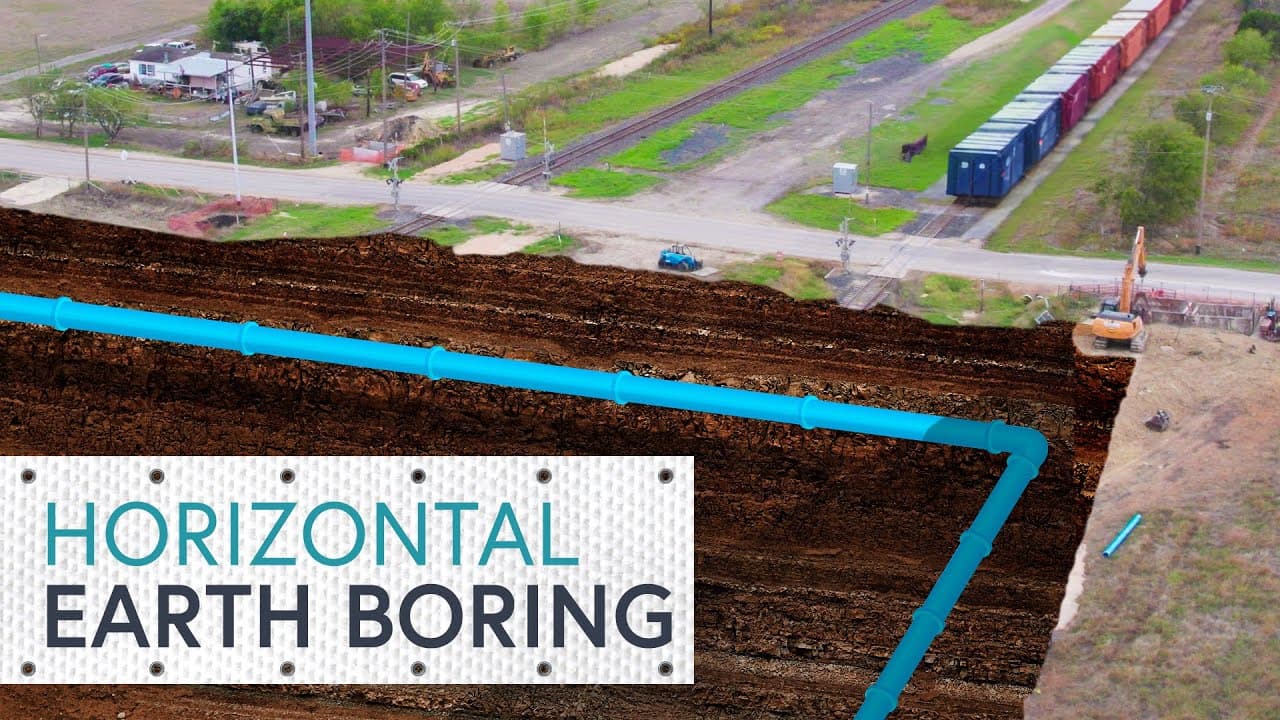
To install a water line under railroad tracks, a method called horizontal earth boring is used, allowing for trenchless installation without disrupting train operations. The process involves intense planning, continuous monitoring of the railroad tracks, and specialized safety measures to ensure precision and safety during 24/7 operations.
Transcript
This is the Union Pacific Railroad’s Austin Subdivision in central Texas. It’s a busy corridor that moves both freight and passengers north and south between Austin and San Antonio… But it’s mostly freight. Trains run twenty-four-seven here, carrying goods like rock from nearby quarries, cement, vehicles, intermodal freight, and more. So, when ... Read More
Key Insights
- The project involves installing a water transmission line under a busy railroad without disrupting train traffic, using horizontal earth boring.
- Trenchless technologies like horizontal earth boring allow underground utilities to be installed without surface disruption, minimizing impact on existing infrastructure.
- Preparation involves identifying and marking existing underground utilities to avoid damaging them during the boring process.
- Safety is paramount, especially around active railroads, requiring coordination with train engineers and specialized safety crews on site.
- The boring machine uses a hydraulic ram system to advance casing pipes, ensuring the bore remains stable and aligned.
- Continuous monitoring ensures the boring process does not affect the stability of the railroad tracks above, with surveys conducted every six hours.
- The project requires 24/7 operation to minimize the duration of open excavation under the tracks, reducing risk and ensuring timely completion.
- Surveying and precise alignment are critical, with adjustments made if necessary to maintain the correct bore path and avoid existing utilities.
Install to Summarize YouTube Videos and Get Transcripts
Explore YouTube Video Summarizer or Get YouTube Transcript Extractor
Questions & Answers
Q: What is the main challenge of installing a water line under a railroad?
The primary challenge is installing the water line without disrupting train operations. This requires using trenchless technologies like horizontal earth boring to avoid surface disruption while ensuring the stability of the railroad tracks above. The project demands careful planning, coordination, and continuous monitoring to maintain safety and precision.
Q: How does horizontal earth boring work in this project?
Horizontal earth boring involves using a boring machine to excavate soil and advance a casing pipe underground. The machine uses augers and a boring head to break up soil and draw cuttings back to the entrance pit. The casing pipe supports the bore, preventing collapse and soil shifting, allowing the water line to be installed without surface disruption.
Q: What safety measures are taken during the installation?
Safety measures include coordinating with train engineers and specialized safety crews to ensure no one is injured during the operation. A specific safety zone is established along the tracks, requiring train engineers to check in before approaching the work area. Continuous monitoring of the tracks is conducted to detect any changes in elevation, ensuring the tracks' stability.
Q: Why is continuous operation required for this project?
Continuous operation is required to minimize the time the excavation remains open under the tracks, reducing the risk of track instability and potential disruptions. The railroad demands that the boring operation proceed nonstop to prevent any delays or interruptions in train service, necessitating double shifts for the boring contractor.
Q: How is the alignment of the bore maintained?
Alignment is maintained through precise surveying and monitoring. The bore path is checked regularly, and adjustments are made if necessary using hydraulic jacks to deflect the casing pipe back into alignment. A worker may be sent inside the casing pipe to verify alignment using a rule and precision laser, ensuring the bore follows the correct path.
Q: What role does surveying play in this project?
Surveying is critical for ensuring the bore is correctly aligned and does not affect the railroad tracks. Surveyors conduct regular measurements using reflective markers and total stations to detect any changes in track elevation. This data is compared to baseline measurements to ensure the tracks remain stable throughout the boring operation.
Q: What happens if the bore deviates from its path?
If the bore deviates, hydraulic jacks can be used to adjust the alignment by bending shoes on the casing pipe outward, guiding the bore back on track. While not highly steerable, this method allows for minor corrections to maintain the bore's alignment and avoid existing utilities, ensuring the successful completion of the project.
Q: Why is the annular space between the casing and pipe left open?
The annular space is left open to facilitate future maintenance or repairs. If the water line breaks or leaks, the pipe can be pulled out and replaced without additional excavation. This design choice allows for easier access and reduces the long-term risk of disruptions, ensuring the line's reliability and serviceability.
Summary & Key Takeaways
-
The video showcases the installation of a water transmission line beneath railroad tracks using horizontal earth boring, a trenchless technology. The project requires careful planning and coordination to avoid disrupting train operations while ensuring safety and precision.
-
Safety measures are emphasized, including coordination with train engineers and specialized safety crews. Continuous monitoring of the railroad tracks is conducted to ensure the boring process does not affect track stability, with surveys every six hours.
-
The boring operation is conducted 24/7 to minimize the duration of open excavation under the tracks. The casing pipe is advanced using a hydraulic ram system, with precise alignment maintained to avoid existing utilities and ensure successful completion.
Read in Other Languages (beta)
Share This Summary 📚
Summarize YouTube Videos and Get Video Transcripts with 1-Click
Try YouTube Summary with ChatGPT & Claude or YouTube Transcript Generator
Explore More Summaries from Practical Engineering 📚


Summarize YouTube Videos and Get Video Transcripts with 1-Click
Try YouTube Summary with ChatGPT & Claude or YouTube Transcript Generator