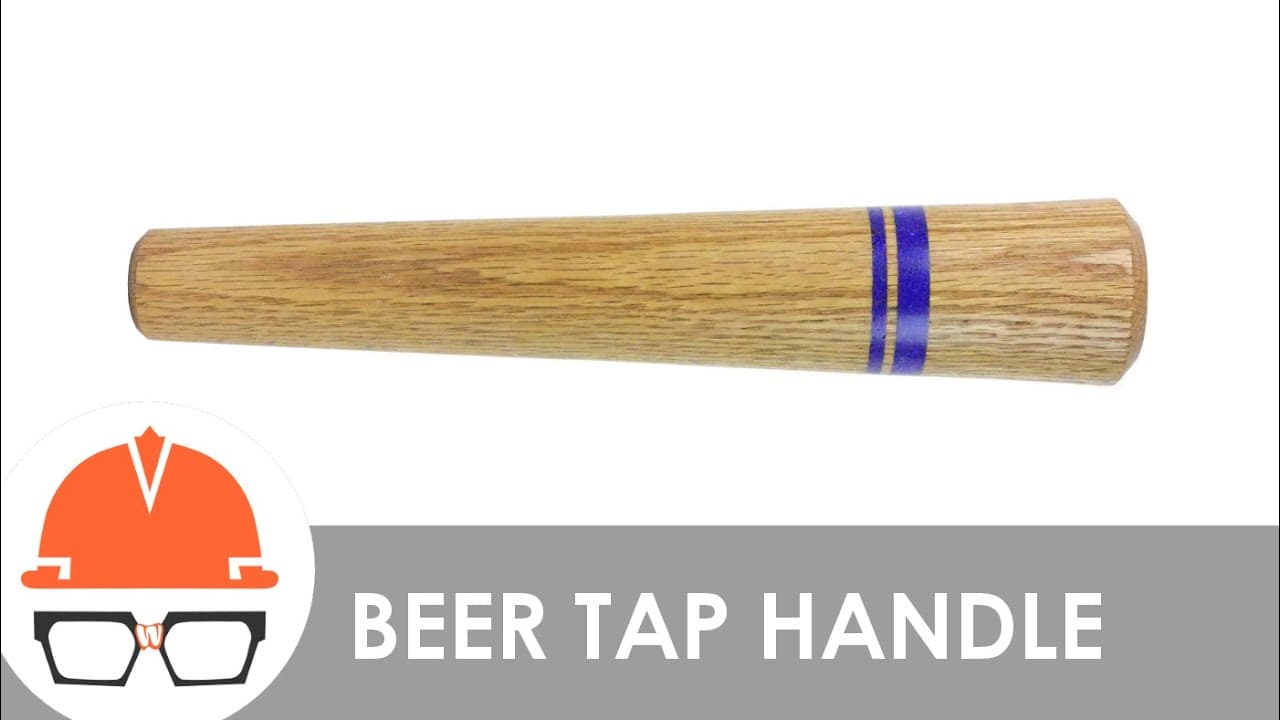
Tap Handle with Stone Inlay on the Lathe
TL;DR
Create a custom beer tap handle with stone inlay on a lathe.
Transcript
carving your own handle out of solid wood on a lathe for the sole purpose of dispensing beer that covers about four of your man card obligations don't let any salty Canadian mining Engineers tell you otherwise if you get your jollies manipulating dead tree carcasses hey more power to you just don't ask me if I like to come over and watch Gladiator ... Read More
Key Insights
- Creating a custom tap handle is a simple project that allows for a lot of creativity, using materials like wood and stone inlays.
- The process begins with roughing out a blank piece of wood, such as Red Oak, and shaping it on a lathe.
- Stone inlay, such as crushed lapis lazuli, adds a decorative element and requires careful application with CA glue.
- Using a carbide scraper and sharp inserts ensures smooth cuts and a clean finish on both wood and stone.
- Proper safety measures, like wearing a respirator and using a dust collector, are crucial when working with stone inlays.
- Finishing touches include shaping the handle, applying a chamfer, and using a polymerized tongue oil for a polished look.
- Standard American tap handles use 3/8 inch 16 TPI threads, which require precise drilling and insertion techniques.
- The project combines woodworking and stone crafting skills, making it an engaging and rewarding experience for hobbyists.
Install to Summarize YouTube Videos and Get Transcripts
Explore YouTube Video Summarizer or Get YouTube Transcript Extractor
Questions & Answers
Q: How is the initial shape of the tap handle created?
The initial shape of the tap handle is created by roughing out a blank piece of wood, such as Red Oak, on a lathe. The process involves cutting out a tenon, moving to a chuck for drilling, and using tools like a carbide scraper and sharp inserts to achieve a smooth, round shape.
Q: What materials are used for the stone inlay?
The stone inlay is made using crushed lapis lazuli. The stones are added into grooves cut into the wood handle and are soaked with CA glue to secure them. The creator alternated between adding stones and glue, allowing each application to dry thoroughly before proceeding.
Q: What safety measures are recommended during the crafting process?
During the crafting process, it is recommended to wear a respirator and run a dust collector, especially when working with stone inlays. This helps to protect against inhaling dust and particles generated during the sanding and finishing stages, ensuring a safer working environment.
Q: How is the final finish of the tap handle achieved?
The final finish of the tap handle is achieved by applying a polymerized tongue oil, which gives a polished look. Before applying the finish, the handle is shaped, sanded, and chamfered on the top and bottom to ensure smooth edges and a refined appearance.
Q: What threading is used for American tap handles?
American tap handles use standard 3/8 inch 16 TPI threads. To install the thread insert, a 1/2 inch hole is drilled into the handle. A bolt with two nuts jammed on is used to apply twisting force, ensuring the insert is securely placed within the handle.
Q: What challenges are mentioned regarding the stone inlay process?
One challenge mentioned in the stone inlay process is filling the gaps between the stones. The creator noted that crushing the lapis lazuli further into dust could help fill all small gaps more effectively. Ensuring a smooth finish requires careful application and multiple layers of stone and glue.
Q: How does the creator ensure the wood does not absorb too much glue?
To prevent the wood from absorbing too much glue, the creator applies a bit of tongue oil to the porous areas of the Oak before adding the stone inlay. This acts as a barrier, reducing the penetration of the CA glue and preserving the wood's integrity.
Q: What is the main benefit of creating a custom tap handle?
The main benefit of creating a custom tap handle is the opportunity for personal creativity and customization. It allows individuals to design a unique piece that reflects their style and preferences, enhancing the aesthetic of their kegerator or home brewing setup while also being a practical and functional item.
Summary & Key Takeaways
-
This project involves creating a custom beer tap handle using Red Oak and a stone inlay on a lathe. The process includes shaping the wood, applying a stone inlay, and finishing with a polymerized tongue oil for a polished look.
-
The creator used crushed lapis lazuli for the stone inlay, applying it with CA glue and ensuring a smooth finish with a carbide scraper. Safety precautions, like wearing a respirator, were emphasized during the crafting process.
-
The handle was completed with standard American tap threads and a chamfered finish. The project showcases the combination of woodworking and stone crafting, offering a creative outlet for hobbyists interested in custom creations.
Read in Other Languages (beta)
Share This Summary 📚
Summarize YouTube Videos and Get Video Transcripts with 1-Click
Try YouTube Summary with ChatGPT & Claude or YouTube Transcript Generator
Explore More Summaries from Practical Engineering 📚






Summarize YouTube Videos and Get Video Transcripts with 1-Click
Try YouTube Summary with ChatGPT & Claude or YouTube Transcript Generator