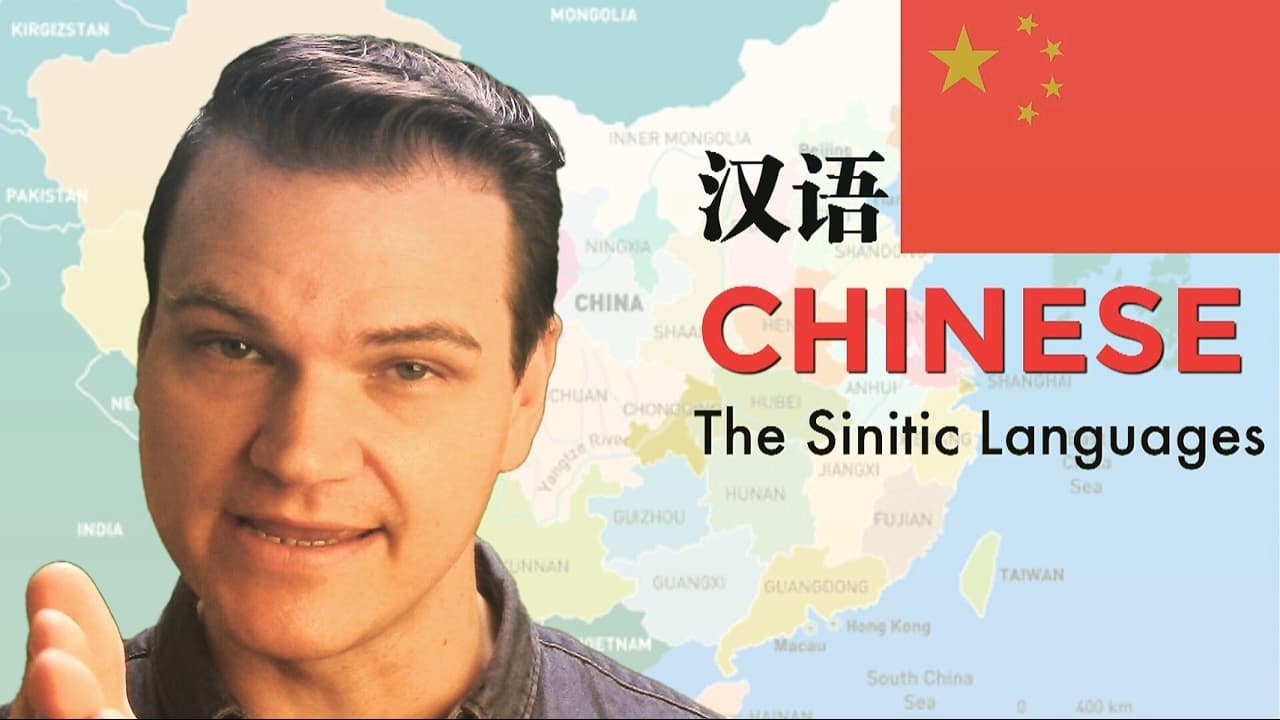
Chinese - The Sinitic Languages
TL;DR
Chinese is a diverse group of languages sharing a common writing system.
Transcript
Follow Langfocus on Facebook, Twitter and Instagram. Err...what should we do today? Today let's talk about Chinese. No, let's talk about written Chinese. No, let's talk about classical Chinese. Or, maybe standard Chinese. No, no, we're gonna talk about various Chinese dialects. Okay, let's just talk about all of them. [Traditional Chinese Music] He... Read More
Key Insights
- Chinese, or Sinitic languages, are a sub-family of the Sino-Tibetan language family, consisting of various dialect groups often considered distinct languages due to their mutual unintelligibility.
- The Chinese language family includes over 200 distinct varieties categorized into 13 dialect groups, with Mandarin, Yue, Xiang, Min, Gan, Wu, and Hakka being the major ones.
- Chinese languages are tonal, meaning the tone used can change the meaning of a word. Mandarin has four main tones, while Cantonese has six, and Shanghainese uses a pitch accent system.
- The Chinese writing system uses logograms called Hànzì, where each character represents a word or a unit of meaning, requiring memorization of each character separately.
- Classical Chinese served as the formal written language until the 20th century, when written vernacular Chinese based on Mandarin dialects was introduced as the new official written language.
- Differences in word order exist among Chinese languages; for example, Mandarin and Shanghainese often use SVO structure, while Cantonese can vary in structure.
- Traditional and simplified Chinese characters are used in different regions, with simplified characters introduced in the mid-20th century to improve literacy.
- Despite the common writing system, verbal communication between speakers of different Chinese languages requires learning Mandarin, highlighting the diversity within the language family.
Install to Summarize YouTube Videos and Get Transcripts
Explore YouTube Video Summarizer or Get YouTube Transcript Extractor
Questions & Answers
Q: What is the significance of tonal variation in Chinese languages?
Tonal variation is crucial in Chinese languages as it affects the meaning of words. Each tone can change the meaning entirely, so understanding and using the correct tone is essential for effective communication. Mandarin, for example, has four primary tones, while Cantonese has six, and Shanghainese uses a pitch accent system, highlighting the diversity in tonal systems across Chinese languages.
Q: How do traditional and simplified Chinese characters differ?
Traditional Chinese characters are the original forms used in classical Chinese, while simplified characters were introduced in the 1950s and '60s in mainland China and Singapore to increase literacy by reducing the number of strokes in characters. Despite their differences, literate native speakers can generally read both types, although traditional characters remain in use in Taiwan, Hong Kong, Macau, and many diaspora communities.
Q: Why is Mandarin considered the standard Chinese language?
Mandarin is considered the standard Chinese language because it serves as the official language in China, Taiwan, and Singapore, and is based on the Beijing dialect. It replaced classical Chinese as the formal written language in the 20th century, and its standardization helps unify communication across diverse Chinese dialects, despite the spoken differences among them.
Q: What role does classical Chinese play in modern Chinese languages?
Classical Chinese served as the formal written language for centuries and influenced the development of modern Chinese languages. Although it was replaced by written vernacular Chinese in the 20th century, its literary tradition and character system continue to impact modern Chinese languages, serving as a historical and cultural touchstone for speakers across different dialects.
Q: How do Chinese languages differ in terms of word order?
Chinese languages exhibit variations in word order, often following subject-verb-object (SVO) structure in Mandarin and Cantonese. However, exceptions exist, such as Mandarin's placement of indirect objects before direct objects, contrasting with Cantonese. Shanghainese and other Wu dialects can also vary between SVO and subject-object-verb (SOV) structures, reflecting the syntactic diversity within Chinese languages.
Q: What are the major dialect groups within the Chinese language family?
The major dialect groups within the Chinese language family include Mandarin, Yue (Cantonese), Xiang, Min, Gan, Wu, and Hakka. Each group encompasses numerous local dialects, often mutually unintelligible, with Mandarin being the most widely spoken and used as the standard language for official communication and writing across China and other regions.
Q: How did Middle Chinese influence modern Chinese varieties?
Middle Chinese, which developed from classical Chinese, is the ancestor of almost all modern Chinese varieties. It was not a single language but a collection of mutually intelligible dialects that began diverging around the 10th century, leading to the distinct languages we see today. Its structure and vocabulary laid the foundation for contemporary Chinese languages, except for Min Chinese, which developed earlier.
Q: What unites the diverse Chinese languages despite their differences?
The diverse Chinese languages are united by their shared origin in Middle Chinese and the classical Chinese literary tradition. They also share a common writing system, with standard Chinese or Mandarin serving as the official written language. This commonality allows written communication across different Chinese languages, although verbal communication requires learning specific dialects like Mandarin.
Summary & Key Takeaways
-
Chinese, often referred to as the Sinitic languages, is a diverse group of languages within the Sino-Tibetan family, united by a common writing system but diverse in spoken forms and mutual intelligibility.
-
The history of Chinese languages spans from Proto-Sino-Tibetan origins to the development of Middle Chinese, with classical Chinese being the formal written language until the 20th century.
-
Modern Chinese varieties, including Mandarin, Cantonese, and others, exhibit significant differences in tones, word order, and character systems, reflecting the linguistic diversity within the Sinitic language family.
Read in Other Languages (beta)
Share This Summary 📚
Summarize YouTube Videos and Get Video Transcripts with 1-Click
Try YouTube Summary with ChatGPT & Claude or YouTube Transcript Generator
Explore More Summaries from Langfocus 📚




Summarize YouTube Videos and Get Video Transcripts with 1-Click
Try YouTube Summary with ChatGPT & Claude or YouTube Transcript Generator