What is Prestressed Concrete?
TL;DR
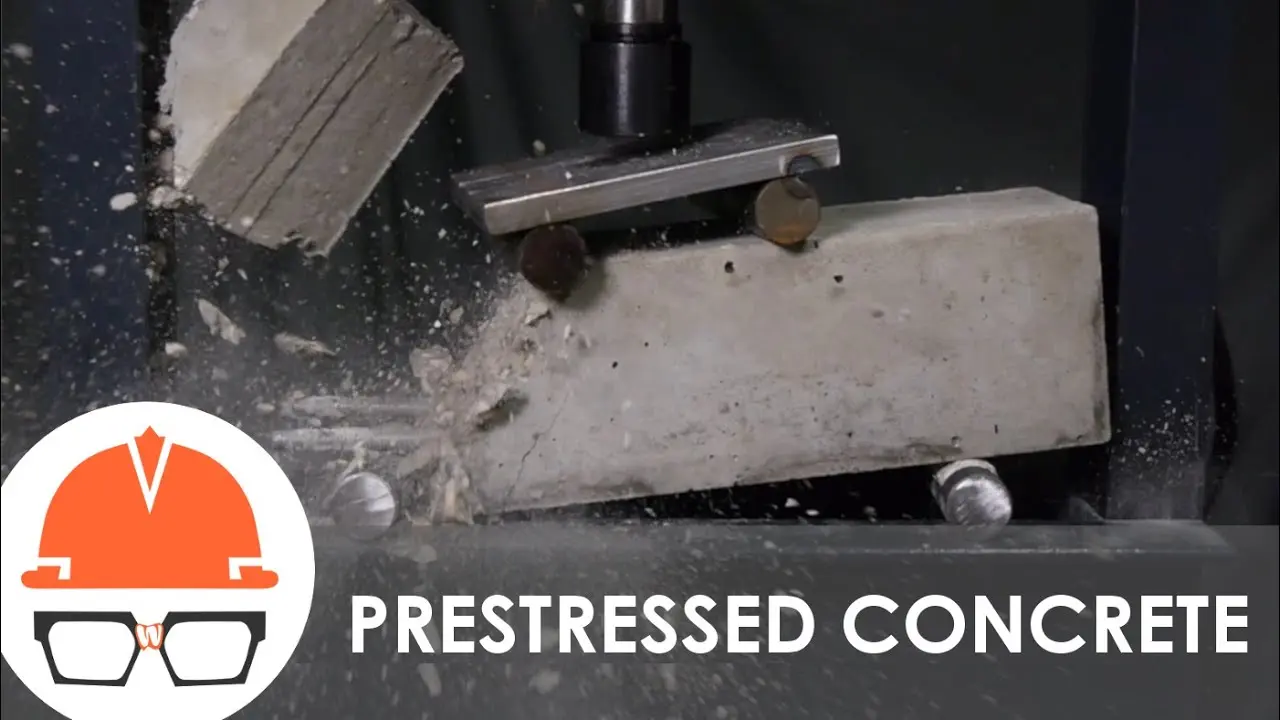
Prestressed concrete reduces deflection, enhancing serviceability in structures.
Transcript
Talk to any concrete professional and they’ll tell you the first rule of concrete is this: it’s pretty much guaranteed to crack. But not all cracking is considered equal, and there is a way to reinforce concrete to minimize its negative impacts. Hey I’m Grady and this is Practical Engineering. Today we’re talking about prestressed concrete. This vi... Read More
Key Insights
- Concrete is strong under compression but weak under tension, leading to cracking if not reinforced properly.
- Reinforced concrete structures must meet design criteria of strength and serviceability, with deflection being a key factor.
- Prestressing concrete involves applying compressive stress to counteract tensile stresses, improving serviceability.
- There are two main methods of prestressing: pre-tensioning and post-tensioning, each with distinct processes.
- Pre-tensioning involves tensioning steel before concrete cures, while post-tensioning applies tension after curing.
- Prestressed concrete does not increase strength but reduces deflection, allowing better use of material properties.
- Cracks in concrete can lead to structural issues by allowing contaminants to corrode reinforcement.
- Prestressed concrete is widely used in various structures to minimize cracking and enhance durability.
Install to Summarize YouTube Videos and Get Transcripts
Explore YouTube Video Summarizer or Get YouTube Transcript Extractor
Questions & Answers
Q: What are the main weaknesses of concrete discussed in the video?
The video highlights two main weaknesses of concrete: its lack of tensile strength and its brittleness. Concrete can withstand significant compressive stress but fails easily under tension, leading to cracks. Its brittleness means it has little ductility, so it cannot stretch or flex without cracking, which can compromise structural integrity.
Q: Why is deflection a critical design criterion in concrete structures?
Deflection is crucial because excessive movement can lead to structural failure or compromise serviceability. People perceive structures that flex as unsafe, and excessive deflection can damage attached elements like plaster or glass. In reinforced concrete, deflection can lead to cracking, allowing water and contaminants to corrode the reinforcement, weakening the structure over time.
Q: How does prestressed concrete improve the serviceability of structures?
Prestressed concrete improves serviceability by applying compressive stress to the structural member, counteracting tensile stresses experienced in service. This reduces deflection, allowing the structure to better handle loads without cracking. By minimizing deflection, prestressed concrete enhances durability and prevents damage to attached elements, maintaining the structural integrity and aesthetic appeal.
Q: What is the difference between pre-tensioning and post-tensioning methods?
Pre-tensioning involves tensioning the steel reinforcement before the concrete cures, while post-tensioning applies tension after the concrete has cured. In pre-tensioning, steel is held in tension during curing, embedding compressive stress in the concrete. In post-tensioning, steel is tensioned within sleeves after curing, applying compressive stress to the already hardened concrete.
Q: Does prestressing concrete increase its strength?
Prestressing concrete does not increase its inherent strength but improves serviceability by reducing deflection. The strength of the concrete and steel remains unchanged. However, by reducing deflection, prestressed concrete allows for better utilization of the material's properties, preventing premature cracking and enhancing the structure's ability to handle loads effectively.
Q: What are the potential consequences of cracks in concrete structures?
Cracks in concrete structures can lead to significant issues, including allowing water and contaminants to reach the steel reinforcement, causing corrosion. This corrosion weakens the reinforcement, compromising the structural integrity and potentially leading to failure. Cracks also affect the aesthetic appearance and can damage attached elements like plaster, reducing the overall durability and lifespan of the structure.
Q: In what types of structures is prestressed concrete commonly used?
Prestressed concrete is commonly used in a variety of structures, including bridges, buildings, silos, and tanks. Its ability to minimize cracking and improve serviceability makes it ideal for applications where structural integrity and durability are critical. By enhancing the performance of reinforced concrete, prestressed concrete ensures long-lasting, stable, and safe structures.
Q: Why is it important to manage deflection in reinforced concrete structures?
Managing deflection in reinforced concrete structures is important to maintain structural integrity and safety. Excessive deflection can lead to cracking, which compromises the structure by allowing contaminants to corrode reinforcement. It also affects the perception of safety, as people feel insecure on structures that visibly flex or move. Proper deflection management ensures durability, safety, and aesthetic appeal.
Summary & Key Takeaways
-
Concrete is inherently strong under compression but weak under tension, leading to cracking if not properly reinforced. Prestressed concrete helps mitigate this issue by applying compressive stress to counteract tensile forces, thereby reducing deflection and enhancing serviceability in structures.
-
The video explains two main methods of prestressing: pre-tensioning, where steel is tensioned before concrete cures, and post-tensioning, where tension is applied after curing. Both methods aim to reduce deflection and improve the serviceability of concrete structures without increasing their inherent strength.
-
Prestressed concrete is crucial in engineering for minimizing cracks and taking full advantage of reinforced concrete's strength. It is used in various structures, including bridges and buildings, to ensure durability and stability by balancing tensile and compressive forces.
Read in Other Languages (beta)
Share This Summary 📚
Summarize YouTube Videos and Get Video Transcripts with 1-Click
Try YouTube Summary with ChatGPT & Claude or YouTube Transcript Generator
Explore More Summaries from Practical Engineering 📚




Summarize YouTube Videos and Get Video Transcripts with 1-Click
Try YouTube Summary with ChatGPT & Claude or YouTube Transcript Generator