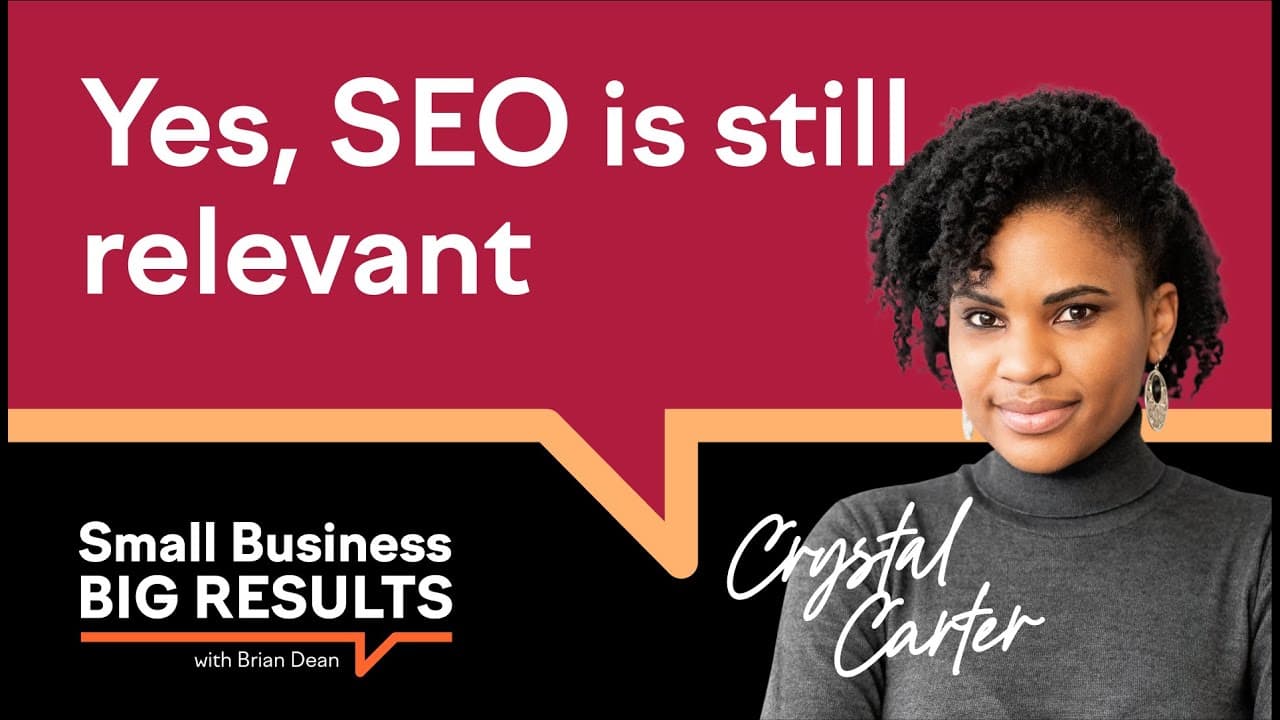
Yes, SEO is still important in 2022!
TL;DR
SEO remains crucial for business growth and visibility.
Transcript
foreign welcome to small business big results a show where we share stories from small business owners and fast growing startups I'm your host Brian Dean and today I have Crystal Carter with me welcome Crystal oh thank you so much I'm really pleased to be here um yeah it's really great to be joining you to talk about SEO right that's exactly what w... Read More
Key Insights
- SEO is not limited to Google; it includes social media and paid strategies for a holistic digital footprint.
- Video content is increasingly important for SEO, with platforms like TikTok also incorporating SEO elements.
- Mobile-first indexing by Google has significantly changed the SEO landscape, emphasizing app-like experiences.
- SEO is an ongoing process due to frequent Google algorithm updates and evolving user behavior.
- Small businesses can leverage their expertise for content creation, providing an advantage over larger competitors.
- SEO and paid strategies should be balanced, especially in sensitive verticals like finance and health.
- Structured data, including H1s and H2s, remains vital for content visibility and user engagement.
- Publishing content early can lead to better indexing and ranking, taking advantage of compounding effects.
Install to Summarize YouTube Videos and Get Transcripts
Explore YouTube Video Summarizer or Get YouTube Transcript Extractor
Questions & Answers
Q: What is a common misconception about SEO?
A common misconception about SEO is that it only involves Google search and meta tags. In reality, SEO encompasses a broader digital strategy, including social media and paid advertising, to create a holistic online presence. This approach helps businesses gain visibility across various platforms, not just through traditional search.
Q: How has mobile-first indexing changed SEO?
Mobile-first indexing has significantly altered SEO by emphasizing the need for mobile-friendly, app-like experiences. As users increasingly access the internet via mobile devices, Google prioritizes mobile-optimized content. This shift requires businesses to adapt their strategies, ensuring their websites are responsive and user-friendly on mobile platforms.
Q: Why is SEO not a 'set it and forget it' strategy?
SEO is not a 'set it and forget it' strategy because of frequent Google algorithm updates and evolving user behaviors. Businesses must continuously adapt to these changes to maintain and improve their search rankings. Ongoing SEO efforts involve updating content, optimizing for new trends, and addressing technical aspects to stay competitive.
Q: How can small businesses benefit from creating their own content?
Small businesses can benefit from creating their own content by leveraging their unique expertise and closer connection to customers. This advantage allows them to produce authentic, high-quality content that resonates with their audience. Such content not only enhances user engagement but also aligns with Google's emphasis on expertise and authority.
Q: What is the recommended balance between SEO and paid strategies?
The balance between SEO and paid strategies depends on the business's vertical and goals. For sensitive industries like finance and health, maintaining a mix of both can ensure visibility even during algorithm changes. Paid strategies provide immediate results and can complement long-term SEO efforts by offering insights into effective keywords and content.
Q: Why is structured data important for SEO?
Structured data, including H1s and H2s, is crucial for SEO as it helps search engines understand and index content effectively. Properly structured content improves visibility in search results, enhances user experience, and increases the likelihood of appearing in featured snippets and other search features, thus driving more traffic to the site.
Q: How does publishing content early benefit SEO?
Publishing content early benefits SEO by allowing it to be indexed and ranked over time, taking advantage of the compounding effects of SEO efforts. Early publication provides ample time for content to gain traction, accumulate backlinks, and gather user engagement signals, ultimately leading to improved search rankings when the target audience actively searches for it.
Q: What are some common technical issues in SEO?
Common technical issues in SEO include missing H1 tags on homepages, lack of structured data, and improperly configured robots.txt files or sitemaps. These issues can hinder search engine visibility and indexing. Addressing such basics ensures that content is accessible and easily understood by search engines, enhancing overall site performance.
Summary & Key Takeaways
-
The episode emphasizes the continued importance of SEO for business growth, highlighting how it extends beyond Google to include social media and paid strategies. Crystal Carter discusses the evolving landscape of SEO, including the significance of video content and mobile-first indexing.
-
SEO is a dynamic, ongoing process due to frequent algorithm updates and changing user behaviors. Small businesses can capitalize on their expertise for content creation, offering a competitive edge over larger companies. The discussion also touches on the balance between SEO and paid strategies, particularly in sensitive industries.
-
Structured data remains essential for SEO success, aiding in content visibility and user engagement. The episode advises on the importance of publishing content early to benefit from indexing and ranking, leveraging the compounding effects of SEO efforts over time.
Read in Other Languages (beta)
Share This Summary 📚
Summarize YouTube Videos and Get Video Transcripts with 1-Click
Try YouTube Summary with ChatGPT & Claude or YouTube Transcript Generator
Explore More Summaries from Semrush 📚

Summarize YouTube Videos and Get Video Transcripts with 1-Click
Try YouTube Summary with ChatGPT & Claude or YouTube Transcript Generator