Why Are Rails Shaped Like That?
TL;DR
Explores the engineering behind train wheels and rails.
Transcript
Maybe more than any other type of infrastructure, railways have a contingent of devoted enthusiasts. “Railfans” as they call themselves; Or should say “ourselves”? Maybe it's the nostalgia of an earlier era or the simple appeal of seeing enormous machinery up close. But railroads and the trains that ride along them are just plain fascinating. T... Read More
Key Insights
- Railways have a strong following due to their engineering complexity and nostalgic appeal, attracting enthusiasts known as 'railfans.'
- Train wheels and rails are engineered for efficiency, using steel to minimize rolling resistance and maximize durability.
- Flanges on the inside of train wheels prevent derailment by guiding wheels on the tracks, even if one wheel lifts.
- Conical wheels self-center and adjust wheel diameter on curves, reducing slip and friction compared to cylindrical wheels.
- Modern trains use trucks or bogies to navigate curves, allowing some wheelsets to rotate radially and manage hunting behavior.
- Rail profiles are optimized for strength and longevity, balancing cost with wear resistance to minimize replacement frequency.
- Engineering advances in wheel and rail design continue to improve train performance, steering, and fuel efficiency.
- Sophisticated simulators help modern rail companies optimize train dynamics, track conditions, and energy usage.
Install to Summarize YouTube Videos and Get Transcripts
Explore YouTube Video Summarizer or Get YouTube Transcript Extractor
Questions & Answers
Q: Why are train wheels conical?
Train wheels are conical to allow them to self-center on the tracks and adjust their effective diameter when navigating curves. This design minimizes slippage and friction, enabling smoother turns and reducing wear on both the wheels and the rails. The conical shape helps the outer wheel travel a longer distance by riding on a wider portion of the wheel, while the inner wheel travels a shorter distance on a narrower portion.
Q: What role do flanges play in train wheel design?
Flanges are crucial in train wheel design as they prevent derailment by guiding the wheels along the tracks. Positioned on the inside of the wheels, flanges ensure that even if one wheel lifts due to horizontal forces, the train remains on track. This design choice helps maintain stability and safety, especially when trains navigate curves or experience lateral forces.
Q: How do modern trains handle curves efficiently?
Modern trains handle curves efficiently through the use of conical wheels and trucks or bogies. Conical wheels adjust their effective diameter to accommodate the different lengths of the inner and outer tracks during a curve. Trucks or bogies allow wheelsets to rotate relative to the train car, enhancing the train's ability to follow the curve smoothly. This design minimizes friction and reduces the risk of derailment.
Q: What is the significance of rail shape in railway engineering?
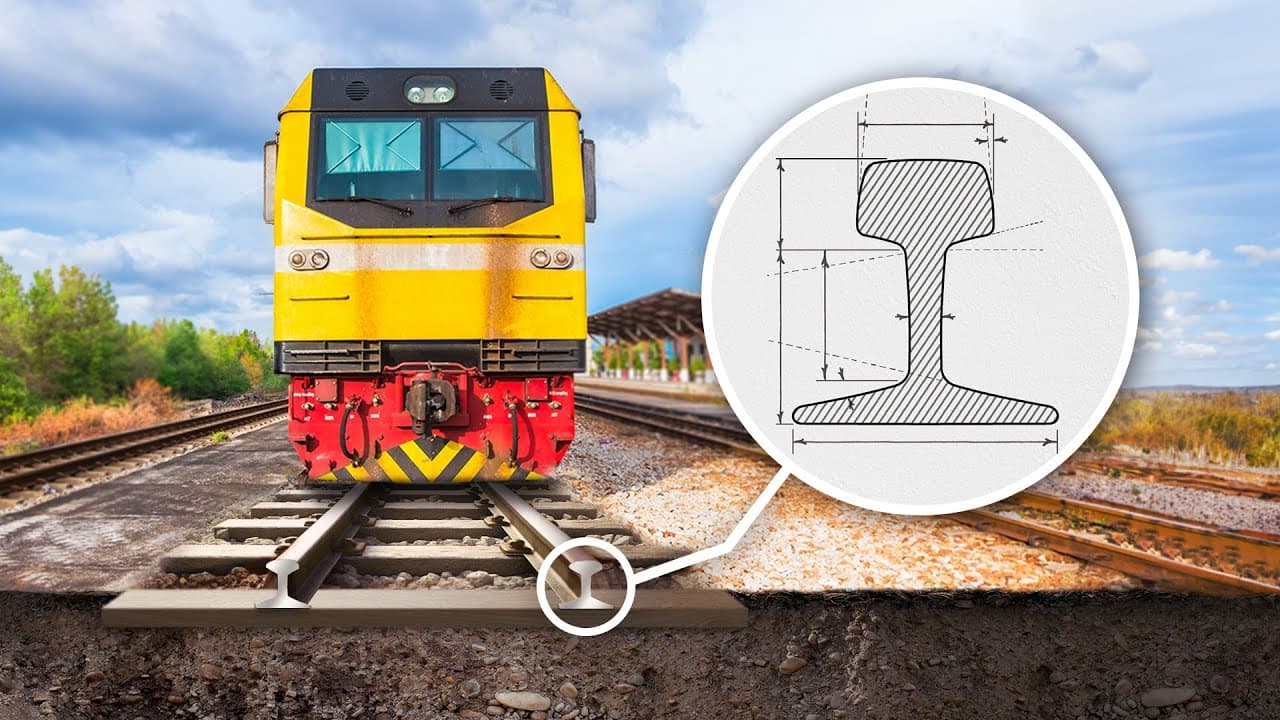
The shape of rails in railway engineering is significant for strength, durability, and cost-efficiency. Rails are designed as I-beams to distribute the weight of the train and withstand the forces exerted by the wheels. The rail head is rounded to minimize the contact patch with the wheels, reducing wear and extending the rail's lifespan. This careful design balances the need for durability with cost considerations.
Q: How do railroads manage the wear and tear on wheels and rails?
Railroads manage wear and tear on wheels and rails by using hardened materials and optimizing the shape of both components. The rounded rail head reduces the contact patch, minimizing friction and wear. Wheels are designed to be re-machined to restore their profile, extending their service life. Additionally, modern wheel and rail designs are continuously updated to improve durability and performance, as seen with the recent AAR-2A standard.
Q: What challenges do trains face with speed and stability?
Trains face challenges with speed and stability due to hunting behavior, where the sinusoidal motion of wheels can lead to oscillations that violently slam trucks side-to-side on the rails. This can cause derailment, particularly at high speeds and with empty cars. Engineering efforts focus on designing wheel profiles and truck systems that raise the hunting onset speed, allowing trains to operate safely at higher speeds.
Q: How has railway engineering evolved over time?
Railway engineering has evolved from focusing on building railroads in the 19th century to optimizing performance in modern times. Today's engineering efforts involve sophisticated software and simulators to enhance train dynamics, energy efficiency, and overall system performance. Continuous research and innovation ensure that railroads remain a vital mode of transportation, with improvements in wheel and rail design contributing to better efficiency and durability.
Q: What role do simulators play in modern railway engineering?
Simulators play a crucial role in modern railway engineering by allowing companies to optimize train dynamics, track conditions, and energy usage. These tools simulate various factors, such as train makeup, operating conditions, and suspension systems, to predict train behavior and improve efficiency. By using simulators, engineers can test and refine designs, ensuring that railroads operate at peak performance while minimizing costs and environmental impact.
Summary & Key Takeaways
-
Railways are a complex engineering marvel, attracting enthusiasts for their intricate design and historical significance. This video delves into the engineering behind train wheels and rails, revealing the innovations that make modern railroads efficient and durable.
-
Train wheels are conical, allowing them to self-center on tracks and adjust to curves by changing their effective diameter. This design minimizes friction and slip, enhancing the train's ability to navigate curves smoothly.
-
Modern railroads employ advanced engineering techniques to optimize wheel and rail interactions. This includes the use of simulators to improve train dynamics and energy efficiency, ensuring that railroads remain a vital and evolving mode of transportation.
Read in Other Languages (beta)
Share This Summary 📚
Summarize YouTube Videos and Get Video Transcripts with 1-Click
Try YouTube Summary with ChatGPT & Claude or YouTube Transcript Generator
Explore More Summaries from Practical Engineering 📚





Summarize YouTube Videos and Get Video Transcripts with 1-Click
Try YouTube Summary with ChatGPT & Claude or YouTube Transcript Generator